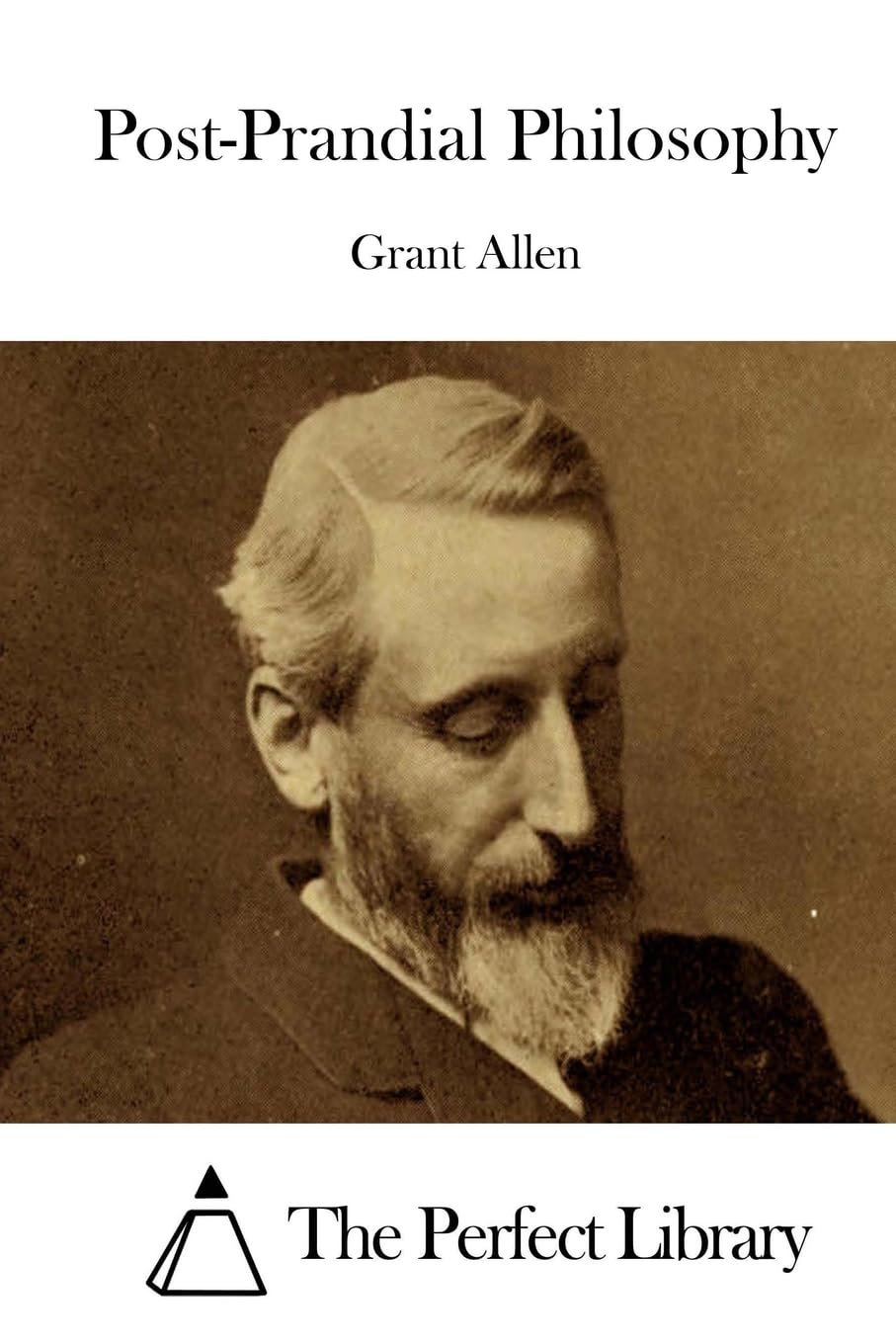
Post-Prandial Philosophy
Post Prandial Philosophy is a collection of short essays by Grant Allen, published in 1894. The title is a small joke. These are the kind of essays that might be talked through after dinner, when the serious work of the day is done and a man with too many opinions feels the need to share them. Allen, who had a great many opinions on a great many subjects, found the form natural.
The pieces in the collection cover an extraordinary range. There are essays on the inadequacy of the English educational system, on the relations between men and women, on the future of marriage, on the cultural cost of imperialism, on the strangeness of English food, on the merits of vegetarianism, on the proper way to spend a Sunday, on the value of cycling, on the etiquette of railway carriages, and on twenty or thirty other subjects in a similar vein. Most of the essays are short, six or eight pages, and most of them have a definite argumentative point.
Allen’s political position is consistent. He is a radical liberal of the 1890s kind, in favour of women’s suffrage, against the public school system, sceptical about the established church, and worried about the direction of British imperial policy. He writes with a confident clarity and a certain edge of impatience that gives the essays their flavour. He is not afraid to offend, and several of the essays in this collection had drawn complaints in their original magazine appearances.
The book is most enjoyable now as a portrait of late Victorian opinion at its most independent. Allen was one of a number of writers in the period who used the magazine essay to argue against the comfortable assumptions of middle class Britain. His positions on women and marriage in particular anticipate the more controversial argument of The Woman Who Did, his novel of the following year. The book runs about three hundred pages and works as a series of after dinner conversations with a slightly difficult guest. It pairs naturally with the essays of George Bernard Shaw and the early polemical writing of H G Wells.
About the Author
Download free books by Grant Allen on BDeBooks. Read Grant Allen’s works online or download as PDF/EPUB · part of our growing free eBook collection.
See all books by Grant Allen →