
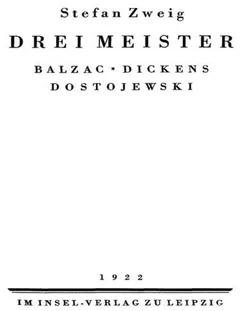
Drei Meister: Balzac, Dickens, Dostojewski
Vita Triumphatrix
Beleidigten, die Gehemmten und Verkrümmten. Mit jedem können sie sprechen,
und jeder fühlt Beruhigung an ihrer Gegenwart – sie haben nicht die ewige
Hysterie der Angst, zu kränken oder gekränkt zu werden, sie blicken nicht bei
jedem Schritt fragend um sich. Gott quält sie nicht mehr, er befriedet sie. Sie
wissen um alles, aber eben weil sie alles wissen, verstehen sie auch alles, sie
215 richten nicht und sie verurteilen nicht, sie grübeln nicht nach den Dingen,
sondern glauben sie dankbar. Seltsam: er, der ewig Beunruhigte, sieht in dem
gelassenen, geklärten Menschen die höchste Form des Lebens, der Zwiespältige
postuliert als letztes Ideal die Einheit, der Empörer die Unterwerfung. Seine
Gottesqual ist in ihnen Gotteslust geworden, seine Zweifel Gewißheit, seine
Hysterie Gesundung, sein Leid ein allumfassendes Glück. Das Letzte und
Schönste der Existenz ist für ihn, was er selbst, der Bewußte und Überbewußte,
nie gekannt und was er darum für den Menschen als das Erhabenste ersehnt:
Naivität, Kindlichkeit des Herzens, die sanfte, die selbstverständliche Heiterkeit.
Sehet seine liebsten Menschen, wie sie schreiten: ein sanftes Lächeln ist auf
ihren Lippen, um alles wissen sie und haben doch keinen Stolz, sie leben im
Geheimnis des Lebens nicht wie in einer feurigen Schlucht, sondern schlagen es
blau wie einen Himmel um sich. Sie haben die Urfeinde der Existenz, sie haben
„Schmerz und Angst besiegt“ und sind darum gottselig geworden in der
unendlichen Brüderschaft der Dinge. Sie sind erlöst von ihrem Ich. Höchstes
Glück der Erdenkinder ist die Unpersönlichkeit – so verwandelt der höchste
Individualist die Weisheit Goethes in einen neuen Glauben.
Kein Beispiel kennt die Geschichte des Geistes einer ähnlichen moralischen
Selbstvernichtung innerhalb eines Menschen, ähnlich fruchtbarer Erschaffung
des Ideals aus dem Kontrast. Märtyrer seiner selbst, hat Dostojewski sich ans
Kreuz geschlagen: sein Wissen, daß es den Glauben bezeuge, seinen Körper, daß
er durch Kunst den neuen Menschen zeuge, seine Eigenheit um der Allheit
willen. Er will seinen eigenen Untergang als Typus, damit 216 eine
glücklichere bessere Menschheit entstehe: alles Leiden nimmt er auf sich um das
Glück der andern willen. Und der sich sechzig Jahre gespannt zur
schmerzhaftesten Weite seines Gegensatzes, zerwühlt zu allen Tiefen seines
Wesens, damit er Gott und damit den Sinn des Lebens finde – er wirft die
gehäufte Erkenntnis weg für eine neue Menschheit, der er sein tiefstes
Geheimnis sagt, die letzte Formel, seine unvergeßlichste: „Das Leben mehr
lieben als den Sinn des Lebens.“
VITA TRIUMPHATRIX
„Wie es auch war, das Leben, es ist schön.“
Goethe
Wie dunkel der Weg durch Dostojewskis Tiefe, wie düster seine
Landschaft, wie drückend seine Unendlichkeit, geheimnisvoll ähnlich seinem
tragischen Antlitz, das allen Schmerz des Lebens in sich gemeißelt! Abgründige
Höllenkreise des Herzens, purpurne Fegefeuer der Seele, der tiefste Schacht, den
irdische Hand jemals in die Unterwelt des Gefühles hinabstieß. Wieviel Dunkel
in dieser Menschenwelt, wieviel Leiden in diesem Dunkel! O welche Trauer auf
seiner Erde, dieser Erde, „die mit Tränen getränkt ist bis zu ihrer untersten
Kruste“, welche Höllenkreise in ihrer Tiefe, finsterer als Dante, der Seher, sie
vor einem Jahrtausend erschaut. Unerlöste Opfer ihrer Irdischkeit, Märtyrer
eigenen Gefühles, umschlungen von den Schlangen ihrer Leidenschaft, gequält
von allen Geißeln des Geistes, schäumend im Schwall ohnmächtiger Empörung,
o welche Welt, diese Welt Dostojewskis! Vermauert alle Freude, verbannt alle
Hoffnung, ohne Rettung vor dem Leiden, das, unendlich getürmte Mauer, um
alle 217 seine Opfer steht! – Kann kein Mitleid sie erlösen, seine Menschen,
aus ihrer eigenen Tiefe, sprengt keine apokalyptische Stunde diese Hölle, die ein
Gottesmensch schuf aus seiner Qual?
Tumult und Klage strömt aus dieser Tiefe, wie nie die Menschheit sie
erhört. Nie war mehr Dunkelheit über einem Werk. Selbst Michelangelos
Gestalten sind linder in ihrer Trauer, und über Dantes Tiefe glänzt der Paradiese
seliger Schein. Ist wirklich das Leben nur ewige Nacht in Dostojewskis Werk
und Leiden der Sinn alles Lebens? Zitternd beugt sich die Seele über den
Abgrund und schauert, nur Qual und Klage zu hören von ihren Brüdern.
Aber da schwebt ein Wort aus der Tiefe, sanft im Getümmel und doch hoch
sie überschwebend, wie eine Taube aufschwebt über stürmendem Meer. Sanft ist
es gesprochen, und groß ist sein Sinn, selig das Wort: „Meine Freunde, fürchtet
das Leben nicht.“ Und es ist ein Schweigen aus diesem Wort, schauernd lauscht
die Tiefe, und sie schwebt, sie überschwebt alle Qualen, die Stimme, da sie
spricht: „Nur durch Qual können wir das Leben lieben lernen.“
Wer spricht dies tröstendste Wort des Leidens? Der Leidendste aller, er
selbst, Dostojewski. Noch sind die gespreiteten Hände geschlagen an das Kreuz
seines Zwiespalts, noch stehen die Nägel der Qual in seinem brüchigen Leibe,
aber demütig küßt er das Marterholz dieser Existenz, und die Lippen sind sanft,
wie sie zu den Mitbrüdern das große Geheimnis sagen: „Ich glaube, wir alle
müssen erst das Leben lieben lernen.“
Und anbricht der Tag aus seinen Worten, apokalyptische Stunde.
Aufspringen die Gräber und Kerker: aus der Tiefe stehen sie auf, die Toten und Verschlossenen, alle, alle treten sie heran, Apostel seines Wortes zu sein, 218
aus ihrer Trauer erheben sie sich. Aus den Kerkern drängen sie her, aus der
Katorga Sibiriens, klirrend in Ketten, aus Winkelstuben, Bordellen und
Klosterzellen, sie alle, die großen Leidenden der Leidenschaft; noch klebt das
Blut an ihren Händen, noch brennt ihr geknuteter Rücken, noch sind sie nieder in
Zorn und Gebrest, aber schon ist die Klage zerbrochen in ihrem Munde, und ihre
Tränen funkeln von Zuversicht. O ewiges Wunder Bileams, Fluch wird Segnung
auf ihrer brennenden Lippe, da sie das Hosianna des Meisters hören, das
Hosianna, das „durch alle Fegefeuer des Zweifels gegangen“. Die Finstersten
sind die ersten, die Traurigsten die Gläubigsten, alle drängen sie vor, dies Wort
zu bezeugen. Und aus ihren Mündern, den rauhen und verlechzten, schäumt als
großer Choral der Hymnus des Leidens, der Hymnus des Lebens mit der
Urgewalt der Ekstase. Alle, alle sind sie zur Stelle, die Märtyrer, das Leben zu
lobpreisen. Dimitri Karamasoff, der unschuldig Verdammte, Ketten an den
Händen, jauchzt aus der Fülle seiner Kraft: „Alles Leid werde ich überwinden,
um mir nur sagen zu können: ‚ich bin‘. Wenn ich mich auch auf der Folterbank
krümme, so weiß ich doch, ‚ich bin‘, angeschmiedet auf die Galeere, sehe ich
noch die Sonne, und wenn ich sie auch nicht sehe, so lebe ich doch und weiß,
daß sie ist.“ Und Iwan, der Bruder, tritt ihm zur Seite und kündet: „Es gibt kein
unwiderrufliches Unglück als Totsein.“ Und wie ein Strahl dringt die Ekstase der
Existenz in seine Brust, und er jubelt, der Gottesleugner: „Ich liebe dich, Gott,
denn groß ist das Leben.“ Aus den Sterbekissen hebt sich, gefalteter Hand, der
ewige Zweifler Stefan Trofimowitsch auf und stammelt: „O wie gerne würde ich
wieder leben wollen. Jede Minute, jeder Augenblick muß eine Seligkeit des
219 Menschen sein.“ Immer heller, immer reiner, immer erhobener werden
die Stimmen. Fürst Myschkin, der Verwirrte, getragen von den schwankenden
Flügeln seiner schweifenden Sinne, breitet die Arme und schwärmt: „Ich
begreife nicht, wie man an einem Baum vorübergehen kann, ohne glücklich zu
sein, daß er ist und daß man ihn liebt ... wieviel wundervolle Dinge gibt es doch
auf jedem Schritt dieses Lebens, Dinge, die selbst der Verworfenste noch als
wundervoll empfindet.“ Der Staretz Sossima predigt: „Die Gott und das Leben
verfluchen, verfluchen sich selbst ... Wenn du jedes Ding lieben wirst, wird sich
dir das Geheimnis Gottes in allen Dingen offenbaren, und schließlich wirst du
die ganze Welt mit allumfassender Liebe umspannen.“ Und selbst der „Mensch
aus der Winkelgasse“, der kleine verschüchterte Namenlose in seinem
verschabten Mäntelchen, drängt heran und entbreitet die Arme: „Das Leben ist
Schönheit, nur im Leiden ist Sinn, o wie schön ist das Leben!“ Der „lächerliche
Mensch“ bricht auf aus seinem Traum, „das Leben, das große, zu verkünden“,
alle, alle kriechen sie wie Gewürm aus den Winkeln ihres Wesens, um mitzusprechen im großen Choral. Keiner will sterben, keiner das Leben lassen,
das heilig geliebte, keines Leiden ist so tief, daß er es mit dem Tode noch
tauschte, dem ewigen Widerpart. Und diese Hölle, Dunkelheit der Verzweiflung,
hallt plötzlich an ihren harten Wänden Lobgesang des Schicksals wider, aus
Fegefeuern entbrennt fanatische Glut der Dankbarkeit. Licht, unendliches Licht
strömt ein, der Himmel Dostojewskis bricht über die Erde, und rauschend über
alle dröhnt das letzte Wort, das Dostojewski schrieb, das Wort der Kinder bei der
Rede am großen Stein, der heilig barbarische Ruf: „Hurra das Leben!“
O Leben, wunderbares, das du dir mit wissendem Willen 220 Märtyrer
schaffst, auf daß sie dich lobsingen, o Leben, weise-grausames, das du die
Größten dir hörig machst mit Leiden, damit sie deinen Triumph verkünden! Den
ewigen Schrei Hiobs, der durch die Jahrtausende tönt, da er in der Plage Gott
erkennt, immer willst du ihn wieder hören und der Männer Daniels Jubelgesang,
indes ihr Leib im feurigen Ofen brennt. Ewig entzündest du ihn, klingende
Kohle, auf der Zunge der Dichter, die du zu Leidenden machst, auf daß sie dir
hörig werden und dich nennen in Liebe! Beethoven schlägst du im Sinne der
Musik, daß der Ertaubte das Brausen Gottes höre und, vom Tode berührt, dir die
Hymne der Freude dichte, Rembrandt jagst du ins Dunkel der Armut, daß er
Licht, dein Urlicht, in Farben sich suche, Dante verjagst du vom Vaterland, daß
er Hölle und Himmel im Traum erschaue, alle hast du mit deinen Geißeln gejagt
in deine Unendlichkeit. Und diesen, den du wie keinen gegeißelt, auch ihn hast
du dir gezwungen zum Knechte, und siehe, von schäumender Lippe, hinfallend
in Krämpfen jauchzt er dir Hosianna zu, das heilige Hosianna, das „durch alle
Fegefeuer der Zweifel gegangen“. O wie siegst du in den Menschen, die du
leiden läßt, aus Nacht machst du Tag, aus Leiden die Liebe, aus der Hölle holst
du dir heiligen Lobgesang. Denn der Leidendste ist der Wissendste aller, und
wer um dich weiß, muß dich segnen: und dieser, der dich zutiefst erkannte,
siehe, er hat dich wie keiner bezeugt, er hat dich wie keiner geliebt!
Druck vom
Bibliographischen Institut
in Leipzig
I N S E L - V E R L A G Z U L E I P Z I G
S T E F A N Z W E I G :
DIE FRÜHEN KRÄNZE. Gedichte. Dritte Auflage.
ERSTES ERLEBNIS. Vier Erzählungen aus Kinderland. Einbandzeichnung von
Emil Preetorius. 8. bis 11. Tausend.
DAS HAUS AM MEER. Schauspiel in zwei Teilen (drei Aufzügen).
JEREMIAS. Eine dramatische Dichtung in neun Bildern. 14.–18. Tausend.
DER VERWANDELTE KOMÖDIANT. Ein Spiel aus dem deutschen Rokoko.
Zweite Auflage.
LEGENDE EINES LEBENS. Ein Kammerspiel in drei Aufzügen.
TERSITES. Ein Trauerspiel in drei Aufzügen. Zweite Auflage.
Ü B E RT R A G U N G E N :
EMILE VERHAEREN. Drei Bände Übertragungen und Biographie. I. Band:
Essay. II. Band: Gedichte. III. Band: Dramen (Helenas Heimkehr. Das Kloster.
Philipp II.).
VERHAEREN: REMBRANDT. Mit 96 ganzseitigen Abbildungen nach
Gemälden, Zeichnungen und Radierungen Rembrandts. 36. bis 40. Tausend.
VERHAEREN: RUBENS. Mit 95 Abbildungen nach Gemälden und
Zeichnungen Rubens'. 21. bis 25. Tausend.
HONORÉ DE BALZAC:
DIE DREISSIG TOLLDREISTEN GESCHICHTEN, genannt CONTES
DROLATIQUES. Übertragen von Benno Rüttenauer. Zwei Bände. 14.–23.
Tausend.
BRIEFE AN DIE FREMDE (Frau von Hanska). Übertragen von Eugenie Faber.
Eingeleitet von Wilhelm Weigand. Zwei Bände. Mit einem Bilde Balzacs in
Lichtdruck.
PHYSIOLOGIE DER EHE. Eklektisch-philosophische Betrachtungen über
Glück und Unglück in der Ehe. Deutsche Übertragung von Heinrich Conrad. 6.–
9. Tausend.
TANTE LISBETH. Übertragung von A. Schurig. Zweite Auflage.
VERLORENE ILLUSIONEN. In der von Johannes Schlaf revidierten
Übertragung von Hedwig Lachmann. Zweite Auflage.
CHARLES DICKENS:
DICKENS' WERKE. Ausgewählt und eingeleitet von Stefan Zweig. Mit den
Federzeichnungen der englischen Originalausgaben von Cattermole, Hablot
K. Browne und anderen. Titel- und Einbandzeichnung von E. R. Weiß.
Taschenausgabe auf Dünndruckpapier in sechs Bänden.
Einzelausgaben:
David Copperfield. Mit 40 Federzeichnungen von Hablot K. Browne, Phiz u. a.
9.–12. Tausend.
Der Raritätenladen. Mit 73 Federzeichnungen und 8 Initialen von Browne,
Cruikshank u. a. 6.–10. Tausend.
Die Pickwickier. Mit 43 Federzeichnungen von R. Seymour, Buß und Phiz. 6.–
10. Tausend.
Martin Chuzzlewit. Mit 40 Federzeichnungen von Hablot K. Browne. 6.–9.
Tausend.
Nikolaus Nickleby. Mit 38 Federzeichnungen von Hablot K. Browne. 6.–9.
Tausend.
Oliver Twist und Weihnachtserzählungen. Mit 76 Federzeichnungen von
Cruikshank, Leech u. a. 6.–10. Tausend.
F. M. DOSTOJEWSKI:
DER IDIOT. Übertragen von H. Röhl. Drei Bände.
DER SPIELER. Übertragen von H. Röhl.
DIE BRÜDER KARAMASOFF. Übertragen und mit einem Nachwort versehen
von Karl Nötzel. Drei Bände.
NETOTSCHKA NJESWANOWA und andere Erzählungen. Übertragen von
H. Röhl.
SCHULD UND SÜHNE (Raskolnikoff). Ein Roman in sechs Teilen mit einem
Nachwort. Übertragen von H. Röhl. Zwei Bände, 11.–20. Taus.
Die folgenden Änderungen gegenüber dem Originaltext wurden
vorgenommen:
Die jeweils erste Zeile gibt den unkorrigierten Text wieder, die
zweite Zeile die Korrektur.
Seite 13:
für einen Balzac nicht gleichgiltig sein
für einen Balzac nicht gleichgültig sein
Seite 18:
Er konzentriert, indem er das administrative
Zentralisationssytem in die Literatur einführt.
Er konzentriert, indem er das administrative
Zentralisationssystem in die Literatur einführt.
Seite 19:
zwischen zwei Feldzügen, den Code civile schuf
zwischen zwei Feldzügen, den Code civil schuf
Seite 39:
des chemiste de la volonté, jener seltsamen Gestalt
des chimiste de la volonté, jener seltsamen Gestalt
Seite 68:
in die Marshalea, Briefe gebracht, die Pfändungen gesehen
in die Marshalsea, Briefe gebracht, die Pfändungen gesehen
Seite 100:
Wie der kleine Njetoscha Neswanowa muß er kelchvoll
gewesen sein
Wie die kleine Njetoscha Neswanowa muß er kelchvoll
gewesen sein
Seite 109:
ob nicht endlich der Wechsel aus Rußland gekommen sie
ob nicht endlich der Wechsel aus Rußland gekommen sei
Seite 115:
das Furchtbarste an Erniedrigung wird ihm jenes Bad in
Reading Goal
das Furchtbarste an Erniedrigung wird ihm jenes Bad in
Reading Gaol
Seite 144:
hier wird auch ihre Tragödie erst ganz zu unseren
hier wird auch ihre Tragödie erst ganz zur unseren
Seite 150:
Im Kosmos Dostojewskis gibt es darum keine entgültig
Verworfenen
Im Kosmos Dostojewskis gibt es darum keine endgültig
Verworfenen
Seite 187:
sondern die Desparados, die über unbekannte Ozeane zum
neuen Indien fuhren
sondern die Desperados, die über unbekannte Ozeane zum
neuen Indien fuhren
Seite 194:
Karamasoffs Wollust wieder ist Lebenlust
Karamasoffs Wollust wieder ist Lebenslust
Seite 201:
können sie wie in ihren Gefühlen auch in ihren Gedanken nicht
haltmachen
können so wie in ihren Gefühlen auch in ihren Gedanken nicht
haltmachen
Seite 204:
bleibt bei den Bekennern und den Heretikern
bleibt bei den Bekennern und den Häretikern
Seite 207:
der neue Erlösungs- und Allversöhnungsgedanke. ein
byzantinisches Antlitz mit harten Zügen
der neue Erlösungs- und Allversöhnungsgedanke, ein
byzantinisches Antlitz mit harten Zügen
Seite 208:
Weg von Petersburg, dem europäischen zurück zu Moskau
Weg von Petersburg, dem europäischen, zurück zu Moskau
Sie haben Drei Meister: Balzac, Dickens, Dostojewski zu Ende gelesen
Stefan Zweig
Bücher wie dieses
Hinweis von Project Gutenberg
End of the Project Gutenberg EBook of Drei Meister, by Stefan Zweig
*** END OF THIS PROJECT GUTENBERG EBOOK DREI MEISTER ***
***** This file should be named 36389-h.htm or 36389-h.zip ***** This and all associated files of various formats will be found in:
http://www.gutenberg.org/3/6/3/8/36389/
Produced by Alexander Bauer, Jana Srna and the Online
Distributed Proofreading Team at http://www.pgdp.net
Updated editions will replace the previous one--the old editions will be renamed.
Creating the works from public domain print editions means that no one owns a United States copyright in these works, so the Foundation (and you!) can copy and distribute it in the United States without permission and without paying copyright royalties. Special rules, set forth in the General Terms of Use part of this license, apply to copying and distributing Project Gutenberg-tm electronic works to protect the PROJECT GUTENBERG-tm concept and trademark. Project Gutenberg is a registered trademark, and may not be used if you charge for the eBooks, unless you receive specific permission. If you do not charge anything for copies of this eBook, complying with the rules is very easy. You may use this eBook for nearly any purpose such as creation of derivative works, reports, performances and research. They may be modified and printed and given away--you may do practically ANYTHING with public domain eBooks. Redistribution is subject to the trademark license, especially commercial redistribution.
*** START: FULL LICENSE ***
THE FULL PROJECT GUTENBERG LICENSE
PLEASE READ THIS BEFORE YOU DISTRIBUTE OR USE THIS WORK
To protect the Project Gutenberg-tm mission of promoting the free distribution of electronic works, by using or distributing this work (or any other work associated in any way with the phrase "Project Gutenberg"), you agree to comply with all the terms of the Full Project Gutenberg-tm License (available with this file or online at http://gutenberg.net/license).
Section 1. General Terms of Use and Redistributing Project Gutenberg-tm electronic works
1.A. By reading or using any part of this Project Gutenberg-tm electronic work, you indicate that you have read, understand, agree to and accept all the terms of this license and intellectual property (trademark/copyright) agreement. If you do not agree to abide by all the terms of this agreement, you must cease using and return or destroy all copies of Project Gutenberg-tm electronic works in your possession. If you paid a fee for obtaining a copy of or access to a Project Gutenberg-tm electronic work and you do not agree to be bound by the terms of this agreement, you may obtain a refund from the person or entity to whom you paid the fee as set forth in paragraph 1.E.8.
1.B. "Project Gutenberg" is a registered trademark. It may only be used on or associated in any way with an electronic work by people who agree to be bound by the terms of this agreement. There are a few things that you can do with most Project Gutenberg-tm electronic works even without complying with the full terms of this agreement. See paragraph 1.C below. There are a lot of things you can do with Project Gutenberg-tm electronic works if you follow the terms of this agreement and help preserve free future access to Project Gutenberg-tm electronic works. See paragraph 1.E below.
1.C. The Project Gutenberg Literary Archive Foundation ("the Foundation" or PGLAF), owns a compilation copyright in the collection of Project Gutenberg-tm electronic works. Nearly all the individual works in the collection are in the public domain in the United States. If an individual work is in the public domain in the United States and you are located in the United States, we do not claim a right to prevent you from copying, distributing, performing, displaying or creating derivative works based on the work as long as all references to Project Gutenberg are removed. Of course, we hope that you will support the Project Gutenberg-tm mission of promoting free access to electronic works by freely sharing Project Gutenberg-tm works in compliance with the terms of this agreement for keeping the Project Gutenberg-tm name associated with the work. You can easily comply with the terms of this agreement by keeping this work in the same format with its attached full Project Gutenberg-tm License when you share it without charge with others.
1.D. The copyright laws of the place where you are located also govern what you can do with this work. Copyright laws in most countries are in a constant state of change. If you are outside the United States, check the laws of your country in addition to the terms of this agreement before downloading, copying, displaying, performing, distributing or creating derivative works based on this work or any other Project Gutenberg-tm work. The Foundation makes no representations concerning the copyright status of any work in any country outside the United States.
1.E. Unless you have removed all references to Project Gutenberg:
1.E.1. The following sentence, with active links to, or other immediate access to, the full Project Gutenberg-tm License must appear prominently whenever any copy of a Project Gutenberg-tm work (any work on which the phrase "Project Gutenberg" appears, or with which the phrase "Project Gutenberg" is associated) is accessed, displayed, performed, viewed, copied or distributed:
This eBook is for the use of anyone anywhere at no cost and with almost no restrictions whatsoever. You may copy it, give it away or re-use it under the terms of the Project Gutenberg License included with this eBook or online at www.gutenberg.net
1.E.2. If an individual Project Gutenberg-tm electronic work is derived from the public domain (does not contain a notice indicating that it is posted with permission of the copyright holder), the work can be copied and distributed to anyone in the United States without paying any fees or charges. If you are redistributing or providing access to a work with the phrase "Project Gutenberg" associated with or appearing on the work, you must comply either with the requirements of paragraphs 1.E.1 through 1.E.7 or obtain permission for the use of the work and the Project Gutenberg-tm trademark as set forth in paragraphs 1.E.8 or 1.E.9.
1.E.3. If an individual Project Gutenberg-tm electronic work is posted with the permission of the copyright holder, your use and distribution must comply with both paragraphs 1.E.1 through 1.E.7 and any additional terms imposed by the copyright holder. Additional terms will be linked to the Project Gutenberg-tm License for all works posted with the permission of the copyright holder found at the beginning of this work.
1.E.4. Do not unlink or detach or remove the full Project Gutenberg-tm License terms from this work, or any files containing a part of this work or any other work associated with Project Gutenberg-tm.
1.E.5. Do not copy, display, perform, distribute or redistribute this electronic work, or any part of this electronic work, without prominently displaying the sentence set forth in paragraph 1.E.1 with active links or immediate access to the full terms of the Project Gutenberg-tm License.
1.E.6. You may convert to and distribute this work in any binary, compressed, marked up, nonproprietary or proprietary form, including any word processing or hypertext form. However, if you provide access to or distribute copies of a Project Gutenberg-tm work in a format other than "Plain Vanilla ASCII" or other format used in the official version posted on the official Project Gutenberg-tm web site (www.gutenberg.net), you must, at no additional cost, fee or expense to the user, provide a copy, a means of exporting a copy, or a means of obtaining a copy upon request, of the work in its original "Plain Vanilla ASCII" or other form. Any alternate format must include the full Project Gutenberg-tm License as specified in paragraph 1.E.1.
1.E.7. Do not charge a fee for access to, viewing, displaying, performing, copying or distributing any Project Gutenberg-tm works unless you comply with paragraph 1.E.8 or 1.E.9.
1.E.8. You may charge a reasonable fee for copies of or providing access to or distributing Project Gutenberg-tm electronic works provided that
- You pay a royalty fee of 20% of the gross profits you derive from
the use of Project Gutenberg-tm works calculated using the method
you already use to calculate your applicable taxes. The fee is
owed to the owner of the Project Gutenberg-tm trademark, but he
has agreed to donate royalties under this paragraph to the
Project Gutenberg Literary Archive Foundation. Royalty payments
must be paid within 60 days following each date on which you
prepare (or are legally required to prepare) your periodic tax
returns. Royalty payments should be clearly marked as such and
sent to the Project Gutenberg Literary Archive Foundation at the
address specified in Section 4, "Information about donations to
the Project Gutenberg Literary Archive Foundation."
- You provide a full refund of any money paid by a user who notifies
you in writing (or by e-mail) within 30 days of receipt that s/he
does not agree to the terms of the full Project Gutenberg-tm
License. You must require such a user to return or
destroy all copies of the works possessed in a physical medium
and discontinue all use of and all access to other copies of
Project Gutenberg-tm works.
- You provide, in accordance with paragraph 1.F.3, a full refund of any
money paid for a work or a replacement copy, if a defect in the
electronic work is discovered and reported to you within 90 days
of receipt of the work.
- You comply with all other terms of this agreement for free
distribution of Project Gutenberg-tm works.
1.E.9. If you wish to charge a fee or distribute a Project Gutenberg-tm electronic work or group of works on different terms than are set forth in this agreement, you must obtain permission in writing from both the Project Gutenberg Literary Archive Foundation and Michael Hart, the owner of the Project Gutenberg-tm trademark. Contact the Foundation as set forth in Section 3 below.
1.F.
1.F.1. Project Gutenberg volunteers and employees expend considerable effort to identify, do copyright research on, transcribe and proofread public domain works in creating the Project Gutenberg-tm collection. Despite these efforts, Project Gutenberg-tm electronic works, and the medium on which they may be stored, may contain "Defects," such as, but not limited to, incomplete, inaccurate or corrupt data, transcription errors, a copyright or other intellectual property infringement, a defective or damaged disk or other medium, a computer virus, or computer codes that damage or cannot be read by your equipment.
1.F.2. LIMITED WARRANTY, DISCLAIMER OF DAMAGES - Except for the "Right of Replacement or Refund" described in paragraph 1.F.3, the Project Gutenberg Literary Archive Foundation, the owner of the Project Gutenberg-tm trademark, and any other party distributing a Project Gutenberg-tm electronic work under this agreement, disclaim all liability to you for damages, costs and expenses, including legal fees. YOU AGREE THAT YOU HAVE NO REMEDIES FOR NEGLIGENCE, STRICT LIABILITY, BREACH OF WARRANTY OR BREACH OF CONTRACT EXCEPT THOSE PROVIDED IN PARAGRAPH 1.F.3. YOU AGREE THAT THE FOUNDATION, THE TRADEMARK OWNER, AND ANY DISTRIBUTOR UNDER THIS AGREEMENT WILL NOT BE LIABLE TO YOU FOR ACTUAL, DIRECT, INDIRECT, CONSEQUENTIAL, PUNITIVE OR INCIDENTAL DAMAGES EVEN IF YOU GIVE NOTICE OF THE POSSIBILITY OF SUCH DAMAGE.
1.F.3. LIMITED RIGHT OF REPLACEMENT OR REFUND - If you discover a defect in this electronic work within 90 days of receiving it, you can receive a refund of the money (if any) you paid for it by sending a written explanation to the person you received the work from. If you received the work on a physical medium, you must return the medium with your written explanation. The person or entity that provided you with the defective work may elect to provide a replacement copy in lieu of a refund. If you received the work electronically, the person or entity providing it to you may choose to give you a second opportunity to receive the work electronically in lieu of a refund. If the second copy is also defective, you may demand a refund in writing without further opportunities to fix the problem.
1.F.4. Except for the limited right of replacement or refund set forth in paragraph 1.F.3, this work is provided to you 'AS-IS' WITH NO OTHER WARRANTIES OF ANY KIND, EXPRESS OR IMPLIED, INCLUDING BUT NOT LIMITED TO WARRANTIES OF MERCHANTIBILITY OR FITNESS FOR ANY PURPOSE.
1.F.5. Some states do not allow disclaimers of certain implied warranties or the exclusion or limitation of certain types of damages. If any disclaimer or limitation set forth in this agreement violates the law of the state applicable to this agreement, the agreement shall be interpreted to make the maximum disclaimer or limitation permitted by the applicable state law. The invalidity or unenforceability of any provision of this agreement shall not void the remaining provisions.
1.F.6. INDEMNITY - You agree to indemnify and hold the Foundation, the trademark owner, any agent or employee of the Foundation, anyone providing copies of Project Gutenberg-tm electronic works in accordance with this agreement, and any volunteers associated with the production, promotion and distribution of Project Gutenberg-tm electronic works, harmless from all liability, costs and expenses, including legal fees, that arise directly or indirectly from any of the following which you do or cause to occur: (a) distribution of this or any Project Gutenberg-tm work, (b) alteration, modification, or additions or deletions to any Project Gutenberg-tm work, and (c) any Defect you cause.
Section 2. Information about the Mission of Project Gutenberg-tm
Project Gutenberg-tm is synonymous with the free distribution of electronic works in formats readable by the widest variety of computers including obsolete, old, middle-aged and new computers. It exists because of the efforts of hundreds of volunteers and donations from people in all walks of life.
Volunteers and financial support to provide volunteers with the assistance they need are critical to reaching Project Gutenberg-tm's goals and ensuring that the Project Gutenberg-tm collection will remain freely available for generations to come. In 2001, the Project Gutenberg Literary Archive Foundation was created to provide a secure and permanent future for Project Gutenberg-tm and future generations. To learn more about the Project Gutenberg Literary Archive Foundation and how your efforts and donations can help, see Sections 3 and 4 and the Foundation web page at http://www.pglaf.org.
Section 3. Information about the Project Gutenberg Literary Archive Foundation
The Project Gutenberg Literary Archive Foundation is a non profit 501(c)(3) educational corporation organized under the laws of the state of Mississippi and granted tax exempt status by the Internal Revenue Service. The Foundation's EIN or federal tax identification number is 64-6221541. Its 501(c)(3) letter is posted at http://pglaf.org/fundraising. Contributions to the Project Gutenberg Literary Archive Foundation are tax deductible to the full extent permitted by U.S. federal laws and your state's laws.
The Foundation's principal office is located at 4557 Melan Dr. S. Fairbanks, AK, 99712., but its volunteers and employees are scattered throughout numerous locations. Its business office is located at 809 North 1500 West, Salt Lake City, UT 84116, (801) 596-1887, email business@pglaf.org. Email contact links and up to date contact information can be found at the Foundation's web site and official page at http://pglaf.org
For additional contact information:
Dr. Gregory B. Newby
Chief Executive and Director
gbnewby@pglaf.org
Section 4. Information about Donations to the Project Gutenberg Literary Archive Foundation
Project Gutenberg-tm depends upon and cannot survive without wide spread public support and donations to carry out its mission of increasing the number of public domain and licensed works that can be freely distributed in machine readable form accessible by the widest array of equipment including outdated equipment. Many small donations ($1 to $5,000) are particularly important to maintaining tax exempt status with the IRS.
The Foundation is committed to complying with the laws regulating charities and charitable donations in all 50 states of the United States. Compliance requirements are not uniform and it takes a considerable effort, much paperwork and many fees to meet and keep up with these requirements. We do not solicit donations in locations where we have not received written confirmation of compliance. To SEND DONATIONS or determine the status of compliance for any particular state visit http://pglaf.org
While we cannot and do not solicit contributions from states where we have not met the solicitation requirements, we know of no prohibition against accepting unsolicited donations from donors in such states who approach us with offers to donate.
International donations are gratefully accepted, but we cannot make any statements concerning tax treatment of donations received from outside the United States. U.S. laws alone swamp our small staff.
Please check the Project Gutenberg Web pages for current donation methods and addresses. Donations are accepted in a number of other ways including including checks, online payments and credit card donations. To donate, please visit: http://pglaf.org/donate
Section 5. General Information About Project Gutenberg-tm electronic works.
Professor Michael S. Hart is the originator of the Project Gutenberg-tm concept of a library of electronic works that could be freely shared with anyone. For thirty years, he produced and distributed Project Gutenberg-tm eBooks with only a loose network of volunteer support.
Project Gutenberg-tm eBooks are often created from several printed editions, all of which are confirmed as Public Domain in the U.S. unless a copyright notice is included. Thus, we do not necessarily keep eBooks in compliance with any particular paper edition.
Most people start at our Web site which has the main PG search facility:
http://www.gutenberg.net
This Web site includes information about Project Gutenberg-tm, including how to make donations to the Project Gutenberg Literary Archive Foundation, how to help produce our new eBooks, and how to subscribe to our email newsletter to hear about new eBooks.