
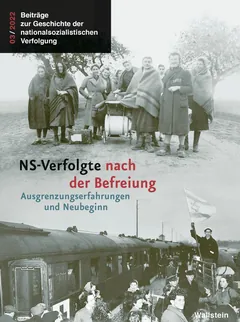
NS-Verfolgte nach der Befreiung, Ausgrenzungserfahrungen und Neubeginn
Sharon Geva: Ghetto Fighters, Mothers, Documenters. Female Holocaust Survivors in Israel
Sharon Geva
Ghetto Fighters, Mothers, Documenters
Female Holocaust Survivors in Israel
In 1946, Yitzhak Sadeh published an of statehood by discussing three aspects
essay titled ›My Sister on the Shore‹. It of the prominent position of women
was one of several essays he wrote as survivors in Israeli public discourse of
commander of the Palmach, the elite the time.
fighting force of the Haganah, the mili- The first aspect focuses on the
tary arm of the Yishuv, whose members women’s actions during the Holocaust,
embodied the persona of the ›New following which they came to symbol-
Jew‹, the 1 Sabra . In his essay, Sadeh de- ize the ultimate heroism. The women
scribed an encounter between a female who were ghetto fighters and partisans
Holocaust survivor who had just dis- during the war became well known in
embarked a ship of illegal immigrants Israel. They shared their stories of com-
and a young local man who waited bat and uprising, took part in public
on the beach for the new arrivals. The debates, and spoke at ceremonies and
woman is his exact opposite: weak and on memorial days. The second aspect
miserable, her clothes torn and her feet describes how women sur vivors’ ex-
bare, her head bowed and her eyes low- periences of motherhood made them a
ered, wishing she were dead. He is ro- symbol of the Jewish people’s revival
bust and tall, wearing khaki and boots, in a sovereign state after the Holo-
ready to fight for a Jewish state.2 The caust. Here, too, the survivors shared
article reflects the dichotomy between their stories and became well known
survivors and Israeli old-timers, with in Is rael. A third aspect regards the
added gender connotations, 3 branding extensive works of Holocaust docu-
the survivors as passive and weak, an mentation by women survivors which
antithesis to the active and robust Eretz are currently stored in Israel’s first
Yisrael Jews. Holocaust documentation centres:
The woman’s description in ›My The Ghetto Fighters’ House Museum
Sister on the Shore‹ reveals a narrow (1949) in Kibbutz Lohamei Hagetaot
view of female survivors who came to in Western Galilee, and Yad Vashem,
Palestine, later the State of Israel. In this The World Holocaust Remembrance
article, I discuss the history of women 5 Center in Jerusalem. survivors from a gender perspective Together, these three aspects con-
and show that they played an important firm that women Holocaust survivors
role in Israel from their arrival after in Israel were anything but silent and
World War II, through the 1950s and passive. Instead, they were an active,
during the Eichmann trial in Jerusalem prominent group that made its voice
(1961), which is considered a turning heard even back then. The findings shed
point in Israeli society’s perception new light on a period that, until just a
of the Holocaust and its survivors. 4 I few decades ago, was defined by Holo-
intend to disprove the claim that the caust researchers as ›the great silence‹
survivors kept silent in the early years of Holocaust survivors within Israeli
GHETTO FIGHTERS, MOTHERS, DOCUMENTERS 117
society. It has even been implied that fighters and partisans who were mem-
survivors were silenced by old-time Is- bers of socialist Zionist movements
raelis, at least until the Eichmann trial. 6 11 linked with Zionist left-wing parties.
The women survivors have proved that Three women stood out among them:
this was a period of talking, telling, and Rozka Korczak (1921-1988), a member
listening rather than one of silence. of HaShomer HaTzair and the Vilna
Ghetto underground (the Fareynegte
Women survivors as a symbol Partizaner Organizatsye; FPO), who
of Holocaust heroism: later joined the Jewish partisan battal-
Ghetto fighters and partisans ion commanded by Abba Kovner in
the Rudninkai woods; Zivia Lubetkin
During Israel’s early years of statehood, (1914-1978), a member of the Dror
the expression ›Holocaust and heroism‹ movement who was a leading figure
(Hashoah ve’Hagvura) was often re- in the Jewish Fighting Organization
peated in public discourse.7 It is part (ŸOB: Zydowska Organizacja Bojo-
of the official title of Israel’s National wa, Eyal) and one of the leaders of the
Holocaust Memorial Day, ›Holocaust Warsaw Ghetto Uprising; and Hai-
and Heroism Remembrance Day‹ (en- ka Grossman (1919-1996), a member
acted in 1959), and of the full name of of the Bialystok underground and a
Yad Vashem, ›The Holocaust Martyrs‹ partisan. All three became prominent
and Heroes’ Remembrance Author- public figures in Israel. They addressed
ity‹ (established in 1953). 8 The most audiences at public events such as po-frequently quoted Holocaust hero ism litical conferences, public gatherings,
stories were those of the underground and rallies, and they wrote articles and
armed resistance in the ghettos, par- books about the Holocaust. At the core
ticularly the Warsaw Ghetto (1943), of their stories was the armed resistance and the actions of partisan groups. of the underground members and their
Recognition of those acts of resistance movements.
stemmed from the general reverence of Rozka Korczak arrived in Eretz Yis-
the Zionist movement and the Jews of rael in December 1944. Shortly after Mandatory Palestine towards the tak- her arrival, she met with Yishuv leaders,
ing up of arms, a characteristic feature including Chaim Weizmann, President
of many national cultures. Armed re- of the World Zionist Organization,
sistance represented physical strength, who asked her to describe the life of the
courage, and resilience. 9 Within the Jews in the ghetto, the Jewish fighters
Zionist doctrine, being armed was a key in the woods, and the mass murder
feature of ›the new Jew‹ who was cap- of Jews. He was deeply impressed by
able of defending himself, an antithesis 12 her. In January and February 1945, to diaspora Jews. 10 Korczak appeared at various events
The Yishuv and its leaders there- organized by different movements and
fore warmly welcomed the surviving large bodies, including a meeting of the
fighters who immigrated to Eretz Yis- HaShomer HaTzair executive commit-rael. The Zionist movements to which tee, a conference of the Histadrut, and
they belonged applauded them, and the Working Women’s Council (Mo’et-
they became role models. The most zet HaPo’alot), one of the largest wom-
prominent among them were ghetto 13 en’s organizations of the time. 118 SHARON GEVA
tus in the ZOB and her participation
in the Warsaw Ghetto Uprising made
her a role model. Her arrival in Eretz
Yisrael on 24 May 1946 generated great
excitement, and the Yishuv institutions
and organizations put together a large
welcome celebration in her honour.16
On 8 June 1946, she was invited to
speak at the 15th conference of Hakib-
butz Hameuchad in Kibbutz Yagur. She spoke for several hours before an
audience that listened intently. Lub-
Fig. 1: Rozka Korczak (1921-1988), undated.
Source: Ghetto Fighters’ House Archive,
D. N. Western Galilee
mach commander Yitzhak Sadeh was
also impressed. He regarded her as a
fellow fighter, akin to the young Sabras.
When they met, he said to her, ›We will
be friends. I am also a partisan‹.14 This short sentence encapsulates the way
the Jewish society of Mandatory Pal-
estine and later Israel looked upon her
and other women survivors – namely, Fig. 2: Zivia Lubetkin (1914-1978) in they were worshipped. Along with her Kibbutz Yagur, June 1946. Source: Ghetto
public appearances, she wrote the story Galilee Fighters’ House Archive, D. N. Western of her experience fighting in the Vilna
underground and in the woods, and in
1946 she published her book Flames in
the Ashes 15 . etkin described the situation of the
Zivia Lubetkin arrived in Eretz Yis- Jews in Poland, specifically in Warsaw,
rael about a year and a half after Kor- during the war. The high point of her
czak. The Yishuv was familiar with her story was the Warsaw Ghetto Uprising,
since she had worked in the Warsaw which she recounted from the organiza-
Ghetto during the war for the Dror tion of the underground to the ghetto’s
movement linked with the Hakibbutz destruction. She went on to describe
Hameuchad movement. Her senior sta- how the surviving fighters, including
GHETTO FIGHTERS, MOTHERS, DOCUMENTERS 119
herself, escaped the ghetto through the
sewage system. The audience numbered
at least three thousand people, and she
left an enormous impression on them.
The press reported on the impressive
appearance of ›our contemporary Jew-
ish heroine‹.17
The audience was fascinated because
Lubetkin was presentable and an excel-
lent speaker, and because weapons were
at the centre of her story – how the un-
derground found, smuggled, and used
them. The audience comprised Yishuv
people who were themselves under-
ground fighters struggling to estab-
lish a state under the British Mandate.
They identified with the story, which
underscored the characteristics they
shared with the ghetto underground
fighters and bolstered Lubetkin’s sta- Fig. 3: Cover of the book by Zivia Lubetkin,
tus as a public figure and a role model. In Days of Destruction and Revolt [Heb.]
Shortly afterwards, her words were (Beit Lohamei Hagetaot and HaKibbutz
HaMeuchad, 1979).
put in writing and published in the
Hebrew press. 18 Excerpts appeared in
publications from the Jewish National
Fund 19 and the Ministry of Education of HaShomer HaTzair. She also wrote
and Culture.20 In 1961, Lubetkin was an extensive review of the situation
summoned to testify in the Eichmann of the Jews in the German General
trial. In her testimony, she described 24 Government during the war, and she
at length the Warsaw Ghetto under- often spoke at national and HaShomer
ground and the uprising. 21 The testimo- HaTzair Holocaust commemoration ny made a huge impression, 22 25 and it was ceremonies.
published after her death in the book In Grossman took part in all the public
Days of Destruction and Revolt . debates related to the Holocaust, such
Haika Grossman arrived in Israel as the debate in early 1952 about the
in May 1948, shortly after the estab- reparation agreement signed with West
lishment of the state, and settled in Germany. She and Lubetkin both vehe-
Kibbutz Evron in the Western Galilee. mently opposed any negotiations with
Like Korczak, she also wrote down Germany, and both spoke at protest the story of her underground days. rallies.26 They also spoke at assemblies of
Her book The People of the Under- left-wing Zionist parties in opposition to
ground, which describes the struggle of Germany’s armament and Israel’s arms
HaShomer HaTzair members during deal with Germany, and they played an the Holocaust, was published in 1950.23 active role in the storm that broke out
In 1958, she co-edited the book The following manifestations of antisemitism
Jewish Partisan 27 , a Holocaust anthology in Europe during that decade. 120 SHARON GEVA
Fig. 4: Haika Grossmann (1919-1996), undated [probably early 1950s at Kibbutz Evron]. Source: Ghetto Fighters’ House Archive, D. N. Western Galilee
In all of these public appearances, From the gender perspective, their
Grossman, Lubetkin, and Korczak womanhood empowered their public
emerged as Holocaust heroines who appearances and added weight to their
were once again leading a struggle main- stories. During the Holocaust, Kor-
ly meant to safeguard Jewish national czak, Lubetkin, and Grossman partici-
honour. During the Holocaust, they pated in actions that required qualities
had done the same thing as underground traditionally associated with men. They
fighters in occupied Poland. In Israeli operated publicly and were prepared
public opinion, they were viewed as to take up arms and use them. They
public leaders representing the uprising crossed the boundaries of gender dur-
ghetto fighters and as the symbolic lead- ing the Holocaust, if only temporarily,
ers of Jewish Holocaust victims. During in a way that promoted their heroic
the raging debate, Grossman called on image and empowered them and the
the public to spurn German reparations 29 stories they told and wrote.
and not shame the memory of the ›up- The period during which these fe-
rising heroes‹. Lubetkin said that both male Holocaust survivors became influ-
survivors and victims would never have ential figures in Israeli society coincides
agreed to these negotiations.28 with the timeline suggested by historian
GHETTO FIGHTERS, MOTHERS, DOCUMENTERS 121
Hanna Yablonka for the integration of In the 1950s, stories of motherhood
Holocaust survivors into Israeli society. during the Holocaust frequently fea-
Yablonka maintains that in the 1950s the tured in public discourse and came
survivors established themselves within to symbolize the Jews’ suffering and
Israeli society, and in the 1960s they 33 German cruelty. If a mother had been
became part of its core.30 In the 1950s, murdered and her children survived,
Korczak, Lubetkin, and Grossman grad- the story focused on the fate of her
ually established their public status in surviving children in Israel and their
direct association with their Holocaust integration into Israeli society. Initially,
history. They maintained this status in the protagonists of these stories were
the early 1960s and became involved mostly anonymous women, and the
in other public activities. Korczak was stories described their separation from
elected secretary of Kibbutz Ein Ha- their children – leaving them with a
horesh and went on to commemorate Christian family or in a convent, taking the Holocaust by becoming one of the them to trains that carried them away,
founders of the Givat Haviva Moreshet or seeing them be murdered in front
Holocaust and Research Center. Lub- 34 of their eyes. This reflected the social
etkin, one of the founders of Kibbutz perception of mother-child attachment
Lochamei Hagetaot and the kibbutz and viewed the separation as an act of
secretary, held several positions in the ultimate cruelty.
Hakibbutz Hameuchad movement and In the late 1950s and early 1960s, a
the Jewish Agency in the 1960s. In 1969, change occurred. Survivors who had
Grossman became a Knesset member for been mothers during the Holocaust and
the Maarach Party, a position she held started new families in Israel began tell-
until 1981 and again between 1984 and ing their stories in public. Their stories
1988. Her parliamentary work focused symbolized the revival of the Jewish
on social affairs, welfare, and health. She people after the Holocaust, either by
was appointed twice as deputy Knesset having new babies or by caring for
chairperson. 31 surviving orphans and bringing them
to Israel. Such were the stories of Riv-
Female Holocaust survivors ka Yoselevska (1915-2001), who had
as symbols of the Jewish lost her daughter in a mass murder in
people’s revival: Motherhood a town near Pinsk and later gave birth
to two sons in Israel, and of Lena
The stories of mothers who had sur- Küchler-Silberman (1910-1987), who
vived the Holocaust had a central place rescued orphaned children during the
in Israeli public discourse alongside Holocaust and later took a hundred
those of the women who were under- child survivors under her wing and
ground members and fought in the brought them to Israel.
ghettos and with the partisans. Much Yoselevska testified in the Eichmann
like the stories about armed struggle, trial. Of all the women survivors who
the stories of mothers affirmed soci- testified, her testimony was the only
ety’s accepted norms and values. In a one that focused on her story as a
patriarchal society like that found in Is- 35 mother. She described the massacre
rael,32 motherhood was perceived as the in the town of Pohost-Zahorodzki
ultimate accomplishment for women. in August 1942, explaining how her
122 SHARON GEVA
Fig. 5: Rivka Yoselevska (1915-2001) at Beit Fig. 6: Lena Küchler-Silbermann (1910-
Ha’Am, Jerusalem, during the Eichmann 1987), undated. Source: Ghetto Fighters’
trial, May 1961. Source: Ghetto Fighters’ House Archive, D. N. Western Galilee House Archive, D. N. Western Galilee
daughter was murdered in front of her was some relief in learning that, after
eyes and thrown into a pit with other she climbed out of the pit, she took
dead bodies, and how she herself was refuge in the forest, where she remained
thrown into the pit but climbed out of until the end of the war, and later came
it. 36 This was the first time the Israeli to Israel. The prosecutor then asked,
public heard a mother talk about how ›And now you are married and have
her daughter was murdered before her two children?‹ She affirmed this, and
during the Holocaust. Haim Gouri, a 39 the testimony ended. The temporal poet and intellectual, said that this was leap from the massacre in August 1942
the story that individualized the incon- to the end of the war and then to Israel
ceivable number ›six million‹ and let somehow comforted the shocked audi-
the voice of a woman who was ›one of ence. But it also highlighted the sharp
those numbers‹ be heard.37 transition from a horrible disaster to
Listening to the story was unbear- rehabilitation and revival; the daughter
able. When she described how she was murdered, but the mother survived
climbed out of the pit, prosecutor Gide- and had two more children. on Hausner told her, ›Please, let us be Even as it was being told, Yoselevs-
brief, Mrs. Yoselevska. This is hard to ka’s account turned from a personal ex-
tell and difficult to listen to. Tell us‹.38 perience into a story that had a national
His words indicated his desire to learn significance. In his concluding speech,
and the difficulty of listening. There prosecutor Hausner said, ›The fate of
GHETTO FIGHTERS, MOTHERS, DOCUMENTERS 123
Rivka Yoselevska is the fate of the entire The book received favourable re-
Jewish people.‹ 40 In saying this, he de- views, and Küchler-Silberman soon be-
clared the story of the survivor mother came famous. Rachel Yannait Ben-Zvi,
to be a national story, and he made her the President’s wife and an educator
into a symbol. None of the Holocaust and public activist herself, said, ›Every-
stories about men, whether fathers, hus- one should read this book as a devout
bands, or sons, were as powerful, and 43 Jew reads his prayer book‹. Like the
for good reason. Underlying Yoselevs- books of surviving ghetto fighters, such
ka’s story was the primal human bond as Korczak and Grossman, My Hun-
between a mother and her child. To the dred Children was considered a nation-Israeli audience, the story was clear, al book. Its protagonists represented
pertinent, and painful, a manifestation the revival. The person who made this
of revival that validated the calling of a possible was a survivor who voluntar-
Jewish woman in Is rael – which was to ily undertook the duties of a mother,
give birth and raise children. offering motherly love and expecting
This was how women survivors be- nothing in return.
came public figures merely by being Küchler-Silberman’s book was suc-
mothers, even if the children were not cessful because it had a happy end-
their own. In the 1950s, stories circu- ing. Despite its tragic beginnings, the
lated in Israel about women who cared children who had lost their biologi-
for orphaned children with great de- cal families survived and reached Is-
votion during the Holocaust, offering rael. The numerous press articles them foster homes. This was a typical about Küchler-Silberman pointed out
motherly act meant to help the chil- the transformation that ›her‹ children
dren cope with their distress. 41 The underwent from diaspora children to
woman survivor who gained the most ›Sabras‹. The general conclusion was fame for rescuing children was Lena that she rehabilitated them: from ex-
Küchler-Silberman, a teacher, educator, hausted, humiliated, and sick chil-
and psychologist. She was born and dren, they turned into strong, confi-
raised in Wieliczka, Poland, and after dent, and proud ones, thanks to their
graduating from the Hebrew Secondary ›mother‹. One female journalist wrote,
School in Krakow went on to study ›Her pride: »her« children all resem-
philosophy, psychology, and pedagogy. 44 ble Israeli-born ones in every way‹.
When the war ended, she went to the Küchler-Silberman wrote the same in
Jewish Committee House in Krakow, 45 the epilogue to her book.
where she came across children who The press published excerpts from
had been left alone in the world. She 46 the book, and Küchler-Silberman
gathered them in a house in Zakopane spoke before kibbutzim members and
and became their protector. They trav- 47 their children as well as teachers-
elled from there to Czecho slovakia and 48 to-be in a Yad Vashem seminar. My
France on their way to Israel, where Hundred Children was on the recom-
they arrived in 1949. The children found mended reading list put together by a
a home in Kibbutz Kvutzat Shiller. In Ministry of Education sub-committee
1959, Küchler-Silberman published her that determined what Holocaust litera-
book 49 My Hundred Children , which im- ture high school students should read.
mediately became a best-seller.42 In 1962, Küchler-Silberman received a
124 SHARON GEVA
citation from the President wife’s and moved to Warsaw in 1933 and went on
a Mother of the Year citation from the to publish articles on topics such as lit-
Hebrew Women’s Organization. 50 erature, culture, education, and psych-
The stories of Yoselevska and
Küchler-Silberman shed light on a cen-
tral reason for the prominence gained
by women survivors in Israel: they were
living proof that the calling of women
in Israel was motherhood, whether
natural or surrogate. They both sym-
bolized a post-devastation revival by
having Is raeli babies or rehabilitating
child survivors. Although Rivka Yose-
levska never retold her personal story
in public or in writing, her testimony in
the Eichmann trial remained unforget-
table. 51 Küchler-Silberman went on to
publish other books, and My Hundred Children Fig. 7: Rachel Auerbach (1903-1976), remained popular in Israel for
several decades. Archive, D. N. Western Galilee 52 undated. Source: Ghetto Fighters’ House
Female survivors as documenters
and commemorators ology. She was on the editorial staff of
A third aspect of the prominent posi- several journals. During World War II
tion of women survivors in the public she was in charge of the soup kitchen
discourse during Israel’s early years in the Warsaw Ghetto, which is when
of statehood concerns their efforts to she began documenting events. She col-
document the Holocaust and com- lected testimonies and wrote reports
memorate it in various establishments. about the situation of the Jews in the
Two of these survivors stood out in ghetto. After the war, she became active
particular. The first was Rachel Auer- in the Jewish historical committee in
bach (1903-1976), a member of 54 Oyneg Poland. In 1950 she moved to Israel,
Shabat, the historical documentation and she began working at Yad Vashem
project of Dr. Emanuel Ringelblum53 in 1954. Within a decade she was in
during the Holocaust, who later be- charge of managing a collection of three
came head of Yad Vashem’s testimony thousand testimonies that included tens
department. The second was Miriam of thousands of documents in fifteen
Novitch (1908-1990), a member of the 55 languages. She published books, the
French underground who was appoint- first of which, In the Streets of Warsaw, ed curator, documenter, and researcher 56 earned favourable reviews, and her
at the Holocaust Museum in Kibbutz articles about the Holocaust appeared
Lochamei Hagetaot. 57 in the daily press.
Auerbach was a writer, translator, Miriam Novitch graduated from the
and publicist. She studied philosophy Jewish High School in Vilna and then
and history at a Lvov university, then travelled to France, where she was cer-
GHETTO FIGHTERS, MOTHERS, DOCUMENTERS 125
tified as a teacher of Russian and Ger- tation and Study Center). She dedicated
man.58 In addition to Russian, German, her life to unearthing documents and
and Yiddish, she eventually mastered keeping a record of survivor testimonies,
which she later published as books.59
The book she wrote about the Sobibor
death camp was published in Hebrew
(1978) and English (1980). She was the
first curator of the Ghetto Fighters’
House Art Museum and organized
Holo caust exhibitions throughout Is-rael. She travelled frequently to Europe
to collect materials for the museum,
visiting research institutes and various
other establishments where she found
documents and artworks.60
Like the surviving ghetto fighters,
Auerbach and Novitch considered
themselves representatives of the sur-
vivors as well as all Jewish victims. In
an article she wrote opposing the nego-
tiations for a reparation agreement with
West Germany, Auerbach said, ›We
Fig. 8: Miriam Novitch (1908-1990), have an open account with the German
undated [probably 1985]. Source: people‹. By ›we‹, she meant all those
Ghetto Fighters’ House Archive,
D. N. Western Galilee who had experienced the Holocaust
first hand.61 In one press interview, the reporter referred to Miriam Novitch
as the ›ambassador of the exterminated
generation‹ and said she represented all
French, Italian, English, and Hebrew. Holocaust victims, murdered and sur-During the Holocaust she was a mem- 62 vivors alike.
ber of the French underground, and she The documenters’ work was of na-
was arrested and sent to Camp Vittel. tional significance, just as the surviv-
In the camp, she met poet and educator ing ghetto fighters symbolized heroism
Itzhak Katzenelson, who later perished and the mothers symbolized the revival
in Auschwitz. After the war, she put that followed the Holocaust. Auerbach
great effort into locating, retrieving, and thought her work was meaningful for
rescuing his poem ›The Song of the future generations. She also used this Murdered Jewish People‹, which she had argument when she urged survivors
buried in a hidden spot in Camp Vittel. 63 to tell their stories. She thought that
In Israel, she was one of the founders together, the individual stories would
of the Ghetto Fighters’ House in Kib- produce a full picture of the Jews’ fate
butz Lochamei Hagetaot, named after during the Holocaust. This was very
Katzenelson (officially titled the Itzhak different from the limited and some-
Katzenelson Holocaust and Jewish Re- times simplistic message of the stories
sistance Heritage Mu seum, Documen- told by the ghetto fighters and mothers.
126 SHARON GEVA
Auerbach and Novitch joined other the stories of mothers. They gave press
survivor historians who worked in Is- interviews, wrote articles and books,
rael in documenting and researching told their stor ies before live audi ences,
the Holocaust, as historian Boaz Cohen and encouraged other survivors to
has shown.64 However, unlike the male speak.
historians, they did not marry and have Through all of these activities,
children, instead consciously dedicating women survivors furthered the core
their lives to documentation. Auerbach values of Israeli society. In all cases,
said, ›I survived to testify. This is my their work carried notable national sig-
duty‹. 65 Describing her work, Novitch nificance. The ghetto fighters and parti-
said, ›I think this is the only reason for sans reinforced the characteristic values
my survival‹. 66 In her later years, she of the Sabra and made proud the Israelis
said, ›I have lived so that no one forgets who sought comfort for the destruction
what they did to us‹.67 The documents in heroic stories. The surviving mothers
they gathered have served as the basis embodied the revival of the Jewish
for Holocaust research. From this per- people that rose from the ashes after the
spective, their work was typically fe- Holocaust. The documenters dedicated
male: They remained behind the scenes themselves entirely to revival in nation-
and never at the front. al documentation and commemoration
Two aspects of their work indicate institutions at the expense of family life
how prominent women survivors were and raising children.
in Israel. First, their intensive work The previous generation of Holo-
promoted the establishment of the first caust and Israeli social researchers de-
institutions that documented the Holo- scribed the 1950s as an era of silence,
caust in Israel. Second, since the 1950s claiming that Holocaust survivors were
and the early 1960s, their work has unwilling to talk about their past. But proven that the survivors did not avoid the Holocaust was, without a doubt,
speaking out and were not silenced. a central issue discussed by the Israeli
They related their history and were public. In the late 1990s, historian An-
willing to document it. ita Shapira resolved this dissonance by
distinguishing between ›public mem-
Conclusion: Active, dynamic, ory‹, which regarded the Holocaust
enterprising ory‹, comprising private, highly per- as a colossal event, and ›private mem-
Women survivors make up a large and sonal stories. According to Shapira,
highly diversified group in Israel. This public memory reigned in the 1950s,
article has focused on three central while private memory did not enter the
aspects that characterized this group public discourse until the Eichmann
in the early years of the State of Israel. 68 trial. A review of the place of female
Each of these aspects, not to men- Holocaust survivors in Israel in the
tion all of them combined, proves that 1950s and during the trial indicates that
women survivors were active, dynamic, Shapira’s argument requires revision.
and enterprising. They related Holo- Women survivors formed a prominent
caust stor ies that were collective, such and active group in all aspects of Israeli
as those of surviving ghetto fighters society from the very beginning. Inves-
and partisans, and personal, such as tigating their visibility from a gender GHETTO FIGHTERS, MOTHERS, DOCUMENTERS 127
perspective sheds additional light on 70 ready proven this point. The present
this point. Once again, this shows how article demonstrates the importance of
important it is to take women into ac- considering the role of women while
count in researching the Holocaust, as researching Holocaust survivors, both
researcher Joan Ringelheim has noted.69 in Israel, as in this case, and in other
Numerous women researchers have al- societies and places.
Notes
1 Oz Almog, The Sabra: A Portrait (Tel Vashem website [Heb.], https://www.yad
Aviv: Am Oved Publishers, 1997). vashem.org/about/yad-vashem-law.
2 Yitzhak Sadeh, ›My Sister on the Shore‹, html (retrieved May 19, 2021).
Around the Bonfire [Heb.] (Ein Harod, 9 George Mosse, The Image of Man: The
1946), 50-51. Creation of Modern Masculinity (New 3 This dichotomy echoes the well-known York/Oxford: Oxford University Press,
binary pattern described in gender theo- 1996).
ries based on Simone de Beauvoir’s dis- 10 Anita Shapira, Land and Power: The
tinction between man, the autonomous Zionist Resort to Force, 1881-1948 (New
subject, and woman, the other, the ob- York/Oxford: Oxford University Press,
ject. Simon de Beauvoir, The Second Sex 1992).
(London: Vintage, 2011). 11 Neima Barzel, A Sacrifice Unredeemed: 4 Anita Shapira, ›The Holocaust: Private The Encounter between the Leaders of
Memories, Public Memory‹, Jewish So- the Ghetto Fighters and Israeli Society
cial Studies 4/2 (1998), 40; Tom Segev, [Heb.] (Jerusalem: Mosad Bialik, 1998).
The Seventh Million: The Israelis and 12 ›My meeting with Weizmann‹, in: Ye-
the Holocaust (New York: Hill and huda Tubin, Levi Dror and Yosef Rab
Wang, 1993), 323-366. (eds.), Ruzka Korchak-Marle: The Per-5 For information on the early years of sonality and Philosophy of Life of a
the Ghetto Fighters’ Museum, see Lior Fighter [Heb.], (Tel Aviv: Moreshet and
Inbar, ›Kibbutz Lohamei Hagetaot: Sifriat Po’alim, 1988), 125.
A Site of Memory in a Challenging 13 All her appearances left a strong im-
Reality, 1949-1959‹ [Heb.], Moreshet 16 pression, as if she were the first witness
(2019), 92-134. On Yad Vashem at that to tell the Yishuv about the fate of East
time, see Boaz Cohen, Israeli Holocaust European Jews in the Holocaust, which
Research: Birth and Evolution (London/ was not the case chronologically. Dina
New York: Routledge, 2013). Porat, ›With Forgiveness and Grace:
6 Idith Zertal, The Nation and Death: The encounter between Ruzka Kor-
History, Memory, and Politics [Heb.] czak, the Yishuv and its leaders 1944-
(Or Yehuda, 2002); Shapira, ›The Holo- 1946‹, The Journal of Israeli History
caust‹ (see note 4), 40. 16/2 (1995), 101-132. 7 Roni Stauber, The Holocaust in Israeli 14 ›Letters to Chesia Rosenberg‹ (see note
Public Debate in the 1950s: Ideology 12), 221.
and Memory (London: Vallentine Mit- 15 Rozka Korczak, Flames in the Ashes
chell, 2007). [Heb.] (Merhavyah: ha-Kibbutz ha-artsi
8 ›»Martyrs« and Heroes Remembrance ha-Shomer ha-tsa’ir, 1946).
Day Law, 5719-1959‹, The Holocaust 16 Sharon Geva, ›With and Despite the
Martyrs’ and Heroes’ Remembrance Burden of the Past: 1946 in the Life
Day, The Knesset website [Heb.], Story of Zivia Lubetkin‹, Moreshet 14
https://main.knesset.gov.il/EN/About/ (2017), 225-227.
Pages/shoah.aspx (retrieved May 19, 17 ›All Day Saturday Zivia Recounted the
2021); ›»Martyrs« and Heroes Re- Story of the Struggle and the Extermi-
membrance (Yad Vashem) Law‹, Yad nation‹ [Heb.], Davar (June 9, 1946), 128 SHARON GEVA
1; ›The Heroic Story of the Warsaw Holocaust Heroines in Israeli Society
Ghetto Uprising Retold at the Hakib- [Heb.] (Tel Aviv, 2010), 271-275.
butz Hameuchad Conference‹ [Heb.], 30 Hanna Yablonka, ›Shoah-Überlebende
Mishmar (June 9, 1946), 4. in Israel – Schlüsselereignisse und wich-
18 Zivia Lubetkin, ›The Last Ones on the tige Integrationsphasen‹, in Miri Frei-
Wall‹, The 15th Conference of Hakib- lich (ed.), Der Dornbusch, der nicht
butz Hameuchad [Heb.] (Ein Harod, verbrannte: Überlebende der Shoah in
1946/47); Zivia Lubetkin, ›Thus the Israel (Friedrich-Ebert-Stiftung and Beit
People was Led to Slaughter …‹ [Heb.], Berl Academic College, 2012), 32-59.
Davar (June 10-19, 1946), 2. 31 Knesset member Haika Grossman-Or-
19 Zivia Lubetkin, ›The Last Ones on the kin, The Knesset website [Heb.], https://
Wall‹ [Heb.], In Memory of the Holo- www.knesset.gov.il/mk/eng/mk_eng.
caust and the Uprising (Jerusalem, 1953), asp?mk_individual_id_t=347 (retrieved
45-46. May 19, 2021). 20 Zivia Lubetkin, ›The Last Days of the 32 Sara Ruddick, ›Maternal Thinking‹, Fe-
Ghetto‹, From the Days of the Holocaust minist Studies 6/2 (July 1980), 342-367.
and Heroism [Heb.] (Jerusalem, 1956), 33 For example: ›Holocaust Horrors‹, He-
28-35. rut (September 11, 1952), 1; Battia Ei-21 Testimony of Zivia Lubetkin-Zucker- senstein, ›Women in the Ghetto‹ [Heb.],
man, The Trial of Adolf Eichmann, vol. Davar (April 12, 1953), 2.
1, session 25. Nizkor Project, https:// 34 Korczak, Flames in the Ashes (see note
www.nizkor.org/session-025-01-eich 15), 103; Raya Kagan, Hell’s Office
mann-adolf/ (retrieved July 4, 2021). Women (Nashim be-lishkat ha-gehi-
22 For example: Haim Gouri, ›Why Fear nom) [Heb.] (Merchavia: Sifriat Po’alim
Death‹, Facing the Glass Booth: The 1947), 203.
Jerusalem Trial of Adolf Eichmann (De- 35 Of the women who testified in the Eich-
troit: Wayne State University, 2004), 46. mann trial, six were mothers during the
23 Haika Grossman, The People of the Un- Holocaust. Yoselevska was the only one
derground (Anshe ha-mahteret) [Heb.] whose story stood at her testimony’s
(Merhavia: Sifriat Po’alim, 1950). center. 24 Haika Grossman, ›In the General 36 Testimony of Rivka Yoselevska, The
Government Lands‹, in M. Gefen, Hai- Trial of Adolf Eichmann, vol. 1, session
ka Grossman, Shalom Cholawski, et 30. Nizkor Project, https://www.nizkor.
al. (eds.), The Jewish Partisan (Sefer org/session-030-03-eichmann-adolf/
HaPartizanim HaYehudim) B [Heb.] (retrieved July 4, 2021).
(Merhavia: Sifriyat Po’alim, 1958), 11- 37 Gouri, ›Marta’s Sabbath Dress‹, Facing
251. the Glass Booth (note 22), 50-51. 25 ›Twenty thousand armed Jews fought in 38 Testimony of Rivka Yoselevska (see
the ghettoes and in the woods‹, Davar note 36).
(September 18, 1958), 2; ›Tonight, a rally 39 Ibid.
in Kibbutz Yad Mordechai‹ [Heb.], Al 40 Oral summation by the Attorney Ge-
HaMishmar (May 5, 1959), 1. neral, The Trial of Adolf Eichmann, vol. 26 For example: ›Partisans and under- 5, session 111. Nizkor Project, https://
ground fighters call: Negotiating with www.nizkor.org/session-111-01-eich
Bonn – a betrayal of the victims‹ [Heb.], mann-adolf/ (retrieved July 4, 2021).
Al HaMishmar (January 6, 1952), 1. 41 Sybil Milton, in Esther Katz and Joan
27 For example: ›Ghetto fighters Z. Lu- Ringelheim (eds.), Proceedings of the
betkin and H. Grossman call to pro- Conference on Women Surviving: The
test against restoring the Wehmacht‹, Holocaust (New York: Institute for Re-
LaMerchav (March 6, 1955), 4; Haika search in History, 1983), 19.
Grossman, ›Let us call for memories 42 Hava Razili, ›Which were Israel’s best-
to remind us‹, Al HaMishmar (April sellers?‹ [Heb.], Ha’aretz (March 4,
22, 1960), 7; ›Rozka Korczak: Save the 1960), 7.
honour of the living nation‹ [Heb.], Al 43 Eisenberg, ›The Jewish child during the
HaMishmar (July 12, 1959), 4. Holocaust‹ [Heb.], Haboker (Novem-28 See note 26 above. ber 6, 1959), 8. 29 Sharon Geva, To the Unknown Sister: 44 Tikva Weinstock, ›A hundred children
GHETTO FIGHTERS, MOTHERS, DOCUMENTERS 129
and their mother‹, Ma’ariv (August 28, Kibbutz Lochamei Hagetaot [Heb.],
1959), 6. vol. 2 (Beit Lochamei Hagetaot and Ha-
45 Lena Küchler-Silberman, My Hundred Kibbutz HaMeuchad, 1984), 500.
Children [Heb.] (Tel Aviv: Kiriat Sefer, 59 For example: Miriam Novitch, Le
1960), 451-5. Passage des Barbares: Contribution á
46 For example: Lena Küchler, ›Mira‹ l’histoire de la déportation et de la résis-
[Heb.], Dvar Ha-poelet 25/9-10 (1959), tance des juifs grecs (Nice, 1972; Hebrew
267. edition, 1979). For testimony examples
47 Shlomo, ›Lena Küchler speaks‹ [Heb.], see Miriam Novitch, ›Report regarding
LaMerchav (February 3, 1960), 2. the extermination of the Jews of Thes-
48 ›Future teachers assemble for a Yad saloniki‹ [Heb.], Collection Section, File
Vashem seminar‹ [Heb.], Al HaMishmar 2438, Ghetto Fighters’ House Archive.
(November 10, 1960), 4. 60 Tzvika Dror, Miriam’s Burden: The Life 49 Program for teaching the Holocaust Story of Miriam Novitch [Heb.] (Kib-
and Heroism, file of the committee de- butz Lohamei Hagetaot, 2008), 117-123,
termining the materials for high school 170-171.
Holocaust studies (Ministry of Educa- 61 Auerbach, ›Our account with the Ger-
tion) [Heb.], Central Zionist Archives, man people‹, Molad 8, 41 (December
C6/528. 1941), 68. 50 Haim Nagid, ›Mother of the Year cita- 62 Ya’akov Haelyon, ›The Ambassador
tion awarded to Lena Küchler‹ [Heb.], of the Generation of the Exterminatio‹
Davar (December 22, 1962), 16. [Heb.], Ma’ariv (May 31, 1960), 14. 51 Hanna Yablonka, The State of Israel vs. 63 Rachel Auerbach, ›Testimonies‹ [Heb.],
Adolf Eichmann (New York: Schocken Davar (November 4, 1955), 5-6.
Books, 2004). 64 Cohen, Israeli Holocaust Research (note 52 Over the years, at least four Hebrew 5).
editions of the book have appeared in 65 Rivka Gorfein, ›Rachel Auerbach’s »In
Israel, the last in 2004. the Streets of Warsaw«‹ [Heb.], Al Ha-53 Samuel D. Kassow, Who Will Write mishma (June 6, 1954), 5.
Our History? Emanuel Ringelblum, the 66 Rachel Adiv, ›Memorial for the Holo-
Warsaw Ghetto, and the Oyneg Shabes caust and the Uprising‹ [Heb.], Dvar
Archive (Bloomington: Indiana Univer- Ha-poelet 24/4 (April 1960), 76-77.
sity Press, 2007). 67 Zvika Dror (ed.), Testimonies: Stories 54 Boaz Cohen, ›Rachel Auerbach, Yad of 96 Members of Kibbutz Lochamei
Vashem, and Israeli Holocaust Memo- Hagetaot [Heb.], vol. 2 (Beit Lochamei
ry‹, Polin 20 (2008), 197-211. Hagetaot and HaKibbutz HaMeuchad,
55 Joseph Kermish, ›Rachel Auerbach and 1984), 517.
Her Work‹, in: Rachel Auerbach, War- 68 Shapira, ›The Holocaust‹ (see note 4),
saw Testaments [Heb.] (Tel Aviv, 1985), 40-58.
13. 69 Joan Ringelheim, ›Women and the
56 Emanuel Ben-Gurion, ›In the Streets of Holo caust: A Reconsideration of Re-
Warsaw‹ [Heb.], Davar (June 18, 1954), search‹, Signs: Journal of Women in Cul-
6. ture and Society 10/4 (1985), 741-61. 57 Rachel Auerbach, ›Chapters of Devo- 70 Judith Baumel-Schwartz and Dalia Ofer
tion‹ [Heb.], Davar (April 26, 1957), 5. (eds.), Her Story, My Story? Writing 58 Zvika Dror (interviewer and editor), about Women during the Holocaust
Testimonies: Stories of 96 Members of (Bern: Peter Lang, 2020).