
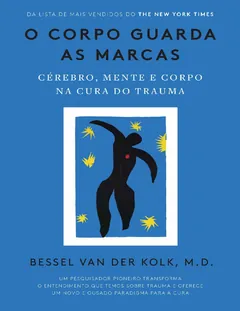
O corpo guarda as marcas
Notas
Este capítulo é longo, por isso está dividido em 3 partes.
PRÓLOGO: O TRAUMA
1. V. Felitti et al., “Relationship of Childhood Abuse and Household Dysfunction to Many of the
Leading Causes of Death in Adults: e Adverse Childhood Experiences (ACE) Study”.
American Journal of Preventive Medicine, v. 14, n. 4, pp. 245-58, 1998.
1. LIÇÕES APRENDIDAS COM VETERANOS DO VIETNÃ
1. A. Kardiner, e Traumatic Neuroses of War. Nova York: P. Hoeber, 1941. Descobri mais tarde
que muitos livros sobre trauma de guerra haviam sido publicados na época da Primeira e da
Segunda Guerras Mundiais, mas, como Abram Kardiner escreveu em 1947, “nos últimos 25
anos, a questão das perturbações neuróticas resultantes de guerras tem sido objeto de muita
oscilação no interesse do público e nos caprichos psiquiátricos. O público, como também a
psiquiatria, não mantém o interesse, que foi enorme depois da Primeira Guerra Mundial. Por
conseguinte, esses problemas não são tema de estudos constantes”.
2. Ibid., p. 7.
3. B. A. van der Kolk, “Adolescent Vulnerability to Post Traumatic Stress Disorder”. Psychiatry, v.
48, pp. 365-70, 1985.
4. S. A. Haley, “When the Patient Reports Atrocities: Speci c Treatment Considerations of the
Vietnam Veteran”. Archives of General Psychiatry, v. 30, n. 2, pp. 191-6, 1974.
5. E. Hartmann, B. A. van der Kolk e M. Ol eld, “A Preliminary Study of the Personality of the
Nightmare Sufferer”. American Journal of Psychiatry, v. 138, pp. 794-7, 1981; B. A. van der Kolk
et al., “Nightmares and Trauma: Life-long and Traumatic Nightmares in Veterans”. American
Journal of Psychiatry, v. 141, pp. 187-90, 1984.
6. B. A. van der Kolk e C. Ducey, “ e Psychological Processing of Traumatic Experience:
Rorschach Patterns in PTSD”. Journal of Traumatic Stress, v. 2, n. 3, pp. 259-74, 1989.
7. Diferentemente das lembranças normais, as traumáticas mais parecem fragmentos de
sensações, emoções, reações e imagens que continuam a ser revividas no presente. Os estudos
de memórias do Holocausto realizados em Yale por Dori Laub e Nanette C. Auerhahn, bem
como o livro Holocaust Testimonies: e Ruins of Memory, de Lawrence L. Langer, e, sobretudo,
as descrições da natureza das lembranças traumáticas feitas por Pierre Janet, em 1889, 1893 e
1905, nos ajudaram a organizar o que víamos. Esse trabalho será examinado no capítulo sobre a
memória.
8. D. J. Henderson, “Incest”. In: A. M. Freedman e H. I. Kaplan (orgs.), Comprehensive Textbook of
Psychiatry. 2. ed. Baltimore: Williams & Wilkins, 1974, p. 1536.
9. Ibid.
10. K. H. Seal et al., “Bringing the War Back Home: Mental Health Disorders Among 103,788 U. S.
Veterans Returning from Iraq and Afghanistan Seen at Department of Veterans Affairs
Facilities”. Archives of Internal Medicine, v. 167, n. 5, pp. 476-82, 2007; C. W. Hoge, J. L.
Auchterlonie e C. S. Milliken, “Mental Health Problems, Use of Mental Health Services, and
Attrition from Military Service A er Returning from Deployment to Iraq or Afghanistan”.
Journal of the American Medical Association, v. 295, n. 9, pp. 1.023-32, 2006.
11. D. G. Kilpatrick e B. E. Saunders, Prevalence and Consequences of Child Victimization: Results
from the National Survey of Adolescents: Final Report. Charleston, SC: Centro de Pesquisa e
Tratamento de Vítimas de Crime Nacionais, Departamento de Psiquiatria e Ciências
Comportamentais, Universidade Médica da Carolina do Sul, 1997.
12. Departamento de Saúde e Serviços Humanos, Administração em Crianças, Jovens e Famílias,
Child Maltreatment 2007, 2009. Ver também Departamento de Saúde e Serviços Humanos,
Administração para Crianças e Famílias, Administração em Crianças, Jovens e Famílias,
Agência Infantil, Child Maltreatment 2010, 2011.
2. REVOLUÇÕES NO MODO DE VER A MENTE E O CÉREBRO
1. G. Ross Baker et al., “ e Canadian Adverse Events Study: e Incidence of Adverse Events
among Hospital Patients in Canada”. Canadian Medical Association Journal, v. 170, n. 11, pp.
1.678-86, 2004; A. C. McFarlane et al., “Posttraumatic Stress Disorder in a General Psychiatric
Inpatient Population”. Journal of Traumatic Stress, v. 14, n. 4, pp. 633-45, 2001; Kim T. Mueser et
al., “Trauma and Posttraumatic Stress Disorder in Severe Mental Illness”. Journal of Consulting
and Clinical Psychology, v. 66, n. 3, p. 493, 1998; National Trauma Consortium,
<www.nationaltraumaconsortium.org>.
2. E. Bleuler, Dementia Praecox or the Group of Schizophrenias. Trad. de J. Zinkin. Washington,
DC: International Universities Press, 1950, p. 227.
3. L. Grinspoon, J. Ewalt e R. I. Shader, “Psychotherapy and Pharmacotherapy in Chronic
Schizophrenia”. American Journal of Psychiatry, v. 124, n. 12, pp. 1.645-52, 1968. Ver também L.
Grinspoon, J. Ewalt e R. I. Shader, Schizophrenia: Psychotherapy and Pharmacotherapy
(Baltimore: Williams and Wilkins, 1972).
4. T. R. Insel, “Neuroscience: Shining Light on Depression”. Science, v. 317, n. 5.839, pp. 757- 8,
2007. Ver também C. M. France, P. H. Lysaker e R. P. Robinson, “ e ‘Chemical Imbalance’
Explanation for Depression: Origins, Lay Endorsement e Clinical Implications” (Professional
Psychology: Research and Practice, v. 38, pp. 411-20, 2007).
5. B. J. Deacon e J. J. Lickel, “On the Brain Disease Model of Mental Disorders”. Behavior
erapist, v. 32, n. 6, 2009.
6. J. O. Cole et al., “Drug Trials in Persistent Dyskinesia (Clozapine)”. In: R. C. Smith, J. M. Davis
e W. E. Fahn (orgs.), Tardive Dyskinesia, Research and Treatment. Nova York: Plenum, 1979.
7. E. F. Torrey, Out of the Shadows: Confronting America’s Mental Illness Crisis. Nova York: John
Wiley & Sons, 1997. Não obstante, outros fatores também foram importantes, como a Lei da
Saúde Mental Comunitária, promulgada pelo presidente Kennedy em 1963, que fez o governo
federal assumir os custos da assistência de saúde mental e recompensar os estados por tratarem
os doentes mentais em sua própria comunidade.
8. Associação Americana de Psiquiatria, Comitê de Nomenclatura. Grupo de Trabalho de Revisão
do DSM-3. Diagnostic and Statistical Manual of Mental Disorders (American Psychiatric
Publishing, 1980).
9. S. F. Maier e M. E. Seligman, “Learned Helplessness: eory and Evidence”. Journal of
Experimental Psychology: General, v. 105, n. 1, p. 3, 1976. Ver também M. E. Seligman, S. F.
Maier e J. H. Geer, “Alleviation of Learned Helplessness in the Dog” (Journal of Abnormal
Psychology, v. 73, n. 3, p. 256, 1968); e R. L. Jackson, J. H. Alexander e S. F. Maier, “Learned
Helplessness, Inactivity, and Associative De cits: Effects of Inescapable Shock on Response
Choice Escape Learning” (Journal of Experimental Psychology: Animal Behavior Processes, v. 6,
n. 1, p. 1, 1980).
10. G. A. Bradshaw e A. N. Schore, “How Elephants Are Opening Doors: Developmental
Neuroethology, Attachment and Social Context”. Ethology, v. 113, pp. 426-36, 2007.
11. D. Mitchell, S. Koleszar e R. A. Scopatz, “Arousal and T-Maze Choice Behavior in Mice: A
Convergent Paradigm for Neophobia Constructs and Optimal Arousal eory”. Learning and
Motivation, v. 15, pp. 287-301, 1984. Ver também D. Mitchell, E. W. Osborne e M. W. O’Boyle,
“Habituation Under Stress: Shocked Mice Show Non-associative Learning in a T-maze”
(Behavioral and Neural Biology, v. 43, pp. 212-7, 1985).
12. B. A. van der Kolk et al., “Inescapable Shock, Neurotransmitters and Addiction to Trauma:
Towards a Psychobiology of Post Traumatic Stress”. Biological Psychiatry, v. 20, pp. 414-25,
1985.
13. C. Hedges, War Is a Force at Gives Us Meaning. Nova York: Random House Digital, 2003.
14. B. A. van der Kolk, “ e Compulsion to Repeat Trauma: Revictimization, Attachment and
Masochism”. Psychiatric Clinics of North America, v. 12, pp. 389-411, 1989.
15. R. L. Solomon, “ e Opponent-Process eory of Acquired Motivation: e Costs of Pleasure
and the Bene ts of Pain”. American Psychologist, v. 35, n. 8, pp. 691-712, 1980.
16. H. K. Beecher, “Pain in Men Wounded in Battle”. Annals of Surgery, v. 123, n. 1, pp. 96-105,
1946.
17. B. A. van der Kolk et al., “Endogenous Opioids, Stress Induced Analgesia, and Posttraumatic
Stress Disorder”. Psychopharmacology Bulletin, v. 25, n. 3, pp. 417-21, 1989. Ver também R. K.
Pitman et al., “Naloxone-Reversible Analgesic Response to Combat-Related Stimuli in
Posttraumatic Stress Disorder: A Pilot Study” (Archives of General Psychiatry, v. 47, n. 6, pp.
541-4, 1990); e R. L. Solomon, op. cit.
18. J. A. Gray e N. McNaughton, “ e Neuropsychology of Anxiety: Reprise”. Nebraska Symposium
on Motivation, v. 43, pp. 61-134, 1996. Ver também C. G. DeYoung e J. R. Gray, “Personality
Neuroscience: Explaining Individual Differences in Affect, Behavior, and Cognition”. In: Philip
J. Corr e Gerald Matthews (orgs.), e Cambridge Handbook of Personality Psychology
(Cambridge, UK: Cambridge University Press, 2009), pp. 323-46.
19. M. J. Raleigh et al., “Social and Environmental In uences on Blood Serotonin Concentrations
in Monkeys”. Archives of General Psychiatry, v. 41, n. 4, pp. 505-10, 1984.
20. B. A. van der Kolk et al., “Fluoxetine in Post Traumatic Stress”. Journal of Clinical Psychiatry, v.
55, n. 12, pp. 517-22, 1994.
21. Para os fãs do teste de Rorschach: o Prozac inverteu a razão C + CF/FC.
22. Grace E. Jackson, Rethinking Psychiatric Drugs: A Guide for Informed Consent. Bloomington,
IN: AuthorHouse, 2005; Robert Whitaker, Anatomy of an Epidemic: Magic Bullets, Psychiatric
Drugs and the Astonishing Rise of Mental Illness in America. Nova York: Random House, 2011.
23. Volto a essa questão no capítulo 15, onde analiso o estudo que comparou o Prozac com a
EMDR, e concluiu que essa abordagem psicoterápica mostrou melhores resultados a longo
prazo do que o Prozac no tratamento da depressão, ao menos em casos de trauma ocorrido na
idade adulta.
24. J. M. Zito et al., “Psychotropic Practice Patterns for Youth: A 10-Year Perspective”. Archives of
Pediatrics and Adolescent Medicine, v. 157, n. 1, pp. 17-25, 2003.
25. <en.wikipedia.org/wiki/List_of_largest_selling_pharmaceutical_products>.
26. Lucette Lagnado, “U. S. Probes Use of Antipsychotic Drugs on Children”. Wall Street Journal, 11
ago. 2013.
27. Katie omas, “J. & J. to Pay $ 2.2 Billion in Risperdal Settlement”. New York Times, 4 nov. 2013.
28. M. Olfson et al., “Trends in Antipsychotic Drug Use by Very Young, Privately Insured
Children”. Journal of the American Academy of Child & Adolescent Psychiatry, v. 49, n. 1, pp. 13-
23, 2010.
29. M. Olfson et al., “National Trends in the Outpatient Treatment of Children and Adolescents
with Antipsychotic Drugs”. Archives of General Psychiatry, v. 63, n. 6, p. 679, 2006.
30. A. J. Hall et al., “Patterns of Abuse among Unintentional Pharmaceutical Overdose Fatalities”.
Journal of the American Medical Association, v. 300, n. 22, pp. 2.613-20, 2008.
31. Na década passada, a dra. Marcia Angell e o dr. Arnold Relman, ambos editores-chefes da mais
prestigiosa publicação médica dos Estados Unidos, o New England Journal of Medicine,
deixaram seus cargos em razão do poder excessivo da indústria farmacêutica sobre a pesquisa
médica, os hospitais e os médicos. Numa carta ao New York Times, em 28 de dezembro de 2004,
ambos destacaram que, no ano anterior, um laboratório despendera 28% de sua receita (mais
de 6 bilhões de dólares) em gastos de marketing e administrativos, enquanto gastava apenas
metade desse montante em pesquisa e desenvolvimento; uma renda líquida de 30% das receitas
era normal para a indústria farmacêutica. Angell e Relman assim concluíram a carta: “A classe
médica deveria romper sua dependência dos laboratórios e educar seus próprios membros.”
Infelizmente, é tão provável que isso aconteça quanto os políticos se afastarem daqueles que
nanciam suas campanhas.
3. O EXAME DO CÉREBRO: A REVOLUÇÃO DA NEUROCIÊNCIA
1. B. Roozendaal, B. S. McEwen e S. Chattarji, “Stress, Memory and the Amygdala”. Nature
Reviews Neuroscience, v. 10, n. 6, pp. 423-33, 2009.
2. R. Joseph, e Right Brain and the Unconscious. Nova York: Plenum, 1995.
3. O lme holandês O ataque (De Aanslag), de 1986, baseado no romance homônimo de Harry
Mulisch (Ed. bras.: O atentado, Rio de Janeiro: José Olympio, 2007), ilustra bem o poder de
impressões emocionais fortes e precoces na determinação de paixões intensas na vida adulta.
4. Essa é a essência da terapia cognitivo-comportamental. Ver E. B. Foa, M. J. Friedman e T. M.
Keane (orgs.), Effective Treatments for PTSD: Practice Guidelines from the International Society
for Traumatic Stress Studies (Nova York: Guilford, 2000).
4. CORRENDO ATRÁS DA VIDA: A ANATOMIA DA SOBREVIVÊNCIA
1. R. Sperry, “Changing Priorities”. Annual Review of Neuroscience, v. 4, pp. 1-15, 1981.
2. A. A. Lima et al., “ e Impact of Tonic Immobility Reaction on the Prognosis of Posttraumatic
Stress Disorder”. Journal of Psychiatric Research, v. 44, n. 4, pp. 224-8, 2010.
3. P. Janet, L’Automatisme psychologique. Paris: Félix Alcan, 1889.
4. R. R. Llinás, I of the Vortex: From Neurons to Self. Cambridge, MA: MIT Press, 2002. Ver
também R. Carter e C. D. Frith, Mapping the Mind (Berkeley: University of California Press,
1998); R. Carter, e Human Brain Book (Penguin, 2009); e J. J. Ratey, A User’s Guide to the
Brain (Nova York: Pantheon, 2001), p. 179.
5. B. D. Perry et al., “Childhood Trauma, the Neurobiology of Adaptation and Use Dependent
Development of the Brain: How States Become Traits”. Infant Mental Health Journal, v. 16, n. 4,
pp. 271-91, 1995.
6. Sou grato a meu amigo David Servan-Schreiber, já falecido, o primeiro a fazer essa distinção
em seu livro e Instinct to Heal.
7. E. Goldberg, e Executive Brain: Frontal Lobes and the Civilized Mind. Londres: Oxford
University Press, 2001.
8. G. Rizzolatti e L. Craighero, “ e Mirror-Neuron System”. Annual Review of Neuroscience, v. 27,
pp. 169-92, 2004. Ver também M. Iacoboni et al., “Cortical Mechanisms of Human Imitation”
(Science, v. 286, n. 5449, pp. 2.526-8, 1999); C. Keysers e V. Gazzola, “Social Neuroscience:
Mirror Neurons Recorded in Humans” (Current Biology, v. 20, n. 8, pp. R353-4, 2010); J. Decety
e P. L. Jackson, “ e Functional Architecture of Human Empathy” (Behavioral and Cognitive
Neuroscience Reviews, v. 3, n. 2, pp. 71-100, 2004); M. B. Schippers et al., “Mapping the
Information Flow from One Brain to Another During Gestural Communication” (Proceedings
of the National Academy of Sciences of the United States of America, v. 107, n. 20, pp. 9.388-93,
2010); e A. N. Meltzoff e J. Decety, “What Imitation Tells Us About Social Cognition: A
Rapprochement between Developmental Psychology and Cognitive Neuroscience”
(Philosophical Transactions of the Royal Society, London, v. 358, n. 1431, pp. 491-500, 2003).
9. D. Goleman, Emotional Intelligence. Nova York: Random House, 2006. [Ed. bras.: Inteligência
emocional. Rio de Janeiro: Objetiva, 1995.] Ver também V. S. Ramachandran, “Mirror Neurons
and Imitation Learning as the Driving Force Behind ‘the Great Leap Forward’ in Human
Evolution” (Edge, 31 maio. 2000). Disponível em: <edge.org/conversation/mirror-neurons-and-
imitation-learning-as-the-driving-force-behind-the-great-leap-forward-in-human-evolution>. Acesso em: 13 abr. 2013.
10. G. M. Edelman e J. A. Gally, “Reentry: A Key Mechanism for Integration of Brain Function”.
Frontiers in Integrative Neuroscience, v. 7, 2013.
11. J. LeDoux, “Rethinking the Emotional Brain”. Neuron, v. 73, n. 4, pp. 653-76, 2012. Ver também
J. S. Feinstein et al., “ e Human Amygdala and the Induction and Experience of Fear”
(Current Biology, v. 21, n. 1, pp. 34-8, 2011).
12. O córtex pré-frontal medial é a parte mediana do cérebro (os neurocientistas se referem a ele
como “as estruturas da linha mediana”). Essa área compreende um conglomerado de estruturas
inter-relacionadas: o córtex órbito-pré-frontal, o córtex pré-frontal inferior e o dorsal e uma
grande estrutura chamada cingulado anterior, todas envolvidas no monitoramento do estado
interno do organismo e na escolha da resposta apropriada. Exemplos em D. Diorio, V. Viau e
M. J. Meaney, “ e Role of the Medial Prefrontal Cortex (Cingulate Gyrus) in the Regulation of
Hypothalamic-Pituitary-Adrenal Responses to Stress” (Journal of Neuroscience, v. 13, n. 9, pp.
3.839-47, 1993); J. P. Mitchell, M. R. Banaji e C. N. Macrae, “ e Link between Social
Cognition and Self-Referential ought in the Medial Prefrontal Cortex” (Journal of Cognitive
Neuroscience, v. 17, n. 8, pp. 1.306-15, 2005); A. D’Argembeau et al., “Valuing One’s Self: Medial
Prefrontal Involvement in Epistemic and Emotive Investments in Self-Views” (Cerebral Cortex,
v. 22, pp. 659-67, 2012); M. A. Morgan, L. M. Romanski e J. E. LeDoux, “Extinction of
Emotional Learning: Contribution of Medial Prefrontal Cortex” (Neuroscience Letters, v. 163,
pp. 109-13, 1993); L. M. Shin, S. L. Rauch e R. K. Pitman, “Amygdala, Medial Prefrontal Cortex
e Hippocampal Function in PTSD” (Annals of the Nova York Academy of Sciences, v. 1071, n. 1,
pp. 67-79, 2006); L. M. Williams et al., “Trauma Modulates Amygdala and Medial Prefrontal
Responses to Consciously Attended Fear” (NeuroImage 29, n. 2, pp. 347-57, 2006); M. Koenig e
J. Grafman, “Posttraumatic Stress Disorder: e Role of Medial Prefrontal Cortex and
Amygdala” (Neuroscientist, v. 15, n. 5, pp. 540-8, 2009); e M. R. Milad, I. Vidal-Gonzalez e G. J.
Quirk, “Electrical Stimulation of Medial Prefrontal Cortex Reduces Conditioned Fear in a
Temporally Speci c Manner” (Behavioral Neuroscience, v. 118, n. 2, pp. 389, 2004).
13. B. A. van der Kolk, “Clinical Implications of Neuroscience Research in PTSD”. Annals of the
New York Academy of Sciences, v. 1071, n. 1, pp. 277-93, 2006.
14. P. D. MacLean, e Triune Brain in Evolution: Role in Paleocerebral Functions. Nova York:
Springer, 1990.
15. U. Lawrence, e Power of Trauma: Conquering Post Traumatic Stress Disorder. Bloomington,
IN: iUniverse, 2009.
16. R. Carter e C. D. Frith, op. cit. Ver também A. Bechara et al., “Insensitivity to Future
Consequences Following Damage to Human Prefrontal Cortex” (Cognition, v. 50, n. 1, pp. 7-15,
1994); A. Pascual-Leone et al., “ e Role of the Dorsolateral Prefrontal Cortex in Implicit
Procedural Learning” (Experimental Brain Research, v. 107, n. 3, pp. 479-85, 1996); e S. C. Rao,
G. Rainer e E. K. Miller, “Integration of What and Where in the Primate Prefrontal Cortex”
(Science, v. 276, n. 5.313, pp. 821-4, 1997).
17. H. S. Duggal, “New-Onset PTSD A er alamic Infarct”. American Journal of Psychiatry, v.
159, n. 12, p. 2113-a, 2002. Ver também R. A. Lanius et al., “Neural Correlates of Traumatic
Memories in Posttraumatic Stress Disorder: A Functional MRI Investigation” (American
Journal of Psychiatry, v. 158, n. 11, pp. 1.920-2, 2001); e I. Liberzon et al., “Alteration of
Corticothalamic Perfusion Ratios during a PTSD Flashback” (Depression and Anxiety, v. 4, n. 3,
pp. 146-50, 1996).
18. R. Noyes Jr. e R. Kletti, “Depersonalization in Response to Life- reatening Danger”.
Comprehensive Psychiatry, v. 18, n. 4, pp. 375-84, 1977. Ver também M. Sierra e G. E. Berrios,
“Depersonalization: Neurobiological Perspectives” (Biological Psychiatry, v. 44, n. 9, pp. 898-
908, 1998).
19. D. Church et al., “Single-Session Reduction of the Intensity of Traumatic Memories in Abused
Adolescents A er EFT: A Randomized Controlled Pilot Study”. Traumatology, v. 18, n. 3, pp.
73-9, 2012; D. Feinstein e D. Church, “Modulating Gene Expression rough Psychotherapy:
e Contribution of Noninvasive Somatic Interventions”. Review of General Psychology, v. 14, n.
4, pp. 283-95, 2010. Ver também <www.vetcases.com>.
5. AS CONEXÕES ENTRE O CORPO E O CÉREBRO
1. C. Darwin, e Expression of the Emotions in Man and Animals. Londres: Oxford University
Press, 1998. (Com excelente introdução e comentários de Paul Ekman, pioneiro no estudo das
emoções.) [Ed. bras.: A expressão das emoções no homem e nos animais. São Paulo: Companhia
das Letras, 2009.]
2. Ibid., p. 71.
3. Ibid.
4. Ibid., pp. 71-2.
5. I. Pavlov, 1927.
6. Id., Lectures on Conditioned Re exes. Nova York: International Publishers, 1928.
7. P. Ekman, Facial Action Coding System: A Technique for the Measurement of Facial Movement.
Palo Alto, CA: Consulting Psychologists, 1978. Ver também C. E. Izard, e Maximally
Discriminative Facial Movement Coding System (MAX) (Newark, DE: University of Delaware
Instructional Resource Center, 1979).
8. S. W. Porges, e Polyvagal eory: Neurophysiological Foundations of Emotions, Attachment,
Communication e Self-Regulation. Nova York: Norton, 2011. (Norton Series on Interpersonal
Neurobiology).
9. Nome que Stephen Porges e Sue Carter dão ao sistema vagal ventral.
<www.pesi.com/bookstore/A_Neural_Love_Code__ e_Body_s_Need_to_Engage_and_Bond
-details.aspx>.
10. S. S. Tomkins, Affect, Imagery, Consciousness. Nova York: Springer, 1962. v. 1: e Positive
Affects; S. S. Tomkins, Affect, Imagery, Consciousness. Nova York: Springer, 1963. v. 2: e
Negative Affects.
11. P. Ekman, Emotions Revealed: Recognizing Faces and Feelings to Improve Communication and
Emotional Life. Nova York: Macmillan, 2007 [Ed. bras.: A linguagem das emoções: Revolucione
sua comunicação e seus relacionamentos reconhecendo todas as expressões das pessoas ao redor.
São Paulo: Lua de Papel, 2011]; P. Ekman, e Face of Man: Expressions of Universal Emotions
in a New Guinea Village. Nova York: Garland, 1980.
12. Ver, por exemplo, B. M. Levinson, “Human/Companion Animal erapy” (Journal of
Contemporary Psychotherapy, v. 14, n. 2, pp. 131-44, 1984); D. A. Willis, “Animal erapy”
(Rehabilitation Nursing, v. 22, n. 2, pp. 78-81, 1997); e A. H. Fine (org.), Handbook on Animal-
Assisted erapy: eoretical Foundations and Guidelines for Practice (Waltham, MA: Academic
Press, 2010).
13. P. Ekman, R. W. Levenson e W. V. Friesen, “Autonomic Nervous System Activity Distinguishes
between Emotions”. Science, v. 221, n. 4616, pp. 1208-10, 1983.
14. J. H. Jackson, “Evolution and Dissolution of the Nervous System”. In: J. Taylor (org.), Selected
Writings of John Hughlings Jackson. Londres: Stapes, 1958, pp. 45-118.
15. Foi Porges quem me mostrou esse exemplo da loja de animais.
16. S. W. Porges, J. A. Doussard-Roosevelt e A. K. Maiti, “Vagal Tone and the Physiological
Regulation of Emotion”. In: N. A. Fox (org.), e Development of Emotion Regulation: Biological
and Behavioral Considerations. Chicago: University of Chicago Press, 1994, pp. 167-86.
(Monographs of the Society for Research in Child Development). <www.amazon.com/ e-
Development-Emotion-Regulation-Considerations/dp/0226259404>.
17. V. Felitti et al., “Relationship of Childhood Abuse and Household Dysfunction to Many of the
Leading Causes of Death in Adults: e Adverse Childhood Experiences (ACE) Study”.
American Journal of Preventive Medicine, v. 14, n. 4, pp. 245-58, 1998.
18. S. W. Porges, “Orienting in a Defensive World: Mammalian Modi cations of Our Evolutionary
Heritage: A Polyvagal eory”. Psychophysiology, v. 32, pp. 301-18, 1995.
19. B. A. van der Kolk, “ e Body Keeps the Score: Memory and the Evolving Psychobiology of
Posttraumatic Stress”. Harvard Review of Psychiatry, v. 1, n. 5, pp. 253-65, 1994.
6. PERDER O CORPO, PERDER O SELF
1. K. L. Walsh et al., “Resiliency Factors in the Relation between Childhood Sexual Abuse and
Adulthood Sexual Assault in College-Age Women”. Journal of Child Sexual Abuse, v. 16, n. 1,
pp. 1-17, 2007.
2. A. C. McFarlane, “ e Long-Term Costs of Traumatic Stress: Intertwined Physical and
Psychological Consequences”. World Psychiatry, v. 9, n. 1, pp. 3-10, 2010.
3. W. James, “What Is an Emotion?”. Mind, v. 9, n. 34, pp. 188-205, 1884.
4. R. L. Bluhm et al., “Alterations in Default Network Connectivity in Posttraumatic Stress
Disorder Related to Early-Life Trauma”. Journal of Psychiatry & Neuroscience, v. 34, n. 3, p. 187,
2009. Ver também J. K. Daniels et al., “Switching between Executive and Default Mode
Networks in Posttraumatic Stress Disorder: Alterations in Functional Connectivity” (Journal of
Psychiatry & Neuroscience, v. 35, n. 4, p. 258, 2010).
5. A. Damásio, e Feeling of What Happens: Body and Emotion in the Making of Consciousness.
Nova York: Hartcourt Brace, 1999. Damásio a rma textualmente: “A consciência foi inventada
para que pudéssemos conhecer a vida”, p. 31.
6. Ibid., p. 28.
7. Ibid., p. 29.
8. Id., Self Comes to Mind: Constructing the Conscious Brain. Nova York: Random House Digital,
2012, p. 17. [Ed. bras.: E o cérebro criou o homem. São Paulo: Companhia das Letras, 2011.]
9. Id., e Feeling of What Happens, op. cit., p. 256.
10. António R. Damásio et al., “Subcortical and Cortical Brain Activity During the Feeling of Self-
Generated Emotions”. Nature Neuroscience, v. 3, v. 10, pp. 1.049-56, 2000.
11. A. A. T. S. Reinders et al., “One Brain, Two Selves”. NeuroImage, v. 20, n. 4, pp. 2119-25, 2003.
Ver também E. R. S. Nijenhuis, O. Van der Hart e K. Steele, “ e Emerging Psychobiology of
Trauma-Related Dissociation and Dissociative Disorders”. In: H. A. H. D’Haenen, J. A. den
Boer e P. Willner (Orgs.), Biological Psychiatry, v. 2, (West Sussex, UK: Wiley 2002), pp. 1079-
198; J. Parvizi e A. R. Damásio, “Consciousness and the Brain Stem” (Cognition, v. 79, n. 1, pp.
135-59, 2001); F. W. Putnam, “Dissociation and Disturbances of Self ”. In: D. Cicchetti e S. L.
Toth (Orgs.), Dysfunctions of the Self, v. 5 (Nova York: University of Rochester Press, 1994), pp.
251-65; e F. W. Putnam, Dissociation in Children and Adolescents: A Developmental Perspective
(Nova York: Guilford, 1997).
12. A. D’Argembeau et al., “Distinct Regions of the Medial Prefrontal Cortex Are Associated with
Self-Referential Processing and Perspective Taking”. Journal of Cognitive Neuroscience, v. 19, n.
6, pp. 935-44, 2007. Ver também N. A. Farb et al., “Attending to the Present: Mindfulness
Meditation Reveals Distinct Neural Modes of Self-Reference” (Social Cognitive and Affective
Neuroscience, v. 2, n. 4, pp. 313-22, 2007); e B. K. Hölzel et al., “Investigation of Mindfulness
Meditation Practitioners with Voxel-Based Morphometry” (Social Cognitive and Affective
Neuroscience, v. 3, n. 1, pp. 55-61, 2008).
13. P. A. Levine, Healing Trauma: A Pioneering Program for Restoring the Wisdom of Your Body.
Berkeley: North Atlantic, 2008; P. A. Levine, In an Unspoken Voice: How the Body Releases
Trauma and Restores Goodness. Berkeley: North Atlantic, 2010.
14. P. Ogden e K. Minton, “Sensorimotor Psychotherapy: One Method for Processing Traumatic
Memory”. Traumatology, v. 6, n. 3, pp. 149-73, 2000; P. Ogden, K. Minton e C. Pain, Trauma
and the Body: A Sensorimotor Approach to Psychotherapy. Nova York: Norton, 2006. (Norton
Series on Interpersonal Neurobiology).
15. D. A. Bakal, Minding the Body: Clinical Uses of Somatic Awareness. Nova York: Guilford, 2001.
16. São inumeráveis os estudos sobre esse tema. Eis uma breve amostra para quem desejar estudá-
lo mais a fundo: J. Wolfe et al., “Posttraumatic Stress Disorder and War-Zone Exposure as
Correlates of Perceived Health in Female Vietnam War Veterans” (Journal of Consulting and
Clinical Psychology, v. 62, n. 6, pp. 1.235-40, 1994); L. Zoellner, M. L. Goodwin e E. B. Foa,
“PTSD Severity and Health Perceptions in Female Victims of Sexual Assault” (Journal of
Traumatic Stress, v. 13, n. 4, pp. 635-49, 2000); E. M. Sledjeski, B. Speisman e L. C. Dierker,
“Does Number of Lifetime Traumas Explain the Relationship between PTSD and Chronic
Medical Conditions? Answers from the National Comorbidity Survey-Replication (NCS-R)”
(Journal of Behavioral Medicine, v. 31, n. 4, pp. 341-9, 2008); J. A. Boscarino, “Posttraumatic
Stress Disorder and Physical Illness: Results from Clinical and Epidemiologic Studies” (Annals
of the New York Academy of Sciences. v. 1032, n. 1, pp. 141-53, 2004); M. Cloitre et al.,
“Posttraumatic Stress Disorder and Extent of Trauma Exposure as Correlates of Medical
Problems and Perceived Health among Women with Childhood Abuse” (Women & Health, v.
34, n. 3, pp. 1-17, 2001); D. Lauterbach, R. Vora e M. Rakow, “ e Relationship between
Posttraumatic Stress Disorder and Self-Reported Health Problems” (Psychosomatic Medicine, v.
67, n. 6, pp. 939-47, 2005); B. S. McEwen, “Protective and Damaging Effects of Stress
Mediators” (New England Journal of Medicine, v. 338, n. 3, pp. 171-9, 1998); P. P. Schnurr e B. L.
Green, Trauma and Health: Physical Health Consequences of Exposure to Extreme Stress
(Washington, DC: Associação Americana de Psicologia, 2004).
17. P. K. Trickett, J. G. Noll e F. W. Putnam, “ e Impact of Sexual Abuse on Female Development:
Lessons from a Multigenerational, Longitudinal Research Study”. Development and
Psychopathology, v. 23, n. 2, pp. 453, 2011.
18. K. Kosten e F. Giller Jr., “Alexithymia as a Predictor of Treatment Response in Post-Traumatic
Stress Disorder”. Journal of Traumatic Stress, v. 5, n. 4, pp. 563-73, 1992.
19. G. J. Taylor e R. M. Bagby, “New Trends in Alexithymia Research”. Psychotherapy and
Psychosomatics, v. 73, n. 2, pp. 68-77, 2004.
20. R. D. Lane et al., “Impaired Verbal and Nonverbal Emotion Recognition in Alexithymia”.
Psychosomatic Medicine, v. 58, n. 3, pp. 203-10, 1996.
21. H. Krystal e J. H. Krystal, Integration and Self-Healing: Affect, Trauma, Alexithymia. Nova York:
Analytic, 1988.
22. P. Frewen et al., “Clinical and Neural Correlates of Alexithymia in Posttraumatic Stress
Disorder”. Journal of Abnormal Psychology, v. 117, n. 1, pp. 171-81, 2008.
23. D. Finkelhor, R. K. Ormrod e H. A. Turner, “Re-Victimization Patterns in a National
Longitudinal Sample of Children and Youth”. Child Abuse & Neglect, v. 31, n. 5, pp. 479-502,
2007; J. A. Schumm, S. E. Hobfoll e N. J. Keogh, “Revictimization and Interpersonal Resource
Loss Predicts PTSD among Women in Substance-Use Treatment”. Journal of Traumatic Stress, v.
17, n. 2, pp. 173-81, 2004; J. D. Ford, J. D. Elhai, D. F. Connor e B. C. Frueh, “Poly-Victimization
and Risk of Posttraumatic, Depressive, and Substance Use Disorders and Involvement in
Delinquency in a National Sample of Adolescents”. Journal of Adolescent Health, v. 46, n. 6, pp.
545-52, 2010.
24. P. Schilder, “Depersonalization”. In: Introduction to a Psychoanalytic Psychiatry. Nova York:
International Universities Press, 1952, p. 120.
25. S. Arzy et al., “Neural Mechanisms of Embodiment: Asomatognosia Due to Premotor Cortex
Damage”. Archives of Neurology, v. 63, n. 7, pp. 1.022-5, 2006. Ver também S. Arzy et al.,
“Induction of an Illusory Shadow Person” (Nature, v. 443, n. 7.109, p. 287, 2006); S. Arzy et al.,
“Neural Basis of Embodiment: Distinct Contributions of Temporoparietal Junction and
Extrastriate Body Area” (Journal of Neuroscience, v. 26, n. 31, pp. 8.074-81, 2006); O. Blanke et
al., “Out-of-Body Experience and Autoscopy of Neurological Origin” (Brain, v. 127, parte 2, pp.
243-58, 2004); e M. Sierra et al., “Unpacking the Depersonalization Syndrome: An Exploratory
Factor Analysis on the Cambridge Depersonalization Scale” (Psychological Medicine, v. 35, n.
10, pp. 1.523-32, 2005).
26. A. A. T. Reinders et al., “Psychobiological Characteristics of Dissociative Identity Disorder: A
Symptom Provocation Study”. Biological Psychiatry, v. 60, n. 7, pp. 730-40, 2006.
27. Em seu livro Focusing, Eugene Gendlin criou a expressão “sensação percebida”: “Uma sensação
percebida não é uma experiência mental, mas física. Uma percepção corporal de uma situação,
de uma pessoa ou de um evento”. E. Gendlin, Focusing. Nova York: Random House Digital,
1982.
28. C. Steuwe et al., “Effect of Direct Eye Contact in PTSD Related to Interpersonal Trauma: An
fMRI Study of Activation of an Innate Alarm System”. Social Cognitive and Affective
Neuroscience, v. 9, n. 1, pp. 88-97, 2012.
7. ENTRAR NA MESMA ONDA: APEGO E SINTONIA
1. N. Murray, E. Koby e B. van der Kolk, “ e Effects of Abuse on Children’s oughts”, capítulo 4
de Psychological Trauma (Washington, DC: American Psychiatric Press, 1987).
2. Mary Main, que pesquisou o apego, contou a crianças de 6 anos a história de um menino
abandonado pela mãe e lhes pediu que imaginassem o que acontecia em seguida. A maioria das
crianças que, quando lactentes, haviam experimentado relacionamentos seguros com a mãe
criavam um enredo imaginativo com nal feliz, enquanto crianças que cinco anos antes tinham
com a família uma relação de apego classi cada como desorganizada tendiam a criar fantasias
catastró cas e com frequência davam respostas assustadas como “Os pais vão morrer” ou “O
menino vai se matar”. Em M. Main, N. Kaplan e J. Cassidy, “Security in Infancy, Childhood,
and Adulthood: A Move to the Level of Representation” (Monographs of the Society for Research
in Child Development, v. 50 [1-2, n. de série 209], 1985).
3. J. Bowlby, Attachment and Loss. Nova York: Random House, 1969. v. 1: Attachment; J. Bowlby,
Attachment and Loss. Nova York: Penguin, 1975. v. 2: Separation: Anxiety and Anger; J. Bowlby,
Attachment and Loss. Nova York: Basic, 1980. v. 3: Loss: Sadness and Depression; J. Bowlby, “ e
Nature of the Child’s Tie to His Mother”. International Journal of Psycho-Analysis, v. 39, n. 5, pp.
350-73, 1958.
4. C. Trevarthen, “Musicality and the Intrinsic Motive Pulse: Evidence from Human
Psychobiology and Rhythms, Musical Narrative, and the Origins of Human Communication”.
Musicae Scientiae, n. especial, pp. 157-213, 1999.
5. A. Gopnik e A. N. Meltzoff, Words, oughts, and eories. Cambridge, MA: MIT Press, 1997;
A. N. Meltzoff e M. K. Moore, “Newborn Infants Imitate Adult Facial Gestures”. Child
Development, v. 54, n. 3, pp. 702-9, 1983; A. Gopnik, A. N. Meltzoff e P. K. Kuhl, e Scientist in
the Crib: Minds, Brains and How Children Learn. Nova York: HarperCollins, 2009.
6. E. Z. Tronick, “Emotions and Emotional Communication in Infants”. American Psychologist, v.
44, n. 2, pp. 112, 1989. Ver também E. Tronick, e Neurobehavioral and Social-Emotional
Development of Infants and Children (Nova York: Norton, 2007); E. Tronick e M. Beeghly,
“Infants’ Meaning-Making and the Development of Mental Health Problems” (American
Psychologist, v. 66, n. 2, p. 107, 2011); e A. V. Sravish et al., “Dyadic Flexibility During the Face-
to-Face Still-Face Paradigm: A Dynamic Systems Analysis of Its Temporal Organization”
(Infant Behavior and Development, v. 36, n. 3, pp. 432-7, 2013).
7. M. Main, “Overview of the Field of Attachment”. Journal of Consulting and Clinical Psychology,
v. 64, n. 2, pp. 237-43, 1996.
8. D. W. Winnicott, Playing and Reality. Nova York: Psychology Press, 1971. [Ed. bras.: O brincar e
a realidade. Rio de Janeiro: Imago, 1975.] Ver também D. W. Winnicott, “ e Maturational
Processes and the Facilitating Environment” (International Psycho-Analytical Library, v. 64,
1965); e D. W. Winnicott, rough Paediatrics to Psycho-Analysis: Collected Papers (Nova York:
Brunner/Mazel, 1975).
9. Como vimos no capítulo 6 e como Damásio demonstrou, essa percepção da realidade interior
tem raízes, ao menos em parte, na ínsula, a estrutura cerebral que desempenha um papel
central na comunicação entre corpo e mente, e que com frequência se mostra lesionada em
pessoas com histórico de trauma crônico.
10. D. W. Winnicott, Primary Maternal Preoccupation. Londres: Tavistock, 1956, pp. 300-5.
11. S. D. Pollak et al., “Recognizing Emotion in Faces: Developmental Effects of Child Abuse and
Neglect”. Developmental Psychology, v. 36, n. 5, pp. 679, 2000.
12. P. M. Crittenden, “Peering into the Black Box: An Exploratory Treatise on the Development of
Self in Young Children”. In: D. Cichetti e S. L. Toth (orgs.), Disorders and Dysfunctions of the
Self. Rochester, NY: University of Rochester Press, 1994, p. 79. Rochester Symposium on
Developmental Psychopathology, v. 5; P. M. Crittenden e A. Landini, Assessing Adult
Attachment: A Dynamic-Maturational Approach to Discourse Analysis. Nova York: Norton,
2011.
13. P. M. Crittenden, “Children’s Strategies for Coping with Adverse Home Environments: An
Interpretation Using Attachment eory”. Child Abuse & Neglect, v. 16, n. 3, pp. 329-43, 1992.
14. M. Main, op. cit.
15. Ibid.
16. Ibid.
17. E. Hesse e M. Main, “Frightened, reatening e Dissociative Parental Behavior in Low-Risk
Samples: Description, Discussion e Interpretations”. Development and Psychopathology, v. 18, n.
2, pp. 309-43, 2006. Ver também E. Hesse e M. Main, “Disorganized Infant, Child and Adult
Attachment: Collapse in Behavioral and Attentional Strategies” (Journal of the American
Psychoanalytic Association, v. 48, n. 4, pp. 1097-127, 2000).
18. M. Main, op. cit.
19. E. Hesse e M. Main, “Frightened, reatening e Dissociative Parental Behavior in Low-Risk
Samples”, op. cit., p. 310.
20. Vimos isso de um ponto de vista biológico quando examinamos a “imobilização sem medo” no
capítulo 5. S. W. Porges, “Orienting in a Defensive World: Mammalian Modi cations of Our
Evolutionary Heritage: A Polyvagal eory”, op. cit., pp. 301-18.
21. M. H. van Ijzendoorn, C. Schuengel e M. Bakermans-Kranenburg, “Disorganized Attachment
in Early Childhood: Meta-analysis of Precursors, Concomitants, and Sequelae”. Development
and Psychopathology, v. 11, n. 2, pp. 225-49, 1999.
22. Ibid.
23. N. W. Boris, M. Fueyo e C. H. Zeanah, “ e Clinical Assessment of Attachment in Children
Under Five”. Journal of the American Academy of Child & Adolescent Psychiatry, v. 36, n. 2, pp.
291-3, 1997; K. Lyons-Ruth, “Attachment Relationships among Children with Aggressive
Behavior Problems: e Role of Disorganized Early Attachment Patterns”. Journal of Consulting
and Clinical Psychology, v. 64, n. 1, p. 64, 1996.
24. S. W. Porges et al., “Infant Regulation of the Vagal ‘Brake’ Predicts Child Behavior Problems: A
Psychobiological Model of Social Behavior”. Developmental Psychobiology, v. 29, n. 8, pp. 697-
712, 1996.
25. L. Hertsgaard et al., “Adrenocortical Responses to the Strange Situation in Infants with
Disorganized/Disoriented Attachment Relationships”. Child Development, v. 66, n. 4, pp. 1.100-
6, 1995; G. Spangler e K. E. Grossmann, “Biobehavioral Organization in Securely and
Insecurely Attached Infants”. Child Development, v. 64, n. 5, pp. 1.439-50, 1993.
26. E. Hesse e M. Main, “Frightened, reatening e Dissociative Parental Behavior in Low-Risk
Samples”, op. cit.
27. M. H. van Ijzendoorn et al., op. cit.
28. B. Beebe e F. M. Lachmann, Infant Research and Adult Treatment: Co-constructing Interactions.
Nova York: Routledge, 2013; B. Beebe, F. Lachmann e J. Jaffe, “Mother-Infant Interaction
Structures and Presymbolic Self- and Object Representations”. Psychoanalytic Dialogues, v. 7, n.
2, pp. 133-82, 1997.
29. R. Yehuda et al., “Vulnerability to Posttraumatic Stress Disorder in Adult Offspring of
Holocaust Survivors”. American Journal of Psychiatry, v. 155, n. 9, pp. 1.163-71, 1998. Ver
também R. Yehuda et al., “Relationship between Posttraumatic Stress Disorder Characteristics
of Holocaust Survivors and eir Adult Offspring” (American Journal of Psychiatry, v. 155, n. 6,
pp. 841-3, 1998); R. Yehuda et al., “Parental Posttraumatic Stress Disorder as a Vulnerability
Factor for Low Cortisol Trait in Offspring of Holocaust Survivors” (Archives of General
Psychiatry, v. 64, n. 9, p. 1.040, 2007); e R. Yehuda et al., “Maternal, Not Paternal, PTSD Is
Related to Increased Risk for PTSD in Offspring of Holocaust Survivors” (Journal of Psychiatric
Research, v. 42, n. 13, pp. 1.104-11, 2008).
30. R. Yehuda et al., “Transgenerational Effects of PTSD in Babies of Mothers Exposed to the WTC
Attacks during Pregnancy”. Journal of Clinical Endocrinology and Metabolism, v. 90, n. 7, pp.
4.115-8, 2005.
31. G. Saxe et al., “Relationship between Acute Morphine and the Course of PTSD in Children
with Burns”. Journal of the American Academy of Child & Adolescent Psychiatry, v. 40, n. 8, pp.
915-21, 2001. Ver também G. N. Saxe et al., “Pathways to PTSD, Part I: Children with Burns”
(American Journal of Psychiatry, v. 162, n. 7, pp. 1299-304, 2005).
32. C. M. Chemtob, Y. Nomura e R. A. Abramovitz, “Impact of Conjoined Exposure to the World
Trade Center Attacks and to Other Traumatic Events on the Behavioral Problems of Preschool
Children”. Archives of Pediatrics and Adolescent Medicine, v. 162, n. 2, pp. 126, 2008. Ver
também P. J. Landrigan et al., “Impact of September 11 World Trade Center Disaster on
Children and Pregnant Women” (Mount Sinai Journal of Medicine, v. 75, n. 2, pp. 129-34, 2008).
33. D. Finkelhor, R. K. Ormrod e H. A. Turner, “Polyvictimization and Trauma in a National
Longitudinal Cohort”. Development and Psychopathology, v. 19, n. 1, pp. 149-66, 2007; J. D. Ford
et al., “Poly-victimization and Risk of Posttraumatic, Depressive e Substance Use Disorders and
Involvement in Delinquency in a National Sample of Adolescents”. Journal of Adolescent Health,
v. 46, n. 6, pp. 545-52, 2010; J. D. Ford et al., “Clinical Signi cance of a Proposed Development
Trauma Disorder Diagnosis: Results of an International Survey of Clinicians”. Journal of
Clinical Psychiatry, v. 74, n. 8, pp. 841-9, 2013.
34. Family Pathways Project, <www.challiance.org/academic/family-pathways-project>.
35. K. Lyons-Ruth e D. Block, “ e Disturbed Caregiving System: Relations among Childhood
Trauma, Maternal Caregiving, and Infant Affect and Attachment”. Infant Mental Health Journal,
v. 17, n. 3, pp. 257-75, 1996.
36. K. Lyons-Ruth, “ e Two-Person Construction of Defenses: Disorganized Attachment
Strategies, Unintegrated Mental States, and Hostile/Helpless Relational Processes”. Journal of
Infant, Child, and Adolescent Psychotherapy, v. 2, p. 105, 2003.
37. G. Whitmer, “On the Nature of Dissociation”. Psychoanalytic Quarterly, v. 70, n. 4, pp. 807-37,
2001. Ver também K. Lyons-Ruth, “ e Two-Person Construction of Defenses: Disorganized
Attachment Strategies, Unintegrated Mental States, and Hostile/Helpless Relational Processes”,
op. cit., pp. 107-19.
38. M. S. Ainsworth e J. Bowlby, “An Ethological Approach to Personality Development”. American
Psychologist, v. 46, n. 4, pp. 333-41, 1991.
39. K. Lyons-Ruth e D. Jacobvitz, 1999; M. Main, op. cit.; K. Lyons-Ruth, “Dissociation and the
Parent-Infant Dialogue: A Longitudinal Perspective from Attachment Research”. Journal of the
American Psychoanalytic Association, v. 51, n. 3, pp. 883-911, 2003.
40. L. Dutra et al., “Quality of Early Care and Childhood Trauma: A Prospective Study of
Developmental Pathways to Dissociation”. Journal of Nervous and Mental Disease, v. 197, n. 6, p.
383, 2009. Ver também K. Lyons-Ruth et al., “Borderline Symptoms and Suicidality/Self-Injury
in Late Adolescence: Prospectively Observed Relationship Correlates in Infancy and
Childhood” (Psychiatry Research, v. 206, n. 2-3, pp. 273-81, 2013).
41. Para uma meta-análise das contribuições relativas do apego desorganizado e dos maus-tratos a
crianças, ver C. Schuengel et al., “Frightening Maternal Behavior Linking Unresolved Loss and
Disorganized Infant Attachment” (Journal of Consulting and Clinical Psychology, v. 67, n. 1, p.
54, 1999).
42. K. Lyons-Ruth e D. Jacobvitz, “Attachment Disorganization: Genetic Factors, Parenting
Contexts and Developmental Transformation from Infancy to Adulthood”. In: J. Cassidy e R.
Shaver (orgs.), Handbook of Attachment: eory, Research, and Clinical Applications. 2. ed. Nova
York: Guilford, 2008, pp. 666-97. Ver também E. O’Connor et al., “Risks and Outcomes
Associated with Disorganized/Controlling Patterns of Attachment at Age ree Years in the
National Institute of Child Health & Human Development Study of Early Child Care and Youth
Development” (Infant Mental Health Journal, v. 32, n. 4, pp. 450-72, 2011); e K. Lyons-Ruth et
al., op. cit.
43. Dispomos hoje de poucas informações sobre os fatores que afetam a evolução dessas primeiras
anormalidades regulatórias, porém é provável que eventos intervenientes, a qualidade de outras
relações e, talvez, até fatores genéticos as modi quem no decorrer do tempo. Obviamente, é
fundamental estudar o grau em que o cuidado consistente e concentrado de crianças com
histórico de abuso e negligência pode modi car sistemas biológicos.
44. E. Warner et al., “Can the Body Change the Score? Application of Sensory Modulation
Principles in the Treatment of Traumatized Adolescents in Residential Settings”. Journal of
Family Violence, v. 28, n. 7, pp. 729-38, 2003.
8. IMOBILIZAÇÃO EM RELACIONAMENTOS: O CUSTO DO ABUSO E DA NEGLIGÊNCIA
1. W. H. Auden, e Double Man. Nova York: Random House, 1941.
2. S. N. Wilson et al., “Phenotype of Blood Lymphocytes in PTSD Suggests Chronic Immune
Activation”. Psychosomatics, v. 40, n. 3, pp. 222-5, 1999. Ver também M. Uddin et al.,
“Epigenetic and Immune Function Pro les Associated with Posttraumatic Stress Disorder”
(Proceedings of the National Academy of Sciences of the United States of America, v. 107, n. 20,
pp. 9470-5, 2010); M. Altemus, M. Cloitre e F. S. Dhabhar, “Enhanced Cellular Immune
Response in Women with PTSD Related to Childhood Abuse” (American Journal of Psychiatry,
v. 160, n. 9, pp. 1.705-7, 2003); e N. Kawamura, Y. Kim e N. Asukai, “Suppression of Cellular
Immunity in Men with a Past History of Posttraumatic Stress Disorder” (American Journal of
Psychiatry, v. 158, n. 3, pp. 484-6, 2001).
3. R. Summit, “ e Child Sexual Abuse Accommodation Syndrome”. Child Abuse & Neglect, v. 7,
n. 2, pp. 177-93, 1983.
4. Um estudo realizado na Universidade de Lausanne, na Suíça, usando a tecnologia de imagens
por ressonância magnética funcional, comprovou que quando as pessoas têm essas
experiências fora do corpo (ou de projeção da consciência), observando a si mesmas como se
olhassem do teto, elas ativam o córtex temporal superior do cérebro. O. Blanke et al., “Linking
Out-of-Body Experience and Self Processing to Mental Own-Body Imagery at the
Temporoparietal Junction”. Journal of Neuroscience, v. 25, n. 3, pp. 550-7, 2005. Ver também O.
Blanke e T. Metzinger, “Full-Body Illusions and Minimal Phenomenal Sel ood” (Trends in
Cognitive Sciences, v. 13, n. 1, pp. 7-13, 2009).
5. Quando um adulto usa uma criança para sua satisfação sexual, a criança se vê numa situação
confusa e num con ito de lealdades: ao revelar o abuso, ela trai e magoa o perpetrador (que
pode ser um adulto de quem a criança depende para sua segurança e proteção), mas ao ocultá-
lo ela aumenta sua vergonha e sua vulnerabilidade. Esse dilema foi expresso pela primeira vez
por Sándor Ferenczi, em 1933, em “ e Confusion of Tongues between the Adult and the
Child: e Language of Tenderness and the Language of Passion” (International Journal of
Psychoanalysis, v. 30, n. 4, pp. 225-30, 1949), e foi explorado depois por numerosos autores.
9. O QUE O AMOR TEM A VER COM ISSO?
1. G. Greenberg, e Book of Woe: e DSM and the Unmaking of Psychiatry. Nova York: Penguin,
2013.
2. <www.thefreedictionary.com/diagnosis>.
3. O QAT está disponível na página do Trauma Center na Internet:
<www.traumacenter.org/products/instruments.php>.
4. J. L. Herman, J. C. Perry e B. A. van der Kolk, “Childhood Trauma in Borderline Personality
Disorder”. American Journal of Psychiatry, v. 146, n. 4, pp. 490-5, 1989.
5. Teicher localizou mudanças importantes no córtex orbitofrontal, área cerebral envolvida na
tomada de decisões e na regulação do comportamento ligado à sensibilidade a demandas
sociais. M. H. Teicher et al., “ e Neurobiological Consequences of Early Stress and Childhood
Maltreatment”. Neuroscience & Biobehavioral Reviews, v. 27, n. 1, pp. 33-44, 2003. Ver também
M. H. Teicher, “Scars at Won’t Heal: e Neurobiology of Child Abuse” (Scienti c American,
v. 286, n. 3, pp. 54-61, 2002); M. Teicher et al., “Sticks, Stones, and Hurtful Words: Relative
Effects of Various Forms of Childhood Maltreatment” (American Journal of Psychiatry, v. 163,
n. 6, pp. 993-1.000, 2006); e A. Bechara et al., “Insensitivity to Future Consequences Following
Damage to Human Prefrontal Cortex” (Cognition, v. 50, pp. 7-15, 1994). Lesões nessa área do
cérebro geram sudorese excessiva, interações sociais de cientes, tendência compulsiva ao jogo
e forte redução da capacidade de empatia. M. L. Kringelbach e E. T. Rolls, “ e Functional
Neuroanatomy of the Human Orbitofrontal Cortex: Evidence from Neuroimaging and
Neuropsychology”. Progress in Neurobiology, v. 72, pp. 341-72, 2004. Outra área problemática
identi cada por Teicher foi o pré-cúneo, envolvido na autocompreensão e na capacidade de
levar em conta que as percepções de uma pessoa podem diferir das de outra. A. E. Cavanna e
M. R. Trimble “ e Precuneus: A Review of Its Functional Anatomy and Behavioural
Correlates”. Brain, v. 129, pp. 564-83, 2006.
6. S. Roth et al., “Complex PTSD in Victims Exposed to Sexual and Physical Abuse: Results from
the DSM-IV Field Trial for Posttraumatic Stress Disorder”. Journal of Traumatic Stress, v. 10, n.
4, pp. 539-55, 1997; B. A. van der Kolk et al., “Dissociation, Somatization, and Affect
Dysregulation: e Complexity of Adaptation to Trauma”. American Journal of Psychiatry, v.
153, n. 7, pp. 83-93, 1996; D. Pelcovitz et al., “Development of a Criteria Set and a Structured
Interview for Disorders of Extreme Stress (SIDES)”. Journal of Traumatic Stress, v. 10, n. 1, pp.
3-16, 1997; S. N. Ogata et al., “Childhood Sexual and Physical Abuse in Adult Patients with
Borderline Personality Disorder”. American Journal of Psychiatry, v. 147, n. 8, pp. 1.008-13,
1990; M. C. Zanarini, et al., “Axis I Comorbidity of Borderline Personality Disorder”. American
Journal of Psychiatry, v. 155, n. 12, pp. 1.733-9, 1998; S. L. Shearer et al., “Frequency and
Correlates of Childhood Sexual and Physical Abuse Histories in Adult Female Borderline
Inpatients”. American Journal of Psychiatry, v. 147, n. 2, pp. 214-6, 1990; D. Westen et al.,
“Physical and Sexual Abuse in Adolescent Girls with Borderline Personality Disorder”.
American Journal of Orthopsychiatry, v. 60, n. 1, pp. 55-66, 1990; M. C. Zanarini et al.,
“Reported Pathological Childhood Experiences Associated with the Development of
Borderline Personality Disorder”. American Journal of Psychiatry, v. 154, n. 8, pp. 1.101-6, 1997.
7. J. Bowlby, A Secure Base: Parent-Child Attachment and Healthy Human Development. p. 103.
Nova York: Basic, 2008.
8. B. A. van der Kolk, J. C. Perry e J. L. Herman, “Childhood Origins of Self-Destructive
Behavior”. American Journal of Psychiatry, v. 148, n. 12, pp. 1665-71, 1991.
9. Essa ideia também encontrou apoio no trabalho do neurocientista Jaak Panksepp, que
constatou que ratinhos que não eram lambidos pelas mães durante a primeira semana de vida
não adquiriam receptores de opioides no córtex cingulado anterior, uma parte do cérebro
associada à a liação e à sensação de segurança. Ver E. E. Nelson e J. Panksepp, “Brain
Substrates of Infant-Mother Attachment: Contributions of Opioids, Oxytocin, and
Norepinephrine” (Neuroscience & Biobehavioral Reviews, v. 22, n. 3, pp. 437-52, 1998). Ver
também J. Panksepp et al., “Endogenous Opioids and Social Behavior” (Neuroscience &
Biobehavioral Reviews, v. 4, n. 4, pp. 473-87, 1981); e J. Panksepp, E. Nelson e S. Siviy, “Brain
Opioids and Mother-Infant Social Motivation” (Acta Paediatrica, v. 83, n. 397, pp. 40-6, 1994).