
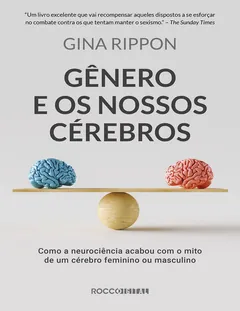
Gênero e os Nossos Cérebros
[71] Como
Differences in Mental Rotation Ability”, Sex Roles 53:5-6 (2005), pp. 433-41. • 71. Shenouda e Danovitch, “Effects of Gender Stereotypes and Stereotype Threat”.
CAPÍTULO 10: Sexo e ciência
1. Site da Women in Science, http://uis.unesco.org/en/topic/women-science; “Women in the STEM
workforce 2016”, site da WISE, https://www.wisecampaign.org.uk/statistics/women-in-the-stem-
workforce-2016 (acessado em 8 de novembro de 2018). • 2. A. Tintori e R. Palomba, Turn On the Light on Science: A Research-Based Guide to Break Down Popular Stereotypes about Science and
Scientists (Londres, Ubiquity Press, 2017). • 3. “Useful statistics: women in STEM”, site da STEM
Women, 5 de março de 2018, https://www.stemwomen.co.uk/blog/2018/03/useful-statistics-women-
in-stem; “UK physics A-level entries 2010–2016”, site do Institute of Physics,
http://www.iop.org/policy/statistics/overview/page_67109.html • 4. “Primary Schools are Critical to Ensuring Success, by Creating Space for Quality Science Teaching”, in Tomorrow’s World: Inspiring Primary Scientists (CBI, 2015), http://www.cbi.org.uk/tomorrows-
world/Primary_schools_are_critical_t.html (acessado em 8 de novembro de 2018). • 5. “Our
definition of science”, site do Science Council, https://sciencecouncil.org/about-science/our-
definition-of-science (acessado em 8 de novembro de 2018). • 6. “Science does not purvey absolute truth, science is a mechanism. It’s a way of trying to improve your knowledge of nature, it’s a system for testing your thoughts against the universe and seeing whether they match”, Explore,
http://explore.brainpickings.org/post/49908311909/science-does-not-purvey-absolute-truth-scienceis
(acessado em 8 de novembro de 2018). • 7. “Essays”, Science: Not Just for Scientists,
http://notjustforscientists.org/essays (acessado em 8 de novembro de 2018). • 8. R. L. Bergland, “Urania’s Inversion: Emily Dickinson, Herman Melville, and the Strange History of Women Scientists in Nineteenth-Century America”, Signs: Journal of Women in Culture and Society 34:1
(2008), pp. 75-99. • 9. J. Mason, “The Admission of the First Women to the Royal Society of London”, Notes and Records: The Royal Society Journal of the History of Science 46:2 (1992), pp.
279-300. • 10. L. Schiebinger, The Mind Has No Sex? Women in the Origins of Modern Science
(Cambridge, MA, Harvard University Press, 1991). • 11. Ibid. • 12. R. Su, J. Rounds e P. I. Armstrong, “Men and Things, Women and People: A Meta-analysis of Sex Differences in Interests”,
Psychological Bulletin 135:6 (2009), p. 859. • 13. J. Billington, S. Baron-Cohen e S. Wheelwright, “Cognitive Style Predicts Entry into Physical Sciences and Humanities: Questionnaire and Performance Tests of Empathy and Systemizing”, Learning and Individual Differences 17:3 (2007),
pp. 260-68. • 14. Ibid. • 15. Baron-Cohen, The Essential Difference. • 16. Ibid. • 17. S. J. Leslie, A. Cimpian, M. Meyer e E. Freeland, “Expectations of Brilliance Underlie Gender Distributions across
Academic Disciplines”, Science 347:6219 (2015), pp. 262-5. • 18. S. J. Leslie, “Cultures of Brilliance and Academic Gender Gaps”, artigo apresentado na conferência “Confidence and Competence: Fifth Annual Diversity Conference”, Royal Society, 16 de novembro de 2017; ver “Annual Diversity Conference 2017 — Confidence and Competence”, Royal Society/YouTube, 16 de
novembro de 2017, https://www.youtu.be/e0ZHpZ31O1M, at 25:50 (acessado em 8 de novembro de
2018). • 19. K. C. Elmore e M. Luna-Lucero, “Light Bulbs or Seeds? How Metaphors for Ideas Influence Judgments about Genius”, Social Psychological and Personality Science 8:2 (2017), pp.
200-208. • 20. Ibid. • 21. L. Bian, S. J. Leslie, M. C. Murphy e A. Cimpian, “Messages about Brilliance Undermine Women’s Interest in Educational and Professional Opportunities”, Journal of
Experimental Social Psychology 76 (2018), pp. 404-20. • 22. Quinn e Liben, “A Sex Difference in
Mental Rotation in Young Infants”. • 23. M. Hines, M. Constantinescu e D. Spencer, “Early Androgen Exposure and Human Gender Development”, Biology of Sex Differences 6:1 (2015), p. 3; J. Wai, D. Lubinski e C. P. Benbow, “Spatial Ability for STEM Domains: Aligning Over 50 Years of Cumulative Psychological Knowledge Solidifies Its Importance”, Journal of Educational Psychology
101:4 (2009), p. 817. • 24. S. C. Levine, A. Foley, S. Lourenco, S. Ehrlich e K. Ratliff, “Sex Differences in Spatial Cognition: Advancing the Conversation”, Wiley Interdisciplinary Reviews:
Cognitive Science 7:2(2016), pp. 127-55. • 25. L. Bian, S. J. Leslie e A. Cimpian, “Gender Stereotypes about Intellectual Ability Emerge Early and Influence Children’s Interests”, Science
355:6323 (2017), pp. 389-91. • 26. M. C. Steffens, P. Jelenec e P. Noack, “On the Leaky Math Pipeline: Comparing Implicit Math-Gender Stereotypes and Math Withdrawal in Female and Male
Children and Adolescents”, Journal of Educational Psychology 102:4 (2010), p. 947. • 27. Ibid. • 28. E. A. Gunderson, G. Ramirez, S. C. Levine e S. L. Beilock, “The Role of Parents and Teachers in the
Development of Gender-Related Math Attitudes”, Sex Roles 66:3–4 (2012), pp. 153-66. • 29.
Freeman, “Preschoolers’ Perceptions of Gender Appropriate Toys”. • 30. V. Lavy e E. Sand, “On the Origins of Gender Human Capital Gaps: Short and Long Term Consequences of Teachers’ Stereotypical Biases”, Documento de Trabalho 20909, Bureau Nacional de Pesquisa Econômica
(2015). • 31. S. Cheryan, V. C. Plaut, P. G. Davies e C. M. Steele, “Ambient Belonging: How Stereotypical Cues Impact Gender Participation in Computer Science”, Journal of Personality and
Social Psychology 97:6 (2009), p. 1045. • 32. Ibid. • 33. G. Stoet e D. C. Geary, “The Gender-Equality Paradox in Science, Technology, Engineering, and Mathematics Education”, Psychological
Science 29:4 (2018), pp. 581-93. • 34. S. Ross, “Scientist: The Story of a Word”, Annals of Science
18:2 (1962), pp. 65-85. • 35. M. Mead e R. Metraux, “Image of the Scientist among High-School
Students”, Science 126:3270 (1957), pp. 384-90. • 36. Ibid. • 37. D. W. Chambers, “Stereotypic
Images of the Scientist: The Draw-a-Scientist Test”, Science Education 67:2 (1983), pp. 255-65. • 38. K. D. Finson, “Drawing a Scientist: What We Do and Do Not Know after Fifty Years of Drawings”,
School Science and Mathematics 102:7 (2002), pp. 335-45. • 39. Ibid. • 40. P. Bernard e K. Dudek, “Revisiting Students’ Perceptions of Research Scientists: Outcomes of an Indirect Draw-a-Scientist
Test (InDAST)”, Journal of Baltic Science Education 16:4 (2017). • 41. M. Knight e C. Cunningham, “Draw an Engineer Test (DAET): Development of a Tool to Investigate Students’ Ideas about Engineers and Engineering”, artigo apresentado na Conferência e Exposição Anual da Sociedade
Americana para Educação em Engenharia, Salt Lake City, junho de 2004, https://peer.asee.org/12831
(acessado em 8 de novembro de 2018). • 42. C. Moseley, B. Desjean-Perrotta e J. Utley, “The Draw-an-Environment Test Rubric (DAET-R): Exploring Pre-service Teachers’ Mental Models of the
Environment”, Environmental Education Research 16:2 (2010), pp. 189-208. • 43. C. D. Martin,
“Draw a Computer Scientist”, ACM SIGCSE Bulletin 36:4 (2004), pp. 11-12. • 44. L. R. Ramsey, “Agentic Traits Are Associated with Success in Science More than Communal Traits”, Personality
and Individual Differences 106 (2017), pp. 6-9. • 45. L. L. Carli, L. Alawa, Y. Lee, B. Zhao e E. Kim, “Stereotypes about Gender and Science: Women ≠ Scientists”, Psychology of Women Quarterly, 40:2
(2016), pp. 244-60. • 46. A. H. Eagly, “Few Women at the Top: How Role Incongruity Produces Prejudice and the Glass Ceiling”, em D. van Knippenberg e M. A. Hogg (orgs.), Leadership and
Power: Identity Processes in Groups and Organizations (Londres, Sage, 2003), pp. 79–93. • 47. A. H. Eagly e S. J. Karau, “Role Congruity Theory of Prejudice toward Female Leaders”, Psychological
Review 109:3 (2002), p. 573. • 48. Carli et al., “Stereotypes about Gender and Science”. • 49. C. Wenneras e A. Wold, “Nepotism and Sexism in Peer Review”, em M. Wyer (org.), Women, Science, and Technology: A Reader in Feminist Science Studies (Nova York, Routledge, 2001), pp. 46-52. •
50. F. Trix e C. Psenka, “Exploring the Color of Glass: Letters of Recommendation for Female and
Male Medical Faculty”, Discourse and Society 14:2 (2003), pp. 191-220. • 51. S. Modgil, R. Gill, V. L. Sharma, S. Velassery e A. Anand, “Nobel Nominations in Science: Constraints of the Fairer Sex”,
Annals of Neurosciences 25:2 (2018), pp. 63-78. • 52. C. A. Moss-Racusin, J. F. Dovidio, V. L. Brescoll, M. J. Graham e J. Handelsman, “Science Faculty’s Subtle Gender Biases Favor Male
Students”, Proceedings of the National Academy of Sciences 109:41 (2012), pp. 16474-9. • 53. E. Reuben, P. Sapienza e L. Zingales, “How Stereotypes Impair Women’s Careers in Science”, Proceedings of the National Academy of Sciences 111:12 (2014), pp. 4403-8.
CAPÍTULO 11: A ciência e o cérebro
1. H. Ellis, Man and Woman: A Study of Human Secondary Sexual Characters (Londres, Walter
Scott; Nova York, Scribner’s, 1894). • 2. N. M. Else-Quest, J. S. Hyde e M. C. Linn, “Cross-national Patterns of Gender Differences in Mathematics: A Meta-analysis”, Psychological Bulletin 136:1
(2010), p. 103. • 3. “Has an uncomfortable truth been suppressed?”, Gowers’s Weblog, 9 de setembro
de 2018, https://gowers.wordpress.com/2018/09/09/has-an-uncomfortable-truth-been-suppressed
(acessado em 8 de novembro de 2018). • 4. Ibid. • 5. L. H. Summers, “Remarks at NBER Conference on Diversifying the Science & Engineering Workforce”, Gabinete da Reitoria, Universidade Harvard,
14 de janeiro de 2005, https://www.harvard.edu/president/speeches/summers_2005/nber.php
(acessado em 8 novembro de 2018). • 6. “The Science of Gender and Science: Pinker vs. Spelke: A
Debate”, Edge, https://www.edge.org/event/the-science-of-gender-and-science-pinker-vs-spelke-a-
debate (acessado em 8 de novembro de 2018). • 7. Y. Xie e K. Shaumann, Women in Science: Career
Processes and Outcomes (Cambridge, MA, Harvard University Press, 2003). • 8. Ibid. • 9. D. F. Halpern, C. P. Benbow, D. C. Geary, R. C. Gur, J. S. Hyde e M. A. Gernsbacher, “The Science of Sex Differences in Science and Mathematics”, Psychological Science in the Public Interest 8:1 (2007),
pp. 1-51. • 10. J. Damore, “Google’s Ideological Echo Chamber”, julho de 2017, disponível em
https://www.documentcloud.org/documents/3914586-Googles-Ideological-Echo-Chamber.html
(acessado em 8 de novembro de 2018). • 11. D. P. Schmitt, A. Realo, M. Voracek e J. Allik, “Why Can’t a Man Be More Like a Woman? Sex Differences in Big Five Personality Traits across 55
Cultures”, Journal of Personality and Social Psychology 94:1 (2008), p. 168. • 12. M. Molteni e A. Rogers, “The actual science of James Damore’s Google memo”, Wired, 15 de agosto de 2017,
https://www.wired.com/story/the-pernicious-science-of-james-damores-google-memo (acessado em 8 de novembro de 2018); H. Devlin e A. Hern, “Why are there so few women in tech? The truth behind the Google memo”, Guardian, 8 de agosto de 2017,
https://www.theguardian.com/lifeandstyle/2017/aug/08/why-are-there-so-few-women-in-tech-the-
truth-behind-the-google-memo (acessado em 8 de novembro de 2018); S. Stevens, “The Google memo: what does the research say about gender differences?”, Heterodox Academy, 10 de agosto de
2017, https://heterodoxacademy.org/the-google-memo-what-does-the-research-say-about-gender-
differences (acessado em 8 de novembro de 2018). • 13. “The Google memo: four scientists
respond”, Quillette, 7 de agosto de 2017, http://quillette.com/2017/08/07/google-memo-four-
scientists-respond (acessado em 8 de novembro de 2018). • 14. Ibid. • 15. Ibid. • 16. G. Rippon, “What neuroscience can tell us about the Google diversity memo”, Conversation, 14 de agosto de
2017, https://theconversation.com/what-neuroscience-can-tell-us-about-the-google-diversitymemo-
82455 (acessado em 8 de novembro de 2018). • 17. Devlin e Hern, “Why are there so few women in
tech?” • 18. R. C. Barnett e C. Rivers, “We’ve studied gender and STEM for 25 years. The science doesn’t support the Google memo”, Recode, 11 de agosto de 2017,
https://www.recode.net/2017/8/11/16127992/google-engineer-memo-research-science-women-
biology-tech-james-damore (acessado em 8 de novembro de 2018). • 19. M.-C. Lai, M. V. Lombardo, B. Chakrabarti, C. Ecker, S. A. Sadek, S. J. Wheelwright, D. G. Murphy, J. Suckling, E. T. Bullmore, S. Baron-Cohen e MRC AIMS Consortium, “Individual Differences in Brain Structure Underpin Empathizing–Systemizing Cognitive Styles in Male Adults”, NeuroImage 61:4 (2012), pp. 1347-54.
• 20. S. Baron-Cohen, “Empathizing, Systemizing, and the Extreme Male Brain Theory of Autism”,
Progress in Brain Research 186 (2010), pp. 167-75. • 21. J. Wai, D. Lubinski e C. P. Benbow, “Spatial Ability for STEM Domains: Aligning Over 50 Years of Cumulative Psychological
Knowledge Solidifies Its Importance”, Journal of Educational Psychology 101:4 (2009), p. 817. • 22.
Ibid. • 23. M. Hines, B. A. Fane, V. L. Pasterski, G. A. Mathews, G. S. Conway e C. Brook, “Spatial Abilities Following Prenatal Androgen Abnormality: Targeting and Mental Rotations Performance in Individuals with Congenital Adrenal Hyperplasia”, Psychoneuroendocrinology 28:8 (2003), pp.
1010-26. • 24. I. Silverman, J. Choi e M. Peters, “The Hunter-Gatherer Theory of Sex Differences in
Spatial Abilities: Data from 40 Countries”, Archives of Sexual Behavior 36:2 (2007), pp. 261-8. • 25. S. G. Vandenberg e A. R. Kuse, “Mental Rotations, a Group Test of Three-Dimensional Spatial
Visualization”, Perceptual and Motor Skills 47:2 (1978), pp. 599-604. • 26. Quinn e Liben, “A Sex
Difference in Mental Rotation in Young Infants”. • 27. Hines et al., “Spatial Abilities Following
Prenatal Androgen Abnormality”. • 28. M. Constantinescu, D. S. Moore, S. P. Johnson e M. Hines, “Early Contributions to Infants’ Mental Rotation Abilities”, Developmental Science 21:4 (2018),
e12613. • 29. T. Koscik, D. O’Leary, D. J. Moser, N. C. Andreasen e P. Nopoulos, “Sex Differences in Parietal Lobe Morphology: Relationship to Mental Rotation Performance”, Brain and Cognition
69:3 (2009), pp. 451-9. • 30. Halpern, et al. “The Pseudoscience of Single-Sex Schooling”. • 31.
Koscik et al., “Sex Differences in Parietal Lobe Morphology”. • 32. K. Kucian, M. Von Aster, T. Loenneker, T. Dietrich, F. W. Mast e E. Martin, “Brain Activation during Mental Rotation in School
Children and Adults”, Journal of Neural Transmission 114:5 (2007), pp. 675-86. • 33. K. Jordan, T. Wustenberg, H. J. Heinze, M. Peters e L. Jancke, “Women and Men Exhibit Different Cortical Activation Patterns during Mental Rotation Tasks”, Neuropsychologia 40:13 (2002), pp. 2397-408. •
34. N. S. Newcombe, “Picture This: Increasing Math and Science Learning by Improving Spatial
Thinking”, American Educator 34:2 (2010), p. 29. • 35. M. Wraga, M. Helt, E. Jacobs e K. Sullivan, “Neural Basis of Stereotype-Induced Shifts in Women’s Mental Rotation Performance”, Social
Cognitive and Affective Neuroscience 2:1 (2007), pp. 12-19. • 36. I. D. Cherney, “Mom, Let Me Play More Computer Games: They Improve My Mental Rotation Skills”, Sex Roles 59:11-12 (2008), pp.
776-86. • 37. Ibid. • 38. J. Feng, I. Spence e J. Pratt, “Playing an Action Video Game Reduces Gender Differences in Spatial Cognition”, Psychological Science 18:10 (2007), pp. 850-55; M. S. Terlecki e N. S. Newcombe, “How Important Is the Digital Divide? The Relation of Computer and Videogame Usage to Gender Differences in Mental Rotation Ability”, Sex Roles 53:5-6 (2005), pp.
433-41. • 39. R. J. Haier, S. Karama, L. Leyba e R. E. Jung, “MRI Assessment of Cortical Thickness and Functional Activity Changes in Adolescent Girls Following Three Months of Practice on a
Visual-Spatial Task”, BMC Research Notes 2:1 (2009), p. 174. • 40. A. Moe e F. Pazzaglia, “Beyond Genetics in Mental Rotation Test Performance: The Power of Effort Attribution”, Learning and
Individual Differences 20:5 (2010), pp. 464-8. • 41. E. A. Maloney, S. Waechter, E. F. Risko e J. A. Fugelsang, “Reducing the Sex Difference in Math Anxiety: The Role of Spatial Processing Ability”,
Learning and Individual Differences 22:3 (2012), pp. 380-84. • 42. O. Blajenkova, M. Kozhevnikov e M. A. Motes, “Object-Spatial Imagery: A New Self-Report Imagery Questionnaire”, Applied
Cognitive Psychology 20:2 (2006), pp. 239-63. • 43. J. A. Mangels, C. Good, R. C. Whiteman, B. Maniscalco e C. S. Dweck, “Emotion Blocks the Path to Learning under Stereotype Threat”, Social
Cognitive and Affective Neuroscience 7:2 (2011), pp. 230-41. • 44. A. C. Krendl, J. A. Richeson, W. M. Kelley e T. F. Heatherton, “The Negative Consequences of Threat: A Functional Magnetic Resonance Imaging Investigation of the Neural Mechanisms Underlying Women’s
Underperformance in Math”, Psychological Science 19:2 (2008), pp. 168-75. • 45. B. Carrillo, E. Gomez-Gil, G. Rametti, C. Junque, A. Gomez, K. Karadi, S. Segovia e A. Guillamon, “Cortical Activation during Mental Rotation in Male-to-Female and Female to-Male Transsexuals under
Hormonal Treatment”, Psychoneuroendocrinology 35:8 (2010), pp. 1213-22. • 46. S. A. Berenbaum e M. Hines, “Early Androgens Are Related to Childhood Sex-Typed Toy Preferences”, Psychological
Science 3:3 (1992), pp. 203-6. • 47. J. R. Shapiro e A. M. Williams, “The Role of Stereotype Threats in Undermining Girls’ and Women’s Performance and Interest in STEM Fields”, Sex Roles 66:3-4
(2012), pp. 175-83. • 48. M. Hines, V. Pasterski, D. Spencer, S. Neufeld, P. Patalay, P. C. Hindmarsh, I. A. Hughes e C. L. Acerini, “Prenatal Androgen Exposure Alters Girls’ Responses to Information Indicating Gender-Appropriate Behaviour”, Philosophical Transactions of the Royal Society B:
Biological Sciences 371:1688 (2016), 20150125. • 49. “Women in Science, Technology, Engineering, and Mathematics (STEM)”, site da Catalyst, 3 de janeiro de 2018,
https://www.catalyst.org/knowledge/women-science-technology-engineering-and-mathematics-stem (acessado em 10 de novembro de 2018).
CAPÍTULO 12: As meninas boazinhas não fazem
1. S. Peters, The Chimp Paradox: The Mind Management Program to Help You Achieve Success,
Confidence, and Happiness (Nova York, Tarcher/Penguin, 2013). • 2. B. P. Dore, N. Zerubavel e K. N. Ochsner, “Social Cognitive Neuroscience: A Review of Core Systems”, em M. Mikulincer e P. R. Shaver (editores responsáveis), APA Handbook of Personality and Social Psychology (Washington,
American Psychological Association, 2014), vol. l, pp. 693-720. • 3. J. M. Allman, A. Hakeem, J. M. Erwin, E. Nimchinsky e P. Hof, “The Anterior Cingulate Cortex: The Evolution of an Interface between Emotion and Cognition”, Annals of the New York Academy of Sciences 935:1 (2001), pp.
107-17. • 4. J. M. Allman, N. A. Tetreault, A. Y. Hakeem, K. F. Manaye, K. Semendeferi, J. M. Erwin, S. Park, V. Goubert e P. R. Hof, “The Von Economo Neurons in Frontoinsular and Anterior Cingulate Cortex in Great Apes and Humans”, Brain Structure and Function 214:5-6 (2010), pp. 495-
517. • 5. J. D. Cohen, M. Botvinick e C. S. Carter, “Anterior Cingulate and Prefrontal Cortex: Who’s
in Control?”, Nature Neuroscience 3:5 (2000), p. 421. • 6. G. Bush, P. Luu e M. I. Posner, “Cognitive and Emotional Influences in Anterior Cingulate Cortex”, Trends in Cognitive Sciences 4:6 (2000),
pp. 215-22. • 7. Eisenberger et al., “The Neural Sociometer”. • 8. Eisenberger e Lieberman, “Why
Rejection Hurts”. • 9. N. I. Eisenberger, “Social Pain and the Brain: Controversies, Questions, and
Where to Go from Here”, Annual Review of Psychology 66 (2015), pp. 601-29. • 10. Lieberman,
Social: Why Our Brains Are Wired to Connect. • 11. N. Kolling, M. K. Wittmann, T. E. Behrens, E. D. Boorman, R. B. Mars e M. F. Rushworth, “Value, Search, Persistence and Model Updating in
Anterior Cingulate Cortex”, Nature Neuroscience 19:10 (2016), p. 1280. • 12. T. Straube, S. Schmidt, T. Weiss, H. J. Mentzel e W. H. Miltner, “Dynamic Activation of the Anterior Cingulate Cortex during Anticipatory Anxiety”, NeuroImage 44:3 (2009), pp. 975-81; A. Etkin, K. E. Prater, F. Hoeft, V. Menon e A. F. Schatzberg, “Failure of Anterior Cingulate Activation and Connectivity with the Amygdala during Implicit Regulation of Emotional Processing in Generalized Anxiety Disorder”, American Journal of Psychiatry 167:5 (2010), pp. 545-54; A. Etkin, T. Egner e R. Kalisch, “Emotional Processing in Anterior Cingulate and Medial Prefrontal Cortex”, Trends in Cognitive
Sciences 15:2 (2011), pp. 85-93. • 13. M. R. Leary, “Responses to Social Exclusion: Social Anxiety, Jealousy, Loneliness, Depression, and Low Self-Esteem”, Journal of Social and Clinical Psychology 9:2 (1990), pp. 221-9; J. F. Sowislo e U. Orth, “Does Low Self-Esteem Predict Depression and Anxiety? A Meta-analysis of Longitudinal Studies”, Psychological Bulletin 139:1 (2013), p. 213; E. A. Courtney, J. Gamboz e J. G. Johnson, “Problematic Eating Behaviors in Adolescents with Low
Self-Esteem and Elevated Depressive Symptoms”, Eating Behaviors 9:4 (2008), pp. 408-14. • 14. W. Bleidorn, R. C. Arslan, J. J. Denissen, P. J. Rentfrow, J. E. Gebauer, J. Potter e S. D. Gosling, “Age and Gender Differences in Self-Esteem — A Cross-cultural Window”, Journal of Personality and Social Psychology 111:3 (2016), p. 396; S. Guimond, A. Chatard, D. Martinot, R. J. Crisp e S. Redersdorff, “Social Comparison, Self-Stereotyping, and Gender Differences in Self-Construals”,
Journal of Personality and Social Psychology 90:2 (2006), p. 221. • 15. “World Self Esteem Plot”,
https://selfesteem.shinyapps.io/maps (acessado em 10 de novembro de 2018). • 16. Schmitt et al.,
“Why Can’t a Man Be More Like a Woman?” • 17. J. S. Hyde, “Gender Similarities and Differences”, Annual Review of Psychology 65 (2014), pp. 373-98; E. Zell, Z. Krizan e S. R. Teeter, “Evaluating Gender Similarities and Differences Using Metasynthesis”, American Psychologist 70:1
(2015), p. 10. • 18. Eisenberger e Lieberman, “Why Rejection Hurts”. • 19. A. J. Shackman, T. V. Salomons, H. A. Slagter, A. S. Fox, J. J. Winter e R. J. Davidson, “The Integration of Negative Affect, Pain and Cognitive Control in the Cingulate Cortex”, Nature Reviews Neuroscience 12:3
(2011), p. 154. • 20. A. T. Beck, Depression: Clinical, Experimental, and Theoretical Aspects (Nova York, Harper & Row, 1967); A. T. Beck, “The Evolution of the Cognitive Model of Depression and Its Neurobiological Correlates”, American Journal of Psychiatry 165 (2008), pp. 969-77; S. G. Disner, C. G. Beevers, E. A. Haigh e A. T. Beck, “Neural Mechanisms of the Cognitive Model of
Depression”, Nature Reviews Neuroscience 12:8 (2011), p. 467. • 21. P. Gilbert, The Compassionate
Mind: A New Approach to Life’s Challenges (Oakland, CA, New Harbinger, 2010). • 22. P. Gilbert e C. Irons, “Focused Therapies and Compassionate Mind Training for Shame and Self-Attacking”, em P. Gilbert (org.), Compassion: Conceptualisations, Research and Use in Psychotherapy (Hove, Routledge, 2005), pp. 263-325; D. C. Zuroff, D. Santor e M. Mongrain, “Dependency, Self-Criticism, and Maladjustment”, em S. J. Blatt, J. S. Auerbach, K. N. Levy e C. E. Schaffer (orgs.), Relatedness, Self-Definition and Mental Representation: Essays in Honor of Sidney J. Blatt (Hove, Routledge,
2005), pp. 75-90. • 23. P. Gilbert, M. Clarke, S. Hempel, J. N. V. Miles e C. Irons, “Criticizing and Reassuring Oneself: An Exploration of Forms, Styles and Reasons in Female Students”, British
Journal of Clinical Psychology 43:1 (2004), pp. 31-50. • 24. W. J. Gehring, B. Goss, M. G. H. Coles, D. E. Meyer e E. Donchin, “A Neural System for Error Detection and Compensation”, Psychological Science 4 (1993), pp. 385-90; S. Dehaene, “The Error-Related Negativity, Self-Monitoring, and
Consciousness”, Perspectives on Psychological Science 13:2 (2018), pp. 161-5. • 25. O. Longe, F. A. Maratos, P. Gilbert, G. Evans, F. Volker, H. Rockliff e G. Rippon, “Having a Word with Yourself: Neural Correlates of Self-Criticism and Self-Reassurance”, NeuroImage 49:2 (2010), pp. 1849-56. •
26. G. Downey e S. I. Feldman, “Implications of Rejection Sensitivity for Intimate Relationships”,
Journal of Personality and Social Psychology 70:6 (1996), p. 1327. • 27. Ibid. • 28. O. Ayduk, A. Gyurak e A. Luerssen, “Individual Differences in the Rejection-Aggression Link in the Hot Sauce Paradigm: The Case of Rejection Sensitivity”, Journal of Experimental Social Psychology 44:3
(2008), pp. 775-82. • 29. D. C. Jack e A. Ali (orgs.), Silencing the Self across Cultures: Depression
and Gender in the Social World (Oxford, Oxford University Press, 2010). • 30. B. London, G. Downey, R. Romero-Canyas, A. Rattan e D. Tyson, “Gender-Based Rejection Sensitivity and Academic Self-Silencing in Women”, Journal of Personality and Social Psychology 102:5 (2012), p.
961. • 31. S. Zhang, T. Schmader e W. M. Hall, “L’eggo my Ego: Reducing the Gender Gap in Math
by Unlinking the Self from Performance”, Self and Identity 12:4 (2013), pp. 400-412. • 32.
Eisenberger e Lieberman, “Why Rejection Hurts”. • 33. E. Kross, T. Egner, K. Ochsner, J. Hirsch e G. Downey, “Neural Dynamics of Rejection Sensitivity”, Journal of Cognitive Neuroscience 19:6
(2007), pp. 945-56. • 34. L. J. Burklund, N. I. Eisenberger e M. D. Lieberman, “The Face of Rejection: Rejection Sensitivity Moderates Dorsal Anterior Cingulate Activity to Disapproving
Facial Expressions”, Social Neuroscience 2:3-4 (2007), pp. 238-53. • 35. Kross et al., “Neural
Dynamics of Rejection Sensitivity”. • 36. K. Dedovic, G. M. Slavich, K. A. Muscatell, M. R. Irwin e N. I. Eisenberger, “Dorsal Anterior Cingulate Cortex Responses to Repeated Social Evaluative Feedback in Young Women with and without a History of Depression”, Frontiers in Behavioral
Neuroscience 10 (2016), p. 64. • 37. A. Kupferberg, L. Bicks e G. Hasler, “Social Functioning in
Major Depressive Disorder”, Neuroscience and Biobehavioral Reviews 69 (2016), pp. 313-32. • 38. Steele, Whistling Vivaldi; S. J. Spencer, C. Logel e P. G. Davies, “Stereotype Threat”, Annual
Review of Psychology 67 (2016), pp. 415-37. • 39. J. Aronson, M. J. Lustina, C. Good, K. Keough, C. M. Steele e J. Brown, “When White Men Can’t Do Math: Necessary and Sufficient Factors in
Stereotype Threat”, Journal of Experimental Social Psychology 35:1 (1999), pp. 29-46. • 40. M. A. Pavlova, S. Weber, E. Simoes e A. N. Sokolov, “Gender Stereotype Susceptibility”, PLoS One 9:12
(2014), e114802. • 41. M. Wraga, M. Helt, E. Jacobs e K. Sullivan, “Neural Basis of Stereotype-Induced Shifts in Women’s Mental Rotation Performance”, Social Cognitive and Affective
Neuroscience 2:1 (2007), pp. 12-19. • 42. M. M. McClelland, C. E. Cameron, S. B. Wanless e A. Murray, “Executive Function, Behavioral Self-Regulation, and Social-Emotional Competence: Links to School Readiness”, em O. N. Saracho e B. Spodek (orgs.), Contemporary Perspectives on Social
Learning in Early Childhood Education (Charlotte, NC, Information Age, 2007), pp. 83-107. • 43. C. E. C. Ponitz, M. M. McClelland, A. M. Jewkes, C. M. Connor, C. L. Farris e F. J. Morrison, “Touch Your Toes! Developing a Direct Measure of Behavioral Regulation in Early Childhood”, Early
Childhood Research Quarterly 23:2 (2008), pp. 141-58. • 44. J. S. Matthews, C. C. Ponitz e F. J. Morrison, “Early Gender Differences in Self-Regulation and Academic Achievement”, Journal of
Educational Psychology 101:3 (2009), p. 689. • 45. S. B. Wanless, M. M. McClelland, X. Lan, S. H. Son, C. E. Cameron, F. J. Morrison, F. M. Chen, J. L. Chen, S. Li, K. Lee e M. Sung, “Gender Differences in Behavioral Regulation in Four Societies: The United States, Taiwan, South Korea, and
China”, Early Childhood Research Quarterly 28:3 (2013), pp. 621-33. • 46. J. A. Gray, “Precis of The Neuropsychology of Anxiety: An Enquiry into the Functions of the Septo-hippocampal System”, Behavioral and Brain Sciences 5:3 (1982), pp. 469-84; Y. Li, L. Qiao, J, Sun, D. Wei, W. Li, J. Qiu, Q. Zhang e H. Shi, “Gender-Specific Neuroanatomical Basis of Behavioral Inhibition/Approach Systems (BIS/BAS) in a Large Sample of Young Adults: a Voxel-Based Morphometric
Investigation”, Behavioural Brain Research 274 (2014), pp. 400-408. • 47. D. M. Amodio, S. L. Master, C. M. Yee e S. E. Taylor, “Neurocognitive Components of the Behavioral Inhibition and Activation Systems: Implications for Theories of Self-Regulation”, Psychophysiology 45:1 (2008),
pp. 11-19. • 48. C. S. Dweck, W. Davidson, S. Nelson e B. Enna, “Sex Differences in Learned Helplessness: II. The Contingencies of Evaluative Feedback in the Classroom and III. An
Experimental Analysis”, Developmental Psychology 14:3 (1978), p. 268. • 49. C. S. Dweck, Mindset: The New Psychology of Success (Nova York, Random House, 2006); D. S. Yeager e C. S. Dweck, “Mindsets That Promote Resilience: When Students Believe that Personal Characteristics
Can Be Developed”, Educational Psychologist 47:4 (2012), pp. 302-14. • 50. M. L. Kamins e C. S. Dweck, “Person versus Process Praise and Criticism: Implications for Contingent Self-Worth and
Coping”, Developmental Psychology 35:3 (1999), p. 835. • 51. J. Henderlong Corpus e M. R. Lepper, “The Effects of Person versus Performance Praise on Children’s Motivation: Gender and Age
as Moderating Factors”, Educational Psychology 27:4 (2007), pp. 487-508. • 52. Ibid.
CAPÍTULO 13: Por dentro de sua linda cabecinha —
uma atualização do século XXI
1. E. Racine, O. Bar-Ilan e J. Illes, “fMRI in the Public Eye”, Nature Reviews Neuroscience 6:2
(2005), p. 159. • 2. T. D. Satterthwaite, D. H. Wolf, D. R. Roalf, K. Ruparel, G. Erus, S. Vandekar, E. D. Gennatas, M. A. Elliott, A. Smith, H. Hakonarson e R. Verma, “Linked Sex Differences in
Cognition and Functional Connectivity in Youth”, Cerebral Cortex 25:9 (2014), pp. 2383-94. • 3. D. Weber, V. Skirbekk, I. Freund e A. Herlitz, “The Changing Face of Cognitive Gender Differences in
Europe”, Proceedings of the National Academy of Sciences 111:32 (2014), pp. 11673-8. • 4. F. Macrae, “Female brains really ARE different to male minds with women possessing better recall and men excelling at maths”, Mail Online, 28 de julho de 2014,
https://www.dailymail.co.uk/news/article-2709031/Female-brains-really-ARE-different-male-
mindswomen-possessing-better-recall-men-excelling-maths.html (acessado em 10 de novembro de
2018). • 5. “Brain regulates social behavior differences in males and females”, Neuroscience News,
31 de outubro de 2016, https://neurosciencenews.com/sex-difference-social-behavior-5392 (acessado
em 10 de novembro de 2018). • 6. K. Hashikawa, Y. Hashikawa, R. Tremblay, J. Zhang, J. E. Feng, A. Sabol, W. T. Piper, H. Lee, B. Rudy e D. Lin, “Esr1+ Cells in the Ventromedial Hypothalamus
Control Female Aggression”, Nature Neuroscience 20:11 (2017), p. 1580. • 7. D. Joel, comunicação
pessoal, 2017. • 8. “Science explains why some people are into BDSM and some aren’t”, India
Times, 7 de outubro de 2017. • 9. K. Hignett, “Everything ‘the female brain’ gets wrong about the
female brain”, Newsweek, 10 de fevereiro de 2018, https://www.newsweek.com/science-behind-
female-brain-802319 (acessado em 10 de novembro de 2018). • 10. Fine, Delusions of Gender; Fine,
“Is There Neurosexism”. • 11. C. M. Leonard, S. Towler, S. Welcome, L. K. Halderman, R. Otto, M. A. Eckert e C. Chiarello, “Size Matters: Cerebral Volume Influences Sex Differences in Neuroanatomy”, Cerebral Cortex 18:12 (2008), pp. 2920-31; E. Luders, A. W. Toga e P. M. Thompson, “Why Size Matters: Differences in Brain Volume Account for Apparent Sex Differences in Callosal Anatomy — The Sexual Dimorphism of the Corpus Callosum”, NeuroImage 84 (2014),
pp. 820-24. • 12. J. Hanggi, L. Fovenyi, F. Liem, M. Meyer e L. Jancke, “The Hypothesis of Neuronal Interconnectivity as a Function of Brain Size — A General Organization Principle of the
Human Connectome”, Frontiers in Human Neuroscience 8 (2014), p. 915. • 13. D. Marwha, M. Halari e L. Eliot, “Meta-analysis Reveals a Lack of Sexual Dimorphism in Human Amygdala Volume”, NeuroImage 147 (2017), pp. 282-94; A. Tan, W. Ma, A. Vira, D. Marwha e L. Eliot, “The Human Hippocampus is not Sexually-Dimorphic: Meta-analysis of Structural MRI Volumes”,
NeuroImage 124 (2016), pp. 350-66. • 14. S. J. Ritchie, S. R. Cox, X. Shen, M. V. Lombardo, L. M. Reus, C. Alloza, M. A. Harris, H. L. Alderson, S. Hunter, E. Neilson e D. C. Liewald, “Sex Differences in the Adult Human Brain: Evidence from 5216 UK Biobank Participants”, Cerebral
Cortex 28:8 (2018), pp. 2959-75. • 15. T. Young, “Why can’t a woman be more like a man?”,
Quillette, 24 de maio de 2018, https://quillette.com/2018/05/24/cant-woman-like-man (acessado em
10 de novembro de 2018). • 16. J. Pietschnig, L. Penke, J. M. Wicherts, M. Zeiler e M. Voracek, “Meta-analysis of Associations between Human Brain Volume and Intelligence Differences: How Strong Are They and What Do They Mean?”, Neuroscience and Biobehavioral Reviews 57 (2015),
pp. 411-32. • 17. D. C. Dean, E. M. Planalp, W. Wooten, C. K. Schmidt, S. R. Kecskemeti, C. Frye, N. L. Schmidt, H. H. Goldsmith, A. L. Alexander e R. J. Davidson, “Investigation of Brain Structure
in the 1-Month Infant”, Brain Structure and Function 223:4 (2018), pp. 1953-70. • 18. “Finding withdrawn after major author correction: ‘Sex differences in human brain structure are already apparent at one month of age’”, British Psychological Society Research Digest, 15 de março de 2018,
https://digest.bps.org.uk/2018/01/31/sex-differences-in-brain-structure-are-already-apparent-at-one-
month-of-age (acessado em 10 de novembro de 2018). • 19. D. C. Dean, E. M. Planalp, W. Wooten, C. K. Schmidt, S. R. Kecskemeti, C. Frye, N. L. Schmidt, H. H. Goldsmith, A. L. Alexander e R. J. Davidson, “Correction to: Investigation of Brain Structure in the 1-Month Infant”, Brain Structure
and Function 223:6 (2018), pp. 3007-9. • 20. Visto no Pinterest. • 21. R. Rosenthal, “The File Drawer
Problem and Tolerance for Null Results”, Psychological Bulletin 86:3 (1979), p. 638. • 22. S. P. David, F. Naudet, J. Laude, J. Radua, P. Fusar-Poli, I. Chu, M. L. Stefanick e J. P. Ioannidis, “Potential Reporting Bias in Neuroimaging Studies of Sex Differences”, Scientific Reports 8:1
(2018), p. 6082. • 23. V. Brescoll e M. LaFrance, “The Correlates and Consequences of Newspaper
Reports of Research on Sex Differences”, Psychological Science 15:8 (2004), pp. 515-20. • 24. C. Fine, R. Jordan-Young, A. Kaiser e G. Rippon, “Plasticity, Plasticity, Plasticity... and the Rigid
Problem of Sex”, Trends in Cognitive Sciences 17:11 (2013), pp. 550-51. • 25. B. B. Biswal, M. Mennes, X.-N. Zuo, S. Gohel, C. Kelly, S. M. Smith, C. F. Beckmann, J. S. Adelstein, R. L. Buckner, S. Colcombe e A. M. Dogonowski, “Toward Discovery Science of Human Brain Function”,
Proceedings of the National Academy of Sciences 107:10 (2010), pp. 4734-9. • 26. Van Anders et al.,
“The Steroid/Peptide Theory of Social Bonds”. • 27. M. N. Muller, F. W. Marlowe, R. Bugumba e P. T. Ellison, “Testosterone and Paternal Care in East African Foragers and Pastoralists”, Proceedings of
the Royal Society B: Biological Sciences 276:1655 (2009), pp. 347-54. • 28. S. M. van Anders, R. M. Tolman e B. L. Volling, “Baby Cries and Nurturance Affect Testosterone in Men”, Hormones and
Behavior 61:1 (2012), pp. 31-6. • 29. W. James, The Principles of Psychology, 2 vols. (Nova York,
Henry Holt, 1890). • 30. E. K. Graham, D. Gerstorf, T. Yoneda, A. Piccinin, T. Booth, C. Beam, A. J. Petkus, J. P. Rutsohn, R. Estabrook, M. Katz e N. Turiano, “A Coordinated Analysis of Big-Five
Trait Change across 16 Longitudinal Samples” (2018), disponível em https://osf.io/ryjpc/download/?
format=pdf (acessado em 10 de novembro de 2018) • 31. D. Halpern, Sex Differences in Cognitive
Abilities, 4ª ed. (Hove, Psychology Press, 2012). • 32. Halpern et al. “The Science of Sex Differences
in Science and Mathematics”. • 33. J. S. Hyde, “The Gender Similarities Hypothesis”, American
Psychologist 60:6 (2005), p. 581. • 34. E. Zell, Z. Krizan e S. R. Teeter, “Evaluating Gender Similarities and Differences Using Metasynthesis”, American Psychologist 70:1 (2015), pp. 10-20.
CAPÍTULO 14: Marte, Vênus ou Terra?
Erramos a respeito do sexo esse tempo todo?
1. A. Montanez, “Beyond XX and XY”, Scientific American 317:3 (2017), pp. 50-51. • 2. D. Joel, “Genetic-Gonadal-Genitals Sex (3G-Sex) and the Misconception of Brain and Gender, or, Why 3G-Males and 3G-Females Have Intersex Brain and Intersex Gender”, Biology of Sex Differences 3:1
(2012), p. 27. • 3. C. P. Houk, I. A. Hughes, S. F. Ahmed e P. A. Lee, “Summary of Consensus
Statement on Intersex Disorders and Their Management”, Pediatrics 118:2 (2006), pp. 753-7. • 4. C.
Ainsworth, “Sex Redefined”, Nature 518:7539 (2015), p. 288. • 5. Ibid. • 6. V. Heggie, “Nature and sex redefined — we have never been binary”, Guardian, 19 de fevereiro de 2015,
https://www.theguardian.com/science/the-h-word/2015/feb/19/nature-sex-redefined-we-have-never-
been-binary • 7. A. Fausto-Sterling, “The Five Sexes”, Sciences 33:2 (1993), pp. 20-24. • 8. A.
Fausto-Sterling, “The Five Sexes, Revisited”, Sciences 40:4 (2000), pp. 18-23. • 9. A. P. Arnold e X. Chen, “What Does the ‘Four Core Genotypes’ Mouse Model Tell Us about Sex Differences in the
Brain and Other Tissues?”, Frontiers in Neuroendocrinology 30:1 (2009), pp. 1-9. • 10. Montañez,
“Beyond XX and XY”. • 11. L. Cahill, “Why Sex Matters for Neuroscience”, Nature Reviews
Neuroscience 7:6 (2006), p. 477. • 12. A. N. Ruigrok, G. Salimi-Khorshidi, M. C. Lai, S. Baron-Cohen, M. V. Lombardo, R. J. Tait e J. Suckling, “A Meta-analysis of Sex Differences in Human
Brain Structure”, Neuroscience & Biobehavioral Reviews 39 (2014), pp. 34-50. • 13. Tan et al., “The Human Hippocampus is not Sexually-Dimorphic”; D. Marwha, M. Halari e L. Eliot, “Meta-analysis Reveals a Lack of Sexual Dimorphism in Human Amygdala Volume”, NeuroImage 147 (2017), pp.
282-94. • 14. Ingalhalikar et al., “Sex Differences in the Structural Connectome of the Human Brain”.
• 15. Hanggi et al., “The Hypothesis of Neuronal Interconnectivity”. • 16. D. Joel e M. M. McCarthy, “Incorporating Sex as a Biological Variable in Neuropsychiatric Research: Where Are We Now and
Where Should We Be?”, Neuropsychopharmacology 42:2 (2017), p. 379. • 17. D. Joel, Z. Berman, I. Tavor, N. Wexler, O. Gaber, Y. Stein, N. Shefi, J. Pool, S. Urchs, D. S. Margulies e F. Liem, “Sex beyond the Genitalia: The Human Brain Mosaic”, Proceedings of the National Academy of Sciences
112:50 (2015), pp. 15468-73. • 18. M. Del Giudice, R. A. Lippa, D. A. Puts, D. H. Bailey, J. M. Bailey e D. P. Schmitt, “Joel et al.’s Method Systematically Fails to Detect Large, Consistent Sex
Differences”, Proceedings of the National Academy of Sciences 113:14 (2016), p. E1965. • 19. D. Joel, A. Persico, J. Hanggi, J. Pool e Z. Berman, “Reply to Del Giudice et al., Chekroud et al., and Rosenblatt: Do Brains of Females and Males Belong to Two Distinct Populations?”, Proceedings of
the National Academy of Sciences 113:14 (2016), pp. E1969-70. • 20. L. MacLellan, “The biggest myth about our brains is that they are ‘male’ or ‘female’”, Quartz, 27 de agosto de 2017,
https://qz.com/1057494/the-biggest-myth-about-our-brains-is-that-theyremale-or-female (acessado
em 10 de novembro de 2018). • 21. S. M. van Anders, “The Challenge from Behavioural Endocrinology”, pp. 4-6 in J. S. Hyde, R. S. Bigler, D. Joel, C. C. Tate e S. M. van Anders, “The Future of Sex and Gender in Psychology: Five Challenges to the Gender Binary”, American
Psychologist (2018), http://dx.doi.org/10.1037/amp0000307. • 22. S. M. Van Anders, “Beyond Masculinity: Testosterone, Gender/Sex, and Human Social Behavior in a Comparative Context”,
Frontiers in Neuroendocrinology 34:3 (2013), pp. 198-210. • 23. Anders, “The Challenge from
Behavioural Endocrinology”. • 24. J. S. Hyde, “The Gender Similarities Hypothesis”, American Psychologist 60:6 (2005), p. 581; E. Zell, Z. Krizan e S. R. Teeter, “Evaluating Gender Similarities
and Differences Using Metasynthesis”, American Psychologist 70:1 (2015), p. 10. • 25. B. J. Carothers e H. T. Reis, “Men and Women are from Earth: Examining the Latent Structure of
Gender”, Journal of Personality and Social Psychology 104:2 (2013), p. 385. • 26. H. T. Reis e B. J. Carothers, “Black and White or Shades of Gray: Are Gender Differences Categorical or
Dimensional?”, Current Directions in Psychological Science 23:1 (2014), pp. 19-26. • 27. Joel et al.,
“Sex beyond the Genitalia”. • 28. Martin e Ruble, “Children’s Search for Gender Cues”. • 29. I. Savic, A. Garcia-Falgueras e D. F. Swaab, “Sexual Differentiation of the Human Brain in Relation to Gender Identity and Sexual Orientation”, Progress in Brain Research 186 (2010), pp. 41-62; Joel,
“Genetic-Gonadal-Genitals Sex (3G-Sex) and the Misconception of Brain and Gender”. • 30. J. J. Endendijk, A. M. Beltz, S. M. McHale, K. Bryk e S. A. Berenbaum, “Linking Prenatal Androgens to Gender-Related Attitudes, Identity, and Activities: Evidence from Girls with Congenital Adrenal
Hyperplasia”, Archives of Sexual Behavior 45:7 (2016), pp. 1807-15. • 31. Colapinto, As Nature
Made Him: The Boy Who Was Raised as a Girl. • 32. “Transgender Equality: House of Commons Backbench Business Debate — Advice for Parliamentarians”, Comissão de Igualdade e Direitos Humanos, 1º de dezembro de 2016, disponível em
https://www.equalityhumanrights.com/en/file/21151/download?token=Z7I8opi2 (acessado em 10 de
novembro de 2018) • 33. “Gender confirmation surgeries rise 20% in first ever report”, site da Sociedade Americana de Cirurgiões Plásticos, 22 de maio de 2017,
https://www.plasticsurgery.org/news/press-releases/gender-confirmation-surgeries-rise-20-percent-in-
first-ever-report (acessado em 10 de novembro de 2018). • 34. Comissão de Mulheres e Igualdade da Câmara dos Comuns, Transgender Equality: First Report of Session 2015-16, HC 390, 8 de dezembro de 2015, disponível em
https://publications.parliament.uk/pa/cm201516/cmselect/cmwomeq/390/390.pdf (acessado em 10 de
novembro de 2018). • 35. C. Turner, “Number of children being referred to gender identity clinics has quadrupled in five years”, Telegraph, 8 de julho de 2017,
https://www.telegraph.co.uk/news/2017/07/08/number-children-referred-gender-identity-clinics-has-
quadrupled (acessado em 10 de novembro de 2018). • 36. J. Ensor, “Bruce Jenner: I was born with body of a man and soul of a woman”, Telegraph, 25 de abril de 2015,
https://www.telegraph.co.uk/news/worldnews/northamerica/usa/11562749/Bruce-Jenner-I-was-born-
with-body-of-a-man-and-soul-of-a-woman.html (acessado em 10 de novembro de 2018). • 37. C. Odone, “Do men and women really think alike?”, Telegraph, 14 de setembro de 2010,
https://www.telegraph.co.uk/news/science/8001370/Do-men-and-women-really-think-alike.html
(acessado em 10 de novembro de 2018). • 38. T. Whipple, “Sexism fears hamper brain research”, The
Times, 29 de novembro de 2016, https://www.thetimes.co.uk/edition/news/sexism-fears-hamper-
brain-research-rx6w39gbw (acessado em 10 de novembro de 2018); L. Willgress, “Researchers’ sexism fears are putting women’s health at risk, scientist claims”, Telegraph, 29 de novembro de
2016, https://www.telegraph.co.uk/news/2016/11/29/researchers-sexism-fears-putting-womens-
health-risk-scientist (acessado em 10 de novembro de 2018).
CONCLUSÃO: Criando filhas destemidas (e filhos solidários)
1. S.-J. Blakemore, Inventing Ourselves: The Secret Life of the Teenage Brain (Londres, Doubleday,
2018). • 2. L. H. Somerville, “The Teenage Brain: Sensitivity to Social Evaluation”, Current
Directions in Psychological Science 22:2 (2013), pp. 121-7. • 3. S.-J. Blakemore, “The Social Brain
in Adolescence”, Nature Reviews Neuroscience 9:4 (2008), p. 267. • 4. B. London, G. Downey, R. Romero-Canyas, A. Rattan e D. Tyson, “Gender-Based Rejection Sensitivity and Academic Self-Silencing in Women”, Journal of Personality and Social Psychology 102:5 (2012), p. 961; E. Kross, T. Egner, K. Ochsner, J. Hirsch e G. Downey, “Neural Dynamics of Rejection Sensitivity”, Journal of
Cognitive Neuroscience 19:6 (2007), pp. 945-56. • 5. Damore, “Google’s Ideological Echo
Chamber”. • 6. Stoet e Geary, “The Gender-Equality Paradox in Science, Technology, Engineering,
and Mathematics Education”. • 7. J. Clark Blickenstaff, “Women and Science Careers: Leaky
Pipeline or Gender Filter?”, Gender and Education 17:4 (2005), pp. 369-86. • 8. A. Tintori e R. Palomba, Turn on the Light on Science: A Research-Based Guide to Break Down Popular
Stereotypes about Science and Scientists (Londres, Ubiquity Press, 2017). • 9. London et al.,
“Gender-Based Rejection Sensitivity”. • 10. J. A. Mangels, C. Good, R. C. Whiteman, B. Maniscalco e C. S. Dweck, “Emotion Blocks the Path to Learning under Stereotype Threat”, Social Cognitive
and Affective Neuroscience 7:2 (2011), pp. 230-41. • 11. E. A. Maloney and S. L. Beilock, “Math Anxiety: Who Has It, Why It Develops, and How to Guard against It”, Trends in Cognitive Sciences
16:8 (2012), pp. 404-6. • 12. K. J. Van Loo e R. J. Rydell, “On the Experience of Feeling Powerful: Perceived Power Moderates the Effect of Stereotype Threat on Women’s Math Performance”,
Personality and Social Psychology Bulletin 39:3 (2013), pp. 387-400. • 13. T. Harada, D. Bridge e J. Y. Chiao, “Dynamic Social Power Modulates Neural Basis of Math Calculation”, Frontiers in Human
Neuroscience 6 (2013), p. 350. • 14. I. M. Latu, M. S. Mast, J. Lammers e D. Bombari, “Successful Female Leaders Empower Women’s Behavior in Leadership Tasks”, Journal of Experimental Social
Psychology 49:3 (2013), pp. 444-8. • 15. J. G. Stout, N. Dasgupta, M. Hunsinger e M. A. McManus, “STEMing the Tide: Using Ingroup Experts to Inoculate Women’s Self-Concept in Science, Technology, Engineering, and Mathematics (STEM)”, Journal of Personality and Social Psychology
100:2 (2011), p. 255. • 16. “Inspiring girls with People Like Me”, site da WISE,
https://www.wisecampaign.org.uk/what-we-do/expertise/inspiring-girls-with-people-like-me
(acessado em 10 de novembro de 2018). • 17. C. Ainsworth, “Sex Redefined”, Nature 518:7539
(2015), p. 288. • 18. E. S. Finn, X. Shen, D. Scheinost, M. D. Rosenberg, J. Huang, M. M. Chun, X. Papademetris e R. T. Constable, “Functional Connectome Fingerprinting: Identifying Individuals Using Patterns of Brain Connectivity”, Nature Neuroscience 18:11 (2015), p. 1664; E. S. Finn, “Brain activity is as unique — and identifying — as a fingerprint”, Conversation, 12 de outubro de
2015, https://theconversation.com/brainactivity-is-as-unique-and-identifying-as-a-fingerprint-48723
(acessado em 10 de novembro de 2018). • 19. D. Joel e A. Fausto-Sterling, “Beyond Sex Differences: New Approaches for Thinking about Variation in Brain Structure and Function”, Philosophical Transactions of the Royal Society B: Biological Sciences 371:1688 (2016), 20150451; Joel et al.,
“Sex beyond the Genitalia”. • 20. L. Foulkes e S. J. Blakemore, “Studying Individual Differences in
Human Adolescent Brain Development”, Nature Neuroscience 21:3 (2018), pp. 315-23. • 21. Q. J. Huys, T. V. Maia e M. J. Frank, “Computational Psychiatry as a Bridge from Neuroscience to Clinical Applications”, Nature Neuroscience 19:3 (2016), p. 404; O. Moody, “Artificial intelligence can see what’s in your mind’s eye”, The Times, 3 de janeiro de 2018,
https://www.thetimes.co.uk/article/artificial-intelligence-can-see-whatsin-your-minds-eye-w6k9pjsh6
(acessado em 10 novembro de 2018). • 22. M. M. Mielke, P. Vemuri e W. A. Rocca, “Clinical Epidemiology of Alzheimer’s Disease: Assessing Sex and Gender Differences”, Clinical Epidemiology 6 (2014), p. 37; S. L. Klein e K. L. Flanagan, “Sex Differences in Immune
Responses”, Nature Reviews Immunology 16:10 (2016), p. 626. • 23. L. D. McCullough, G. J. De Vries, V. M. Miller, J. B. Becker, K. Sandberg e M. M. McCarthy, “NIH Initiative to Balance Sex of Animals in Preclinical Studies: Generative Questions to Guide Policy, Implementation, and Metrics”,
Biology of Sex Differences 5:1 (2014), p. 15. • 24. D. L. Maney, “Perils and Pitfalls of Reporting Sex Differences”, Philosophical Transactions of the Royal Society B: Biological Sciences 371:1688
(2016), 20150119. • 25. http://lettoysbetoys.org.uk • 26. R. Nicholson, “No More Boys and Girls: Can Kids Go Gender Free review — reasons to start treating children equally”, Guardian, 17 de
agosto de 2017, https://www.theguardian.com/tv-and-radio/tvandradioblog/2017/aug/17/no-more-
boys-and-girls-can-kids-go-gender-free-review-reasons-to-start-treating-children-equally (acessado em 10 de novembro de 2018); J. Rees, “No More Boys and Girls: Can Our Kids Go Gender Free? should be compulsory viewing in schools — review”, Telegraph, 23 de agosto de 2017,
https://www.telegraph.co.uk/tv/2017/08/23/no-boys-girls-can-kids-go-gender-free-should-
compulsory-viewing (acessado em 10 de novembro de 2018). • 27. S. Quadflieg e C. N. Macrae, “Stereotypes and Stereotyping: What’s the Brain Got to Do with It?”, European Review of Social
Psychology 22:1 (2011), pp. 215-73. • 28. C. Fine, J. Dupre e D. Joel, “Sex-Linked Behavior:
Evolution, Stability, and Variability”, Trends in Cognitive Sciences 21:9 (2017), pp. 666-73. • 29. D. Victor, “Microsoft created a Twitter bot to learn from users. It quickly became a racist jerk”, New
York Times, 24 de março de 2016, https://www.nytimes.com/2016/03/25/technology/microsoft-
created-a-twitter-bot-to-learn-from-users-it-quickly-became-a-racist-jerk.html (acessado em 10
novembro de 2018). • 30. Hunt, “Tay, Microsoft’s AI chatbot, gets a crash course in racism from Twitter”.
Título original
THE GENDERED BRAIN
The New Neuroscience that Shatters the Myth of the Female Brain
Copyright © Gina Rippon, 2019
Gina Rippon assegurou seu direito de ser identificada
como autora desta obra em concordância com
o Copyright, Designs and Patents Act 1988.
Direitos para a língua portuguesa reservados
com exclusividade para o Brasil à
EDITORA ROCCO LTDA.
Rua Evaristo da Veiga, 65 – 11º andar
Passeio Corporate – Torre 1
20031-040 – Rio de Janeiro, RJ
Tel.: (21) 3525-2000 – Fax: (21) 3525-2001
rocco@rocco.com.br
www.rocco.com.br
preparação de originais
SARAH OLIVEIRA
coordenação digital
MARIANA MELLO E SOUZA
revisão de arquivo ePub
BRUNO LORENZATTO
Edição digital: janeiro, 2021.
CIP-Brasil. Catalogação na Publicação.
Sindicato Nacional dos Editores de Livros, RJ
R464g
Rippon, Gina, 1950-
Gênero e os nossos cérebros [recurso eletrônico] : como a neurociência acabou com o mito de um cérebro feminino ou masculino / Gina Rippon ; [tradução Ryta Vinagre]. - 1. ed. - Rio de Janeiro : Rocco Digital, 2021.
recurso digital
Tradução de: The gendered brain : the new neuroscience that shatters the myth of the female brain
ISBN 978-65-5595-038-0 (recurso eletrônico)
1. Neurociências. 2. Discriminação de sexo na medicina. 3. Cérebro -Fisiologia. 4. Sistema nervoso. 5. Livros eletrônicos. I. Vinagre, Ryta. II. Título.
20-66932 CDD: 612.8
CDU: 611.8
O texto deste livro obedece às normas do Acordo Ortográfico da Língua
Portuguesa.
A AUTORA
Professora e pesquisadora, Gina Rippon estuda neurociência cognitiva no
Aston Brain Centre na Aston University, em Birmingham. Sua pesquisa
envolve o uso de diferentes técnicas e exames de imagem do cérebro para
investigar distúrbios de desenvolvimento, como o autismo. É também
promotora de iniciativas para ajudar as mulheres a melhorar sua
representatividade nas áreas de ciência, tecnologia, engenharia e
matemática. Enquanto membro da European Union Gender Equality
Network, Rippon participou de conferências em todo o mundo. Gênero e os
nossos cérebros é seu primeiro livro não acadêmico.
Você terminou Gênero e os Nossos Cérebros
Gina Rippon
Livros como este
-
 Mindshift: Mude Seu Padrão Mental e Descubra do Que Você É Capaz
-
 Tipos de Mentes: Rumo a uma Compreensão da Consciência
-
 Cérebro: Uma Biografia
-
 Traçando caminhos em uma sociedade violenta
-
 Educando Meninos
-
 Complexo de Cinderela
Depois do livro
Páginas que vieram com esta edição, guardadas aqui para consulta.