
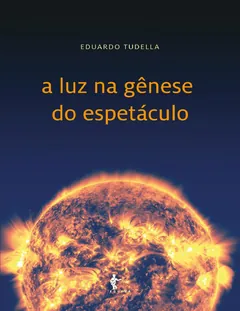
A luz na gênese do espetáculo
Caderno de imagens
Este capítulo é longo, por isso está dividido em 5 partes.
being causal agents or subjects of an action. They are, quite simply, objects of an action.”
↩
16. “ll y a quelque chose entre nous […]”
↩
17. Historiador austríaco, nascido tcheco, um dos nomes mais
importantes da Escola de Viena, da História da Arte.
↩
18. Pesquisadora, autora de alguns livros que abordam a obra de
Beckett, professora da Montclair State University.
↩
19. “[…] directed his own work to ensure the most faithful realization
of his vision.”
↩
20. Atriz inglesa, nascida em 1932, trabalhou com Beckett durante
25 anos, e é considerada uma das suas mais importantes intérpretes.
↩
21. “[…] as if he were a sculptor and I a piece of clay. At other times
I might be a piece of marble that he needed to chip away at. He would endlessly move my arms and my head in a certain way, to get closer to the precise image in his mind.[…] sometimes I felt as if I were modeling for a painter […] I felt I was being painted with light.”
↩
22. O título desse texto tem sido traduzido como Comédia, o que
não parece boa solução. Peça, simplesmente, serve aos propósitos do presente trabalho.
↩
23. “Espace pur a force de mathematique… et le lapide [sic]
expose, s’exposant a l’admiration des courtisans prenant l’air dominical au balcon, tout ça envahi, mangé par l’humain. Devant une telle oeuvre, une telle victoire sur Ia realite du désordre, sur la petitesse du coeur et de l’esprit, on manque se pendre.”
↩
24. “May (M), dishevelled grey hair, worn grey wrap hiding feet,
trailing.”
↩
25. “In Footfalls, I felt like a moving musical Edvard Munch painting
[…] and in fact when Beckett was directing Footfalls, he was not only using me to play notes, but I almost felt that he did have the
paintbrush out and was painting, and, of course that he always has in the other pocket is rubber, because as fast as he draws a line in, he get out that enormous India-rubber and rubs it out until it is only faintly there.”
↩
26. Trecho de uma entrevista espontânea com Billie Whitelaw, por
James Knowlson, uma gravação para a televisão, efetuada em 1 fev. de 1977.
↩
27. “Lighting: dim, strongest at floor level, less on body, least on
head.”
↩
28. “Tattered. [Pause] A tangle of tatters. […] Watch her pass before
the candelabrum, how its flames, their light… like moon through passing rack.”
↩
29. “The semblance. Faint, though by no means invisible, in a
certain light. [Pause] Given the right light. [Pause] Grey rather than white, a pale shade of grey.”
↩
30. Na nota do tradutor, o sobrenome Svetlovídov é formado pelas
palavras sviétli (iluminado, luminoso) e vid (aspecto, aparência, semblante).
↩
31. Personagem da tragédia de Shakespeare, Troilus e Cressida,
Calchas é o pai de Cressida.
↩
32. “Front center touching one another, three identical grey urns
about one yard high. | From each a head protrudes, the neck held fast in the urn’s mouth. The heads are | those, from left to right as seen from auditorium, of w2, m and w1. They face | undeviatingly front throughout the play. Faces so lost to age and aspect as to seem | almost part of urns. But no masks. | Their speech is provoked by a spotlight projected on faces alone. | The transfer of light from one face to another is immediate. | No blackout, i.e. return to almost complete darkness of opening, except where | indicated. | The response to light is immediate. |
Faces impassive throughout. Voices toneless except where an expression is| indicated. | Rapid tempo throughout. | The curtain rises on a stage in almost complete darkness. | Urns just discernible. Five seconds. | Faint spots simultaneously on three faces. Three seconds. Voice faint, largely | unintelligible.”
↩
33. “[…] a stage almost in complete darkness. Urns just
discernible.”
↩
34. “[Spots off. Black-out. Five seconds. Strong spots
simultaneously on three faces.Three seconds. Voices normal strength.].”
↩
35. “The source of light is single and must not be situated outside
the ideal space (stage) occupied by its victims. The optimum position for the spot is at the centre of the footlights, the faces being thus lit at close quarters and from below. When exceptionally three spots are required to light the three faces simultaneously, they should be as single spot branching into three. Apart from these moments a single mobile spot should be used, swivelling at maximum speed from one face to another as required. The method consisting in assigning to each face a separate fixed spot is unsatisfactory in that it is less expressive of a unique inquisitor than the single mobile spot.”
↩
36. No Brasil, pode-se traduzir como refletor, o que me parece um
termo incompleto, de reduzida precisão técnica, mais apropriado para o senso comum. Quando não há necessidade de especificar a fonte de luz usada na situação, prefiro chamar de instrumento (aplicado para a produção de luz artifical na cena), o que pode se referir tanto ao mais recentemente cobiçado aparato, dotado da mais avançada tecnologia, quanto a uma simples vela de parafina. Na cena, um ou outro será o instrumento aplicado, de acordo com a excelência da imagem pretendida.
↩
37. “Their speech is provoked by a spotlight projected on faces
alone. | The transfer of light from one face to another is immediate.”
↩
38. “Urns just discernible. Five seconds. Faint spots simultaneously
on three faces. Three seconds.”
↩
39. “Yes, strange, darkness best, and the darker the worse, then all
well, for | the time, but it will come, the time will come, the thing is there, you’ll | see it, get off me, keep off me, all dark, all still, all over, wiped out – |Yes, perhaps, a shade gone, I suppose, some might say, poor thing, a| shade gone, just a shade, in the head – [Faint wild laugh] – just a shade, | but I doubt it, I doubt it, not really, I’m all right, still all right, do my | best, all I can- | Yes, peace, one assumed, all out, all the pain, all as if… never been, | it will come – [Hiccup.] – pardon, no sense in this, oh I know … none | the less, one assumed, peace … I mean … not merely all over, but as if… never been.”
↩
40. “I made a bundle of his things and burnt them. It was November
and the bonfire was going. All night I smelt them smouldering.”
↩
41. “When this first change.”
↩
42. “[Spot off W2. Blackout. Five seconds. Spots half previous
strength | simultaneously on three faces. Three seconds. Voices proportionately lower.].”
↩
43. “Down, all going down, into the dark, peace is coming, I thought,
after all, at last, I was right, after all, thank God, when first this change.”
↩
44. “Hellish half-light.”
↩
45. “Is it that I do not tell the truth, is that it, that some day somehow
I may tell the truth at last and then no more light at last, for the truth?”
↩
46. “Get off me. Get off me.”
↩
47. “What is meant by ceremony as a moment of postdramatic
theatre is thus the whole spectrum of movements and processes that have no referent but are presented with heightened precision; events of peculiarly formalized communality; musical-rhythmic or visualarchitectonic constructs of development; para-ritual forms, as well as the (often deeply black) ceremony of the body and of presence; the emphatically or monumentally accentuated ostentation of the presentation.”
↩
48. “[…] Wilson’s space is divided ‘into stripes’ parallel to the apron
of the stage, so that actions taking place in different depths of the stage can either be synthesized by the spectator or be read as ‘parallelograms’, so to speak.”
↩
49. Sarah Kane suicidou-se poucos meses depois de concluir esse
texto, mencionado por alguns comentadores como uma provável nota de suicídio.
↩
50. “I am sad | I feel that the future is hopeless and that things
cannot improve | I am bored and dissatisfied with everything | I am a complete failure as a person | I am guilty, I am being punished | I would like to kill myself | I used to be able to cry but now I am beyond tears | I have lost interest in other people | I can’t make decisions | I can’t eat | I can’t sleep | I can’t think | I cannot overcome my loneliness, my fear, my disgust | I am fat | I cannot write | I cannot love | My brother is dying, my lover is dying, I am killing them both | I am charging towards my death | I am terrified of medication I cannot make love | I cannot fuck | I cannot be alone | I cannot be with others | My hips are too big | I dislike my genitals […].”
↩
51. “I do not want to die […] I do not want to die.”
↩
52. “At 4.48 | when depression visits | I shall hang myself | to the
sound of my lover’s breathing […].”
↩
53. “After 4.48 I shall not speak again.”
↩
54. “At 4.48 I shall sleep.”
↩
55. “(A very long silence.) | – But you have friends. | (A long
silence.) | You have a lot of friends. | What do you offer your friends to make them so supportive? | (A long silence.) | What do you offer your friends to make them so supportive? | (A long silence.) | What do you offer? | (Silence.)”
↩
56. “It cannot be reduced to a merely external visual effect. When
physical movement is slowed down to such an extent that the time of its development itself seems to be enlarged as through a magnifying glass, the body itself is inevitably exposed in its concreteness. It is being zoomed in on as through the lens of an observer and is simultaneously ‘cut out’ of the time-space continuum as an art object. At the same time, the motor apparatus is alienated: every action (walking, standing, getting up and sitting down) remains recognizable but is changed, as never seen.”
↩
57. Padrões gráficos projetados sobre a cena. Podem resultar de
aplicações de acessórios adicionados aos instrumentos do tipo elipsoidal, ou programados nos chamados instrumentos de luz, “inteligentes” [moving light].
↩
58. Como na psicologia, de acordo com o Dicionário Houaiss:
“atividade representativa com certo grau de criação, cujos conteúdos são determinados por ideias súbitas e por lembranças modificadas ou enfraquecidas de objetos, acontecimentos e situações, inclusive sua significação emocional.”
↩
59. “a consolidated consciousness resides in a darkened
banqueting hall near the ceiling of a mind whose floor shifts as ten thousand cockroaches when a shaft of light enters as all thoughts unite in an instant of accord body no longer expellent as the cockroaches comprise a truth which no one ever utters […].”
↩
60. “The theatre here showed “less a succession, a development of
a story, more an involvement of inner and outer states.”
↩
61. “I’m seeing things | I’m hearing things | I don’t know who I am.”
↩
62. “I will drown in dysphoria | in the cold black pond of myself | the
pit of my immaterial mind […].”
↩
63. “Remember the light and believe the light.”
↩
64. “Hatch opens | Stark light.”
↩
65. “[…] it shall come to pass […], que se refere a Zacarias 14:6:
“And it shall come to pass in that day, that the light shall not be clear, nor dark” [E isso acontecerá naquele dia, no qual a luz não será clara, nem escura].
↩
66. “[…] behold the light of despair | the glare of anguish | and ye
shall be driven to darkness […]”, que aparece no Antigo Testamento, Isaías 8:22: “And they shall look unto the earth; and behold trouble and darkness, dimness of anguish; and they shall be driven to darkness.” [E olharão para a terra, e verão angústia e escuridão, sombras da aflição, e serão lançados às trevas].
↩
67. “I saw visions of God.”
↩
68. “[…] scientifically exact representations.”
↩
69. “How much longer are our souls, leaving our ‘mere’ bodies
under cover of the darkness, to plunge into those dreamlike figures up on the stage, there to take part in the crescendos and climaxes which ‘normal’ life denies us?”
↩
70. “Where is the man himself, the living, unmistakeable man, who
is not quite identical with those identified with him? It is clear that his stage image must bring him to light, and this will come about if this particular contradiction is recreated in the image. The image that gives historical definition will retain something of the rough sketching which indicates traces of other movements and features all around the fully-worked-out figure.”
↩
71. “Such images certainly demand a way of acting which will leave
the spectator’s intellect free and highly mobile.”
↩
72. “[…] producing such images, is based on the ‘alienation effect’
(A-effect). A representation that alienates is one which allows us to recognize its subject, but at the same time makes it seem unfamiliar.”
↩
73. “The realm of attitudes adopted by the characters towards one
another is what we call the realm of gest. Physical attitude, tone of voice and facial expression are all determined by a social gest: the characters are cursing, flattering, instructing one another, and so on. The attitudes which people adopt towards one another include even those attitudes which would appear to be quite private, such as the utterances of physical pain in an illness, or of religious faith. These expressions of a gest are usually highly complicated and contradictory, so that they cannot be rendered by any single word and the actor must take care that in giving his image the necessary emphasis he does not lose anything, but emphasizes the entire complex.”
↩
74. “The grouping of the characters on the stage and the
movements of the groups must be such that the necessary beauty is attained above all by the elegance with which the
material conveying that gest is set out and laid bare to the understanding of the audience.”
↩
75. “The ‘story’ is set out, brought forward and shown by the theatre
as a whole, by actors, stage designers, mask-makers, costumiers, composers and choreographers. They unite their various arts for the joint operation, without of course sacrificing their independence in the process.”
↩
76. Ou Tai Yang Erwacht, como aparece no livro de John Willet,
The theatre of Erwin Piscator: half a century of politics in the theatre, 1978, p. 105.
↩
77. John Heartfield (1891-1968), cujo nome de batismo era Helmut
Herzfeld, nasceu em Berlim. Especula-se que ele mudou seu nome em 1917, como protesto contra o exarcebado nacionalismo alemão da sua época, usando o pseudônimo John Heartfield até a sua morte; ilustrador, conhecedor das artes gráficas e da fotografia, considerado um precursor do design gráfico, passou pelo dadaísmo e trabalhou em arranjos cenográficos para espetáculos de Erwin Piscator (1893-1966).
↩
78. “[…] the stage designer gets considerable freedom as soon as
he no longer has to give the illusion of a room or a locality when he is building his sets. It is enough for him to give hints, though these must make statements of greater historical or social interest than does the real setting. At the Jewish Theatre in Moscow King Lear was alienated by a structure that recalled a medieval tabernacle; Neher† set Galileo in front of projections of maps, documents and Renaissance works of art; for Haitang erwacht at the Piscator-Theater Heartfield used a back ground of reversible flags bearing inscriptions, to mark changes in the political situation of which the persons on the stage were sometimes unaware.”
↩
79. Difícil traduzir: o trabalho de Neher é diferente das atribuições
regulares de um “cenógrafo”, no Brasil.
↩
80. “Neher’s designs for the early Brecht’s plays give evidence of a
unique theatrical experiment. His ‘arrangment sketches’ blur the conventional boundaries between the tasks of director and designer, and in doing so demonstrate the degree to which Neher’s influence extended far beyond the sphere of the merely visual.”
↩
81. “On the director’s desk [Neher´s drawings] lay, always near at
hand, on top the drawing of the scene in progress. Almost all arrangements of the Berliner Ensemble productions go straight back to Neher’s sketches.”
↩
82. “the actors ought not to ‘drop into’ song, but should clearly mark
it off from the rest of the text; and this is best reinforced by a few theatrical methods such as changing the lighting or inserting a title.
↩
83. “The numerous and varied devices by which the illusion of
reality was to be dispelled must bear the hallmark of honest craftsmanship, the perfection which comes from the unpretensions use of undisguised materials.”
↩
84. “Give us light on the stage, lighting engineer! How can we, |
Playwrights and actors, present our images of the world | In semi-darkness? Nebulous twilight | Lulls to sleep. | But we need the spetators’ | Wakefullness, even watchfulness. Let them dream | In blazing clarity! …” Texto original: “Gib uns doch Lig auf die Bühne, Beleuchter! Wie | Können wir | Stückeschreiber und Schauspieller bei Halbdunkel | Unsre Abbilder der Welt vorführen? Die schummrige | Dämmerung | Schläfert ein. Wir aber brauchnen der Zuschauer | Wachheit, ja, Wachsamkeit. Laßsie | In der Helle träumen!”
↩
85. “The little bit | Of night that’s wanted now and then | Our lamps
and moons can indicate. | And we with our acting too can keep | The times of day apart. | The Elizabethan wrote us | Verses on a
heath at evening | Which no lights will ever reach | Nor even the heath itself embrace. | Therefore flood full on | What we have made with work | That the watcher may see | The indignant peasant | Sit down upon the soil of Tavastland | As though it were her own.” Disponível em:
<http://www.theatrecrafts.com/lx_brecht.shtml>. Acesso em: 11 abr. 2011.
“Das bißchen Nacht | Ab und zu gewünscht, kann mit Monden oder Lampen | Augedeutet werden, auch unser Spiel | Kann die Tageszeiten erkennbar machen | Dann, wenn es nötig ist. Über die abendliche Heide | Schrieb uns der Elisabethaner Verse | Die Klein Beleuchter erreicht, noch | Die Heide selber! Also beleuchter | Was wir erarbeitet, daß die Zuschauer | Sehen können, wie beleidigte Bäurin | Sich auf den tavastländischen Boden setzt |Als wär’s der ihrige!”
↩
86. “Nobody would expect the spotlights over a box ring to be
hidden.”
↩
87. “[…] and make | my curtain half high, don’t seal off the stage! |
Leaning back in his chair, let the spectator | Be aware of busy preparations, made for him | Cunningly; he see a tinfoil moon | Float down, or a tiled roof | Being carried in.”
↩
88. “do not show him too much, | But show him something! And let
him notice | that you are not wizards, | Friends, but workers […].”
↩
89. “First of all, the stage was not illusionistic – it was identified as a
stage or a space for acting, not as some other place, such as a room, a forest, etc.”
↩
90. “I have proved it repeatedly by unexpectedly taking parts of
which I did not know a word the day before the first performance. It was thus, for instance, when I played the part of Marguerite Gauthier in La Dame aux Camélias with only four hours to learn the lines.”
↩
91. Uma melodia ou canção, ligada aos registros tenor ou soprano.
Pode remeter também a um solo sem acompanhamento. O termo “air” [ária] pode se referir também a uma dança de origem renascentista, que entra como forma musical do Barroco, nas sequências de danças, ou música instrumental que reúne um ciclo de danças. Aparecem, como exemplo, na obra de Johan Sebastian Bach (1685-1750), suítes francesas, suítes inglesas. A melodia da Ária em G (sol ou quarta corda) é um exemplo notabilizado.
↩
92. “To give the scene its full effect he needed very sweet music
and indeterminate illumination. We asked the electrician of the theatre to put green lamps along the footlights and the orchestra leader to play a subdued air.”
↩
93. “At last, transfixed in a state of ecstasy, I let myself drop at his
feet, completely enveloped in a cloud of the light material. The audience encored the scene, and then encored it again – so loudly and so often that we had to come back twenty times, or more.”
↩
94. O artigo de Morinni aparece no título organizado por Paul
Magriel (1906-1990, colecionador de arte, curador dos arquivos de dança do Museu de arte Moderna – NYC) depois de ser originalmente publicado no periódico Dance Index, em março de 1942, e é considerado um dos mais importantes relatos biográficos sobre Loie Fuller.
↩
95. “Finally I reached a point where each movement of the body
was expressed in the folds of silk, in a play of colours in the draperies that could be mathematically and systematically calculated.”
↩
96. “For illumination of my dances I intended to have a lantern with
coloured glass in front of the lens. I wanted to dance the last
one in total darkness with a single ray of yellow light crossing the stage.”
↩
97. “Finally I lifted a part of my robe over my shoulders, made a kind
of cloud which enveloped me completely and then fell, a wavering mass of fluffy silk, at the manager’s feet.”
↩
98. Ou, Loin du bal, de Ernest Gillet (1856-1940), compositor
francês, ativo no pós-romantismo.
↩
99. “Light, colour, motion and music.”
↩
100. “‘Fire dance’, was particularly popular, because of the effects de
flame and smoke produced by dancing in a pane of glass lighted from beneath. This innovation, a pioneer realization of indirect light, was an effect ‘greater than Bayreuth’, and was the direct inspiration for the Toulouse Lautrec lithograph.”
↩
101. “[…] cette transition de sonorités aux tissus (y a-t-il, mieux, à
une gaze ressemblant que la Musique!) est, uniquement, le sortilège qu’opère la Loie Fuller, par instinct, avec l’exagération, les retraits, de jupe ou d’aile, instituant un lieu.”
↩
102. “The orgie of color was so wonderful as to leave objection mute.
Light came from every side. La Loie danced upon glass, from which the vivid splendor of the headlights was reflected, while from the the wings, stage and orchestra, wonderful luminous streams seemed to flow toward her. With the rhythm of the music the colors changed, and where white ruled before, there was a kaleidoscopic vision. Violet, orange, purple and mauve movements succeeded in rapid sucession until a rich deep red dominated the dancer, and she became, for one brief moment, a living rose, with palpitating heart and flying leaves. Then the hues of the rainbow came from all sides and ranged themselves upon the ever moving draperies. Every fold had its tint and scheme of color intensified by the sorrounding darkness until the eye could scarcely bear to look. Just as the strain was becoming
almost intolerable, the colors desappeared, there was a white flash of appaling brilhancy and la Loie faded under diaphanous drapery.”
↩
103. “The other evening […] I had, as it were, a vision of a theatre of
the future, […] something of the nature of a feministic theatre. […] Women are more and more taking men’s places. […] Loie Fuller has made studies in a special laboratory of all the effects of light that transform the stage, […] It is certain that necapacities are developing in theatrical art, and that Miss Loie Fuller will have been responsible for an important contribution.”
↩
104. Acessórios considerados a última novidade, em seu tempo. O
mais importante apelo de cada um deles é definir a luz projetada na cena e/ou fazer mudanças automaticamente, para criar efeitos ilusionistas.
↩
105. “A skilled electrician has to go ahead to cut the floor properly
and to lay the wires. When this is done I can go to work. Sometimes I use ten lamps, sometimes sixteen, again twenty, and I have used as may as thrity four and it requires a skilled electrician to run each of them.”
↩
106. “Eight days later the general rehearsal occurred, which ended
only at four o’clock in the morning, and still I had been unable to complete my programme, comprising five dances: 1, the serpentine; 2, the violet; 3, the butterfly; 4, a dance the public later called the ‘white dance’. As a finale I intended to dance with illumination from beneath, the light coming through a square of glass over which I hovered, and this was to be the climax of my dances. After the fourth number my electricians, who were exhausted, left me there unceremoniously.”
↩
107. Uma tradução do termo design pode ser problemática
principalmente devido ao uso indiscriminado do termo no Brasil, indicando a urgência da discussão dos processos que decorrem ou estão incluídos nas funções de um designer,
especificamente de um designer trabalhando no teatro e mais, no design para a luz de espetáculos. No Brasil, essa discussão parece soar cada vez mais estranha e deslocada. Os processos de conceber e projetar a luz para a cena, incluindo planejamento e sistematização, parecem transitar no nível da idiossincrasia. Se cada um pode “fazer luz” usando seu jeito particular, sistematizar parece absurdo.
↩
108. “The design, or more specifically, the planning and execution of
the lighting for a production is often surrounded by a veil of mistery which is due, undoubtedly, to lack of knowledge of both the limits and the potentialities of the problem. This mistery arises first from the fundamental lack of philosophy of precedent in the use of light as a design medium, second, from the primitive equipment employed, and third, from the absence of a simple, well defined plan which may be applied to the solutions of lighting problems.”
↩
109. “Today, the resurgence of the body as an expressive medium
essential to our aesthetic culture is a concept which possesses many minds, animates the imagination, and gives rise to diverse experiments doubtless not all of equal value, but all directed toward the same reform.”
↩
110. Muito influenciado pela obra e pela teoria de Richard Wagner
(1813-1883), tanto no que se refere às composições do artista alemão, quanto à sua teoria, desenvolveu sua própria compreensão da parceria entre os diversos aspectos que compunham uma obra teatral.
↩
111. “If I have not been dissuaded by these considerations, it is only
because I know of no other way to communicate those beliefs which seem to me to have considerable significance for the art of the theatre.”
↩
112. “[…] Appia and a schoolmate.designed a small cardboard stage
but fell out over the friend’s use of conventional painted cut-outs
for the scenery. Appia found these meaningless and insisted on placing real objects on stage. The dispute was fundamental and irreconcilable: it ended with the solemn and deliberate destruction of the original toy theatre, the whole incident a precursor in miniature of Appia’s later relationship to the real theatre.”
↩
113. “I was conscious of the flimsiness of the settings and the
flatness of the stage floor.”
↩
114. “In every work of art there must be a harmonious relationship
between felling and form, a perfect balance between the idea which the artist wishes to express and the means he uses to express it. If one of the means seems to us clearly unnecessary to the expression of the idea, or if the artist’s idea – the object of his expression – is only imperfectly communicated to us by the means he employs, our aesthetic pleasure is weakened, if not destroyed.”
↩
115. “The term was coined by his friend Houston Stewart
Chamberlain: see Volbach, Adolphe Appia, p.35-36, e Bablet-Hahn (Ed.), Oeuvres complètes, Vol. I, p. 444, nota 7. On the first page of La mise en scène du drame wagnérien, Appia notes that he uses ‘the German term WORT-TONDRAMA’ – a drama, thus, in which the poet uses word and music alike. This kind of drama is in some way a synthesis of the Wort-drama, the ‘drama in words’, the play proper, and the Ton-drama, the only true ‘music drama’, in which the poet uses only music, as Beethoven in Coriolan, The Heroic Symphony, etc. Berlioz in his Symphonie Fantastique. Liszt in it’s Symphonic Poems. One cannot repeat often enough that Wagner strongly objected to having this term of ‘music drama’ applied to his stage-work. As the French do not have an equivalent for WORT-TONDRAMA, I shall use the term ‘Wagnerian drama’ [drame wagnérien] or ‘drama of the poetmusician’ [drame du poète-musicien], but I would like the reader to keep in mind that by ‘Wagnerian drama’ I do not only refer to the work of Richard Wagner, but, more
generally, to the new form of drama created by him. Trans. Peter Loefer. Staging Wagnerian Drama, p. 89.”
↩
116. “The constituent elements of word-tone drama fall into two
distinct groups: the words and tones as they are transmitted by the actors’voices and the instruments of the orchestra, and the visual elements of the production.”
↩
117. “Apollo was not only the god of song, but also of light.”
↩
118. Para aqueles leitores interessados numa abordagem da sua
obra, em língua portuguesa, Cibele Forjaz traçou um panorama que incorpora competência de pesquisadora e paixão de quem pensa visualmente a cena, na sua dissertação de mestrado, mencionada na introdução deste trabalho.
↩
119. Opus 62 em dó menor, para duas flautas, dois oboés, dois
clarinetes, dois fagotes, duas trompas, dois trompetes, tímpanos e cordas, escrita em 1807 e incluída como introdução a uma apresentação da peça Coriolan, de Heinrich Joseph von Collin (1771-1811), dramaturgo vienense com o qual Beethoven pretendia trabalhar, tendo-o como libretista, escrevendo anualmente uma ópera, no Teatro Imperial de Viena. A parceria não aconteceu, pois Beethoven não conseguiu fechar o contrato, mas nos rendeu sua Abertura para Coriolano.
↩
120. “The result is a visual image at one with the playwright’s
thoughts.”
↩
121. “It follows therefore that the drama (as produced on stage) is not
only the most complex of all arts, but also the only one of which one of the basic elements may not be judged as a medium of expression in the dramatist’s control, a condition acutely diminishing the integrity of drama as an art form and relegating it to an inferior status.”
↩
122. “[the scene painting] is incapable of revealing any living and
expressive reality by itself, and it loses its power of signification to the extent that the rest of the setting plays an active part in the scene.”
↩
123. Da tradução inglesa: “[…] it is only through the power of the
lighting that the setting can become truly expressive, and this fact must be taken into account in its construction”.
↩
124. “[…] what is it if not light that gives that wonderful unity to the
spectacle we contemplate each day, allowing us to live through our eyes? / Lacking this unity, we should be able to distinguish only dimly the meaning of things, and never their expressiveness; for in order that things be expressive, they must have form, and form without light communicates only to our sense of touch.”
↩
125. “By light, of course, I mean the activity of light, not simply
‘visibility’.”
↩
126. “Both elements have an extraordinary flexibility which permits
them to run through all modes of expression consecutively, from a simple statement of existence to the most intense overflow of emotion.”
↩
127. “Comment concilier, en effet, une lumiére destinee à eclairer les
toiles verticales et qui n’en frappe pas moins les objets placés entre elles, avec une lumiere destinée à ces objets et qui n’en frappe pas moins les toiles verticales?”
↩
128. Cf. Figuras 139 e 140, para comparação entre a proposta de
Appia e o cenário da montagem do Bayreuth.
↩
129. “[…] the actor is a solid mass, which cannot be lighted by
imitation light; in order to have light on the stage, one or the other must be sacrificed. If we dispense with the actor, the
drama is effaced, […]. Therefore, the painting must be sacrificed.”
↩
130. “La partition n’a, […], qu’une voie pour se transporter sur la
scene: c’est l’Acteur. Sans lui le drame n’existe pas, et sans son influence sur les autres facteurs representatifs la mise en scene reste etrangere au drame. C’est lui qui traduit pour la Plantation, l’Eclairage et la Peinture, en un langage qu’ils puissent comprendre, ce que le texte poetique-musical lui a confie. Il est l’interprete de la musique aupres du tableau inanime.
↩
131. “Il devient donc necessaire d’étudier plus en detail le jeu de
l’eclairage au point de vue de la couleur pour savoir si la peinture, au sens ordinaire du mot, conserve un role distinct de la nouvelle mise en scène, en dehors de la conception generale du tableau scenique.”
↩
132. “[…] la couleur, pour s’exterioriser et ne plus dependre des
toiles verticales, […].”
↩
133. Da tradução inglesa: “[…] each of these objects is given a
suitable color, and finally, light is used only to make them more or less visible”.
↩
134. “The illusion created by a work of art is not to delude us
regarding the nature of emotions or objects in their relationship to reality, but rather to draw us so completely into the artist’s vision that it seems to be our own.”
↩
135. “The terrain of the actor in the word-tone drama is determined
above all other considerations by the actor’s presence. Here it is to be understood that by terrain I mean not merely that portion of the stage trod by the actor’s feet, but everything in the composition of the setting relating to the material form of the character and his actions.”
↩
136. “Color, deprived of its own life on the stage by living light, loses
the benefits it once derived from immobility. If color is to perform as a valuable element in production, it must be subordinate to light. For when light ceases to be fictive in character, it destroys the relative importance of color combinations. The mobility characteristic of any stage picture requires, therefore, that the lighting assume a good many of the functions which color alone once gave to the painter. […] It is no longer static colors which represent light, but light which takes from color all that opposes its mobility.”
↩
137. “Light can also project images ranging from the most delicate
gradation of hues to the sharpest effects. A shutter, placed over the source of light, can direct a beam to one part of the stage, leaving the other areas in darkness. Starting with this simple effect, we have a host of possibilities whose scope is limited only by the varieties, shapes, and combinations of transparencies used. The lighting, already made mobile by the presence of the actors, in whose activity it takes part, becomes even more so, if the light source can be moved about, if the projected images are placed in motion before a stable light source, or if the lens in front of the light source is vibrated in some manner. These colors, forms, and motions, variously combined with each other, and, in turn, with the stage picture, offer innumerable possibilities; they constitute the palette of the word-tone poet.”
↩
138. “Both the living and the diffused light require an object on which
to focus. The lighting does not change the form of these objects, but rather serves to make their presence felt, and hence to make them expressive. With the addition of color, the lighting now begins to modify the object’s own chromatic scheme; moreover, a light source equipped to project a combination of colors, or an image or design, has the power to create an environment on stage, and even to create objects by means of projection. In order to be visible, projected images must strike an object as is the case for both ordinary and colored light. But,
unlike simple light rays, projected images strongly affect the essential nature of these objects (for the spectator). Moreover, these objects, because of their various shapes and dimensions, respond by actively modifying the projected image. Therefore, if the interplay of colored light and painted scenery is simply a matter of chromatic dimensions, the problem of projection is in addition associated with forms. In both cases, we are concerned with the color of objects independent of the effects of lighting. This independence is, of course, relatively small when we consider the sum total of the elements making up the stage picture; yet its existence cannot be ignored any more than that of any other element of production.”
↩
139. “The color of objects, which constitutes the restricted role of
painting in our new concept of production, is important for the form of the actor in general, and particularly for his costume.”
↩
140. “the costume must also be considered from the point of view of
color and design.”
↩
141. “The word-tone poet paints his picture with light.”
↩
142. Um pequeno tema, numa peça musical, que apresenta
conexões com um objeto, coisa ou personagem.
↩
143. “The curtains of Isolde’s tent thus symbolically separate in the
fullest meaning of the term the visual aspect of the outer world from the expression of inner life. The conflict which constitutes the dramatic action is then directly realized before our eyes in a plastic form justified by the dramatic expression, and complete, from the bare necessities of place to the most subtle demands of sound.”
↩
144. “[…] light is less bright (it is late afternoon), but the rays are
more slanted; it covers the floor of the downstage area as with a large bright golden cloth.”
↩
145. “The appearance of the stage when the curtain opens: a large
bright torch in the center of the picture. The rather limited space of the stage is illuminated by a diffuse light, just enough to make the characters clearly distinguishable without entirely depriving the torch of its somewhat blinding brightness, nor above all, destroying the shadows projected by this brightness.”
↩
146. “By extinguishing the torch Isolde removes the obstacle, […].”
↩
147. “What burns in their hearts appears to us, as to them, superior
to their visible forms, and the fictitious existence of the music carries us deeper and deeper into the mysterious world where their union is consummated forever.”
↩
148. “he can think only of a sensation of light that disturbs and pains
him and of a sensation of darkness escaping him but which he would like to retrieve.”
↩
149. “The beautiful clarity of daylight – which became their supreme
illusion – slowly sinks below the sea’s horizon throwing a last bloodtinged halo around the reunited lovers. | So the part played by lighting is clearly prescribed for the act. As long as light is only a source of Tristan’s suffering, it must not fall on him directly. But as soon as he really sees it and associates it with blissful visions, it comes and illuminates his face.”
↩
150. Essa numeração de páginas refere-se à partitura vocal,
preparada por Hans von Buelow, e publicada por Breitkopf & Haertel, em Leipzig, e também em Nova Iorque.
↩
151. “On page 215, the light, turning increasingly more golden,
begins to touch Tristan’s feet; on page 218 it reaches up to his waist; on page 221 it touches his face; on page 223 Tristan is fully lighted; on page 225, the beam extends to his surroundings.”
↩
152. “The color arrangements, as well as the forms they express
through their quality and variations of light and shade, lose not only their expressiveness in the presence of the living elements, but also their meaning.”
↩
153. “[…] the spectator must apprehend the actual existence of a
window, a building or portico, a rock, the edge of a forest, ship’s mast, etc., the lighting can present these objects by means of shadows.”
↩
154. “Daylight floods the whole atmosphere, but nevertheless we are
always aware of the direction from which it comes. But the direction of light can only be sensed by means of shadow – it is the quality of the shadows which expresses the quality of light. Shadows are formed by the same light which illuminates the atmosphere. This tremendous effect cannot be obtained artificially. The brightness of a lighted fire in a dark area will never produce sufficient light to create what we call chiaroscuro, i.e., the more or less distinct shadow cast on an already lighted area. On stage this task must therefore be divided, so that part of the lighting equipment will be used for general illumination, while the rest will cast shadows by means of exactly focused beams.”
↩
155. “[…] there is no plastic object of any kind, animate or otherwise,
which can dispense with shadow. If there is no shade, there is no light; for light is not simple ‘visibility’ […] only the audience is concerned with ‘visibility’ – light is distinguished from visibility by virtue of its power to be expressive.”
↩
156. “the painted setting can become expressive only in the absence
of the actor, because the imitation light painted on the canvas corresponds to the equally false painted shadows.”
↩
157. “To avoid the shadows would interfere with the power of living
light; […] by means of the diffused light, we achieve ‘visibility’ on the stage; the shadows will be neutralized and ready now for the
living light. With the exception of some rather rare instances in which one of the two light forms must operate independently, it goes without saying that we must begin with ‘visibility’. The intensity of the diffused light will then be modified by the living light.”
↩
158. “But, what mode of existence could we imagine for light except
the opposing intensities occasioned by shadows – and how is it possible to imagine shadows but in terms of the objects causing them?”
↩
159. Da tradução inglesa: “[…] furnishing the means of casting
shadows, thus enabling the living light to function.”
↩
160. “The illumination of this area will be quite uniform, with no
shadow whatever. […] will permit the characteristic planes of the faces to be distinctly seen. By contrast, the outdoor area will be brightly lighted and its reality emphasized through a variety of shadows thrown against the tent.”
↩
161. “Brangaene lifts a corner of the side wall to look at the sea, the
spectator sees merely an infinitely small part of the horizon, perceiving the outdoors only through the bright light that grazes the singer’s feet without penetrating enough to throw a heavy shadow on the tent floor.”
↩
162. “When the tent curtains part for the first time (page 13-14), the
light from outside, falling almost straight down, does not pass beyond the threshold of the tent. On page 80 when they open again, the outside light is less bright (it is late afternoon), but the rays are more slanted; it covers the floor of the downstage area as with a large bright golden cloth. The shadows of the characters fall toward the audience. All that is seen is two groups of people: those who are to be received, and those who face them waiting for the king.”
↩
163. “Those in the first group (in particular Tristan and Isolde), hit by
a slanted ray from upstage, are seen by the audience as shadowed silhouettes; the second group is not placed directly between the spotlight and the spectator, and consequently is much more brightly lighted and fully visible.”
↩
164. “The rather limited space of the stage is illuminated by a diffuse
light, just enough to make the characters clearly distinguishable without entirely depriving the torch of its somewhat blinding brightness, nor above all, destroying the shadows projected by this brightness.”
↩
165. “Butades, a potter of Sicyon, was the first who invented, at
Corinth, the art of modeling portraits in the earth which he used in his trade. It was through his daughter that he made the discovery; who, being deeply in love with a young man about to depart on a long journey, traced the profile of his face, as thrown upon the wall by the light of the lamp. Upon seeing this, her father filled in the outline, by compressing clay upon the surface, and so made a face in relief, which he then hardened by fire along with other articles of pottery.”
↩
166. Uma luz que parece originar-se numa fonte específica, como
uma lâmpada, o sol, uma fogueira, entre outros. (BOULANGER; LOUNSBURY, 1992, p. 102)
↩
167. “Only what is strictly needed to mask the flies and to motivate
the shadows which fill the courtyard should be added to this simple construction.”
↩
168. During pages 233-236, the stage attains the maximum of light
which is relatively low, for the section of wall restricting the view of the sky upstage throws a deep shadow over a large part of the courtyard, especially over the door and its approaches”.
↩
169. “Starting with page 236, the lighting takes on the hues of sunset,
then rapidly decreases its intensity during pages 238-242 until,
on pages 245-248, the turbulent action occurs in relative darkness and the audience cannot distinguish its details, while the downstage areas are hit directly by a light which grows redder and redder…”
↩
170. “The platforms at the foot of the wall serve well for the fighting
(pages 138-149). Kurvenal, when wounded, steps into the light and falls down close to Tristan. None of or Kurvenal’s men leaves the dark area. – The greatest care must be taken in handling the shadows created by the characters in the last scene. This means that Mark and Brangaene, their backs turned toward the spotlight, must become dark silhouettes without throwing any shadow on the two principals. – Kurvenal has fallen into the shadow cast by Tristan. Beginning with page 254, the light continues to fade, plunging the setting into an ever deeper twilight. The curtain closes on a quiet and uniformly lighted picture in which the eye can distinguish only the last touch of the waning sun which faintly colors Isolde’s white dress.”
↩
171. Poema de Hesíodo sobre o nascimento dos deuses. Segundo
Marilena Chauí (2000, p. 19): A palavra gonia tem sua origem etmológica em duas palavras gregas: do verbo gennao (engendrar, gerar, fazer nascer e crescer) e do substantivo genos (nascimento, gênese, descendência, gênero, espécie). Gonia, portanto, quer dizer: geração, nascimento, a partir da concepção sexual e do parto. Cosmos, como já vimos, quer dizer mundo ordenado e organizado. Assim, a cosmogonia é a narrativa sobre o nascimento e a organização do mundo, a partir de forças geradoras (pai e mãe) divinas. Teogonia é uma palavra composta de gonia e theós, que, em grego, significa as coisas divinas, os seres divinos, os deuses. A teogonia é, portanto, a narrativa da origem dos deuses, a partir de seus pais e antepassados.
↩
Você terminou A luz na gênese do espetáculo
Eduardo Tudella
Livros como este
-
 A Arquitetura Religiosa na Idade Média
-
 A filosofia natural de Benjamin Franklin: traduções de cartas e ensaios sobre a eletricidade e a luz
-
 Ensaios de teatro e filosofia: do Renascimento ao século XVIII
-
 A Escravidão na Roma Antiga
-
 Luciano Berio: legado e atualidade
-
 O Genocídio do Negro Brasileiro: Processo de um Racismo Mascarado
Depois do livro
Páginas que vieram com esta edição, guardadas aqui para consulta.